

After saying farewell to the Madison Ave Presbyterian Church participants in the Presbyterian Heritage Tour, Lauren and I spent an additional day in Glasgow, picked up our rental car the next day and headed to Aberdeen to catch the overnight ferry to Shetland. The ferry was great—we slept really well and felt almost no motion of the boat at all—I didn’t expect the North Sea to be so calm! We are now on the return ferry, hoping for the same.
The first day we mostly puttered around Lerwick, visiting the shops, looking at Shetland wool and knitted items as well as other local crafts, and went to the little Textile Museum. We both bought kits to make this year’s “Wool Week” pattern—a hat, that will be the most ambitious knitting I’ve tried yet.

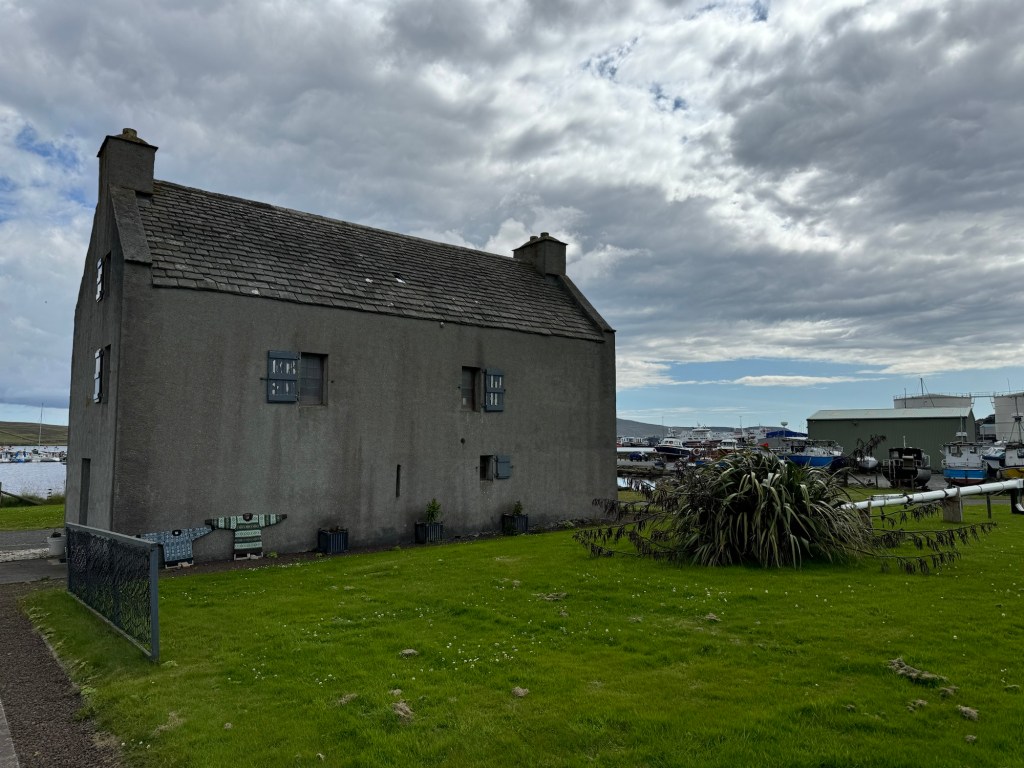


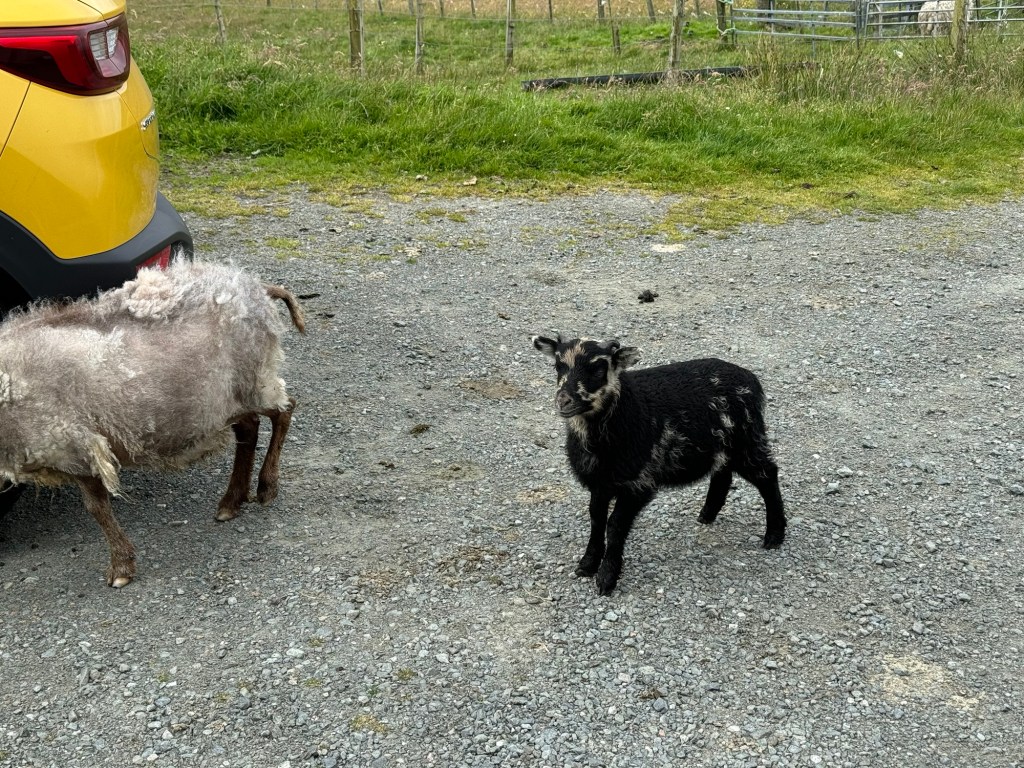
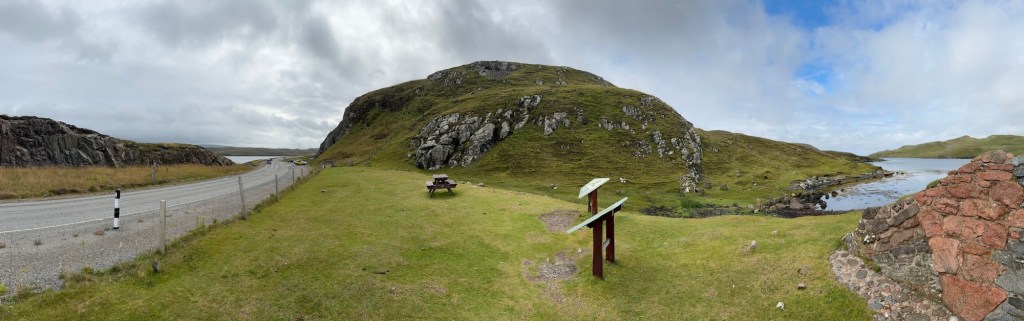
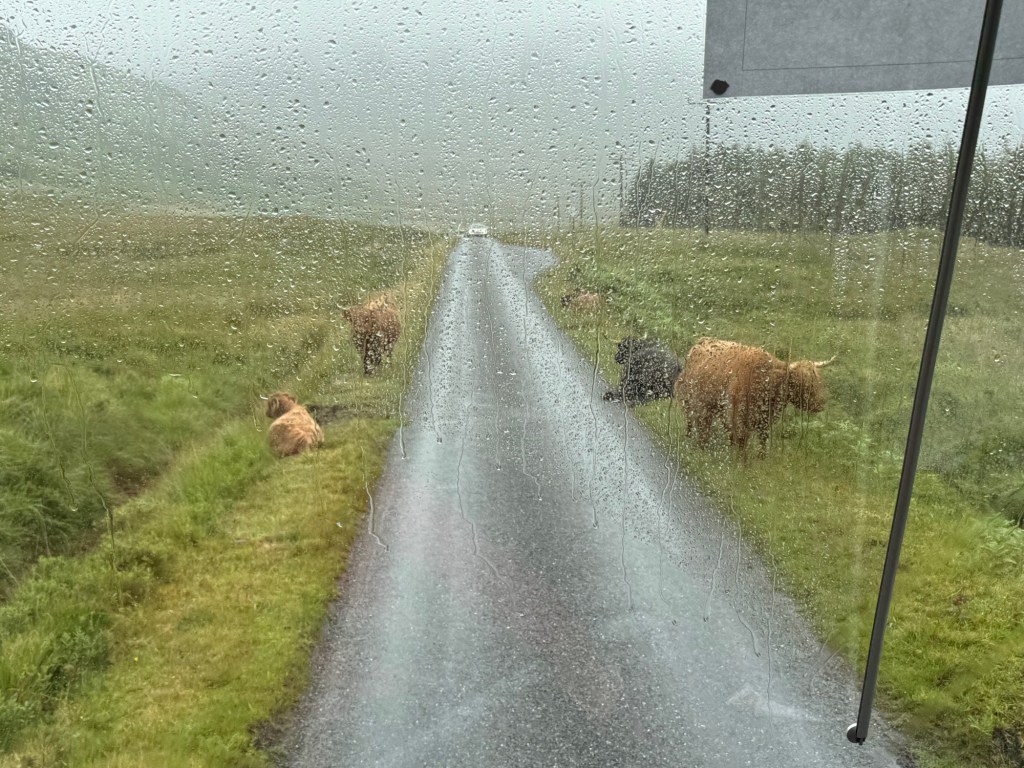
The second day we headed to the south of the Mainland (it’s all island, but the main island is called The Mainland), with a walk to St. Ninian’s Isle as our goal. I’m so grateful for my friend Louise for pointing us in that direction. It was magical. It is connected to the Mainland by a tombolo (google it!), so you can walk across—it isn’t tidal so you don’t have to worry about getting cut off. There is the ruin of a chapel there, and of course, the landscape is breathtaking, which pretty much describes all of Shetland: barren, yes, but dramatic—rocky coastline, beautiful beaches, fascinating stones (it is a geologist’s paradise), seabirds by the tens of thousands, seals, ruined stone crofts which dot the landscape along with occasional standing stones, sheep everywhere, Shetland ponies, occasional cows, seals, and otters (but we didn’t see any). So much sky and so much water, and being summer, so much light. And wind—always wind, sometimes a breeze, usually stronger, often whipping your hair and tearing your hat off your head in spite of a tight chin strap. There are almost no trees—only around houses where there is some shelter from the wind. Most of the roads are single-track with passing places, and sheep on the side of the road, sometimes in the road. You have to be very careful because if a lamb is across the road from its mom, and your car comes along, it will dash across the road right in front of you to get to Mom.


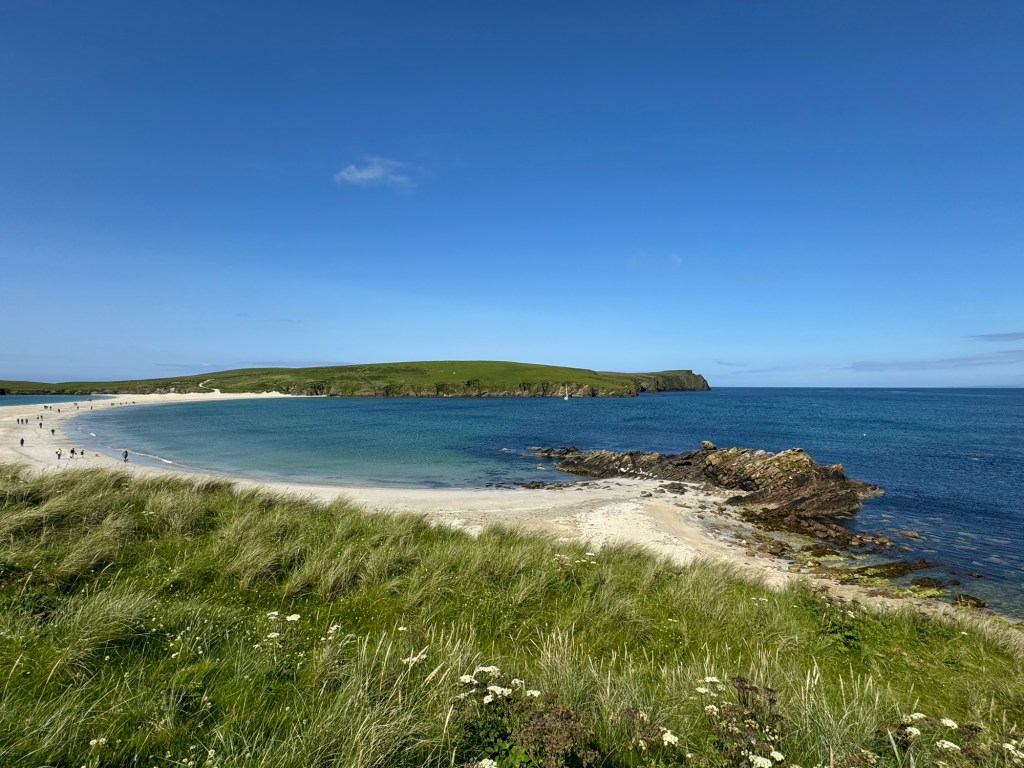
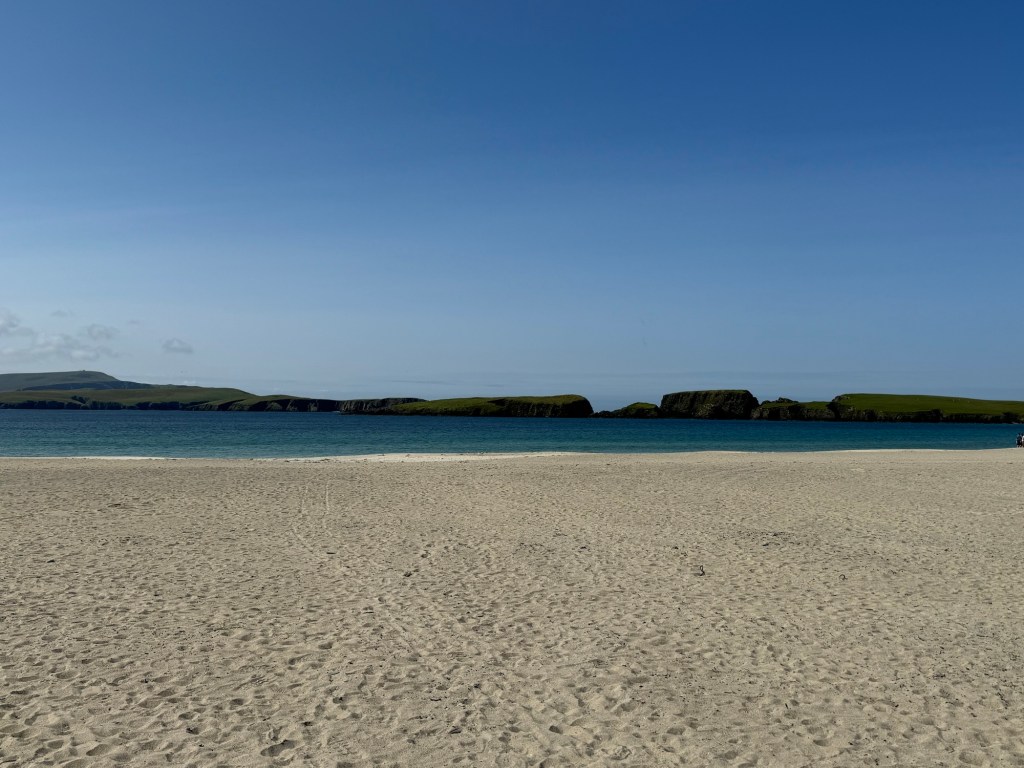
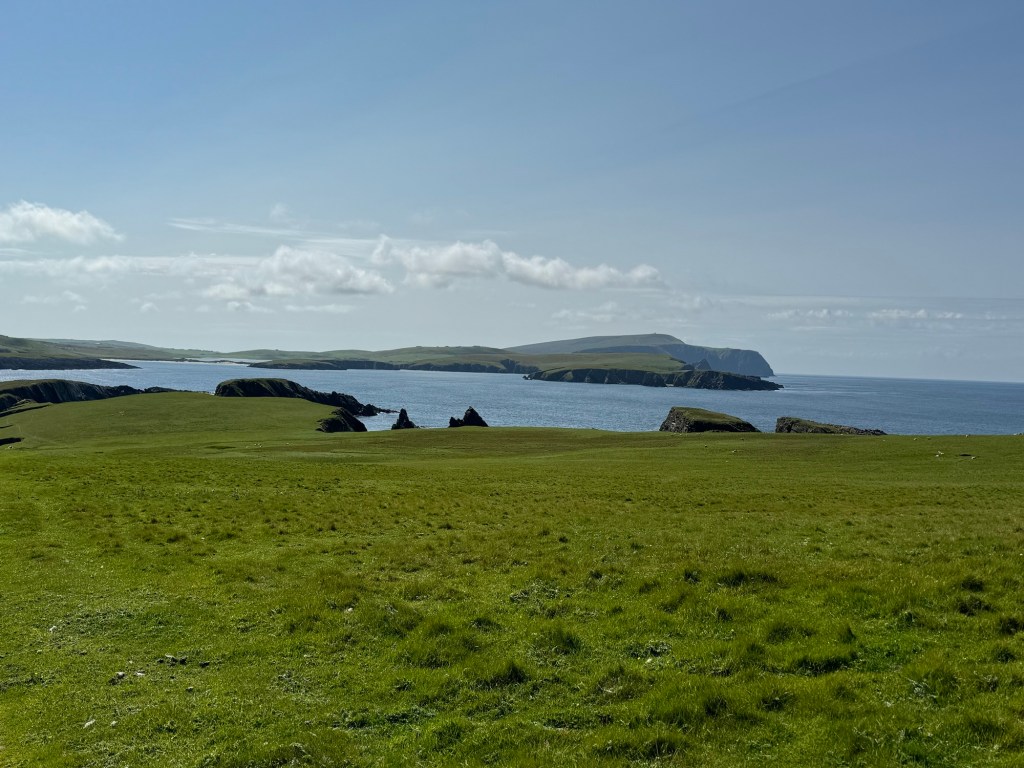

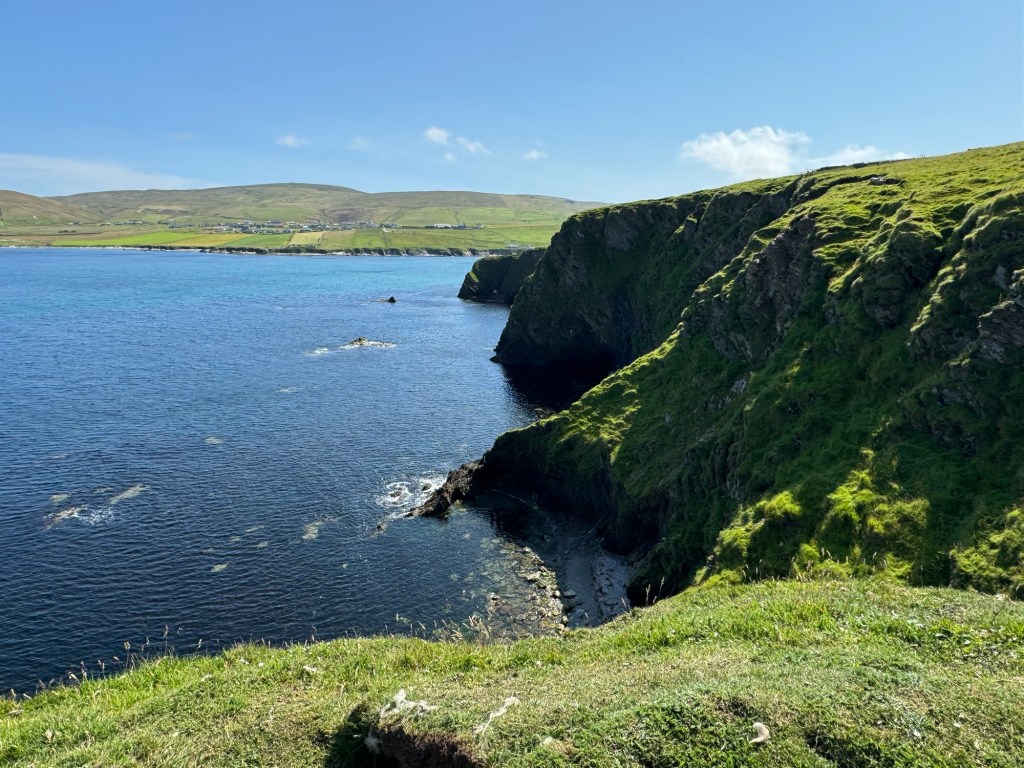
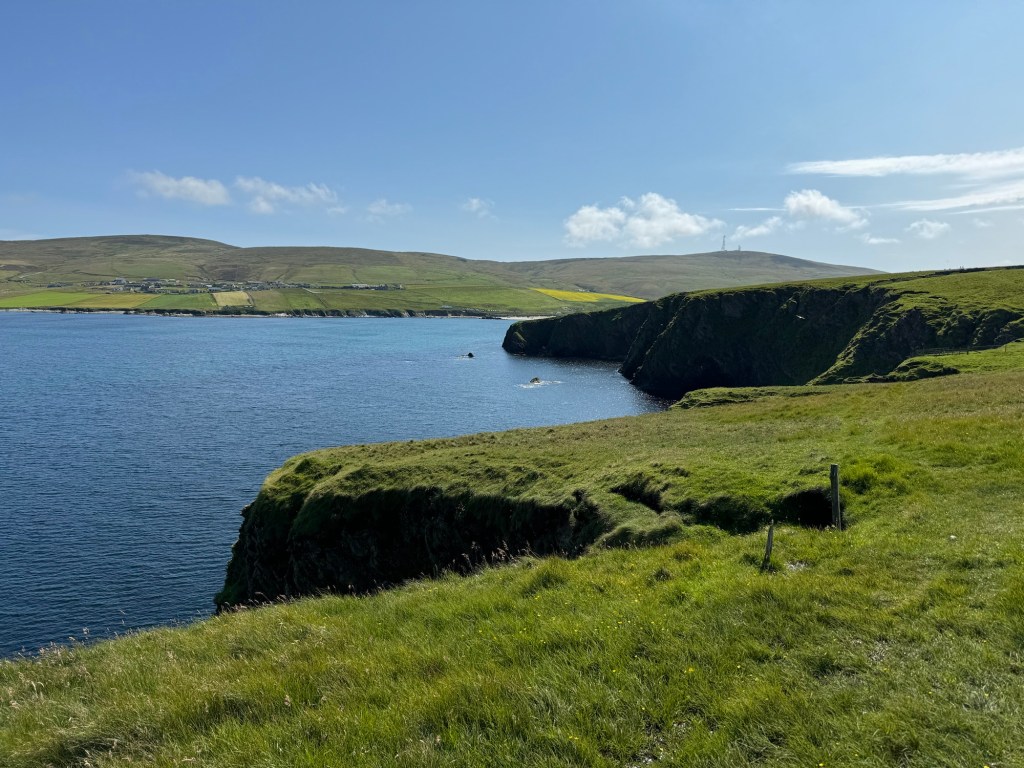
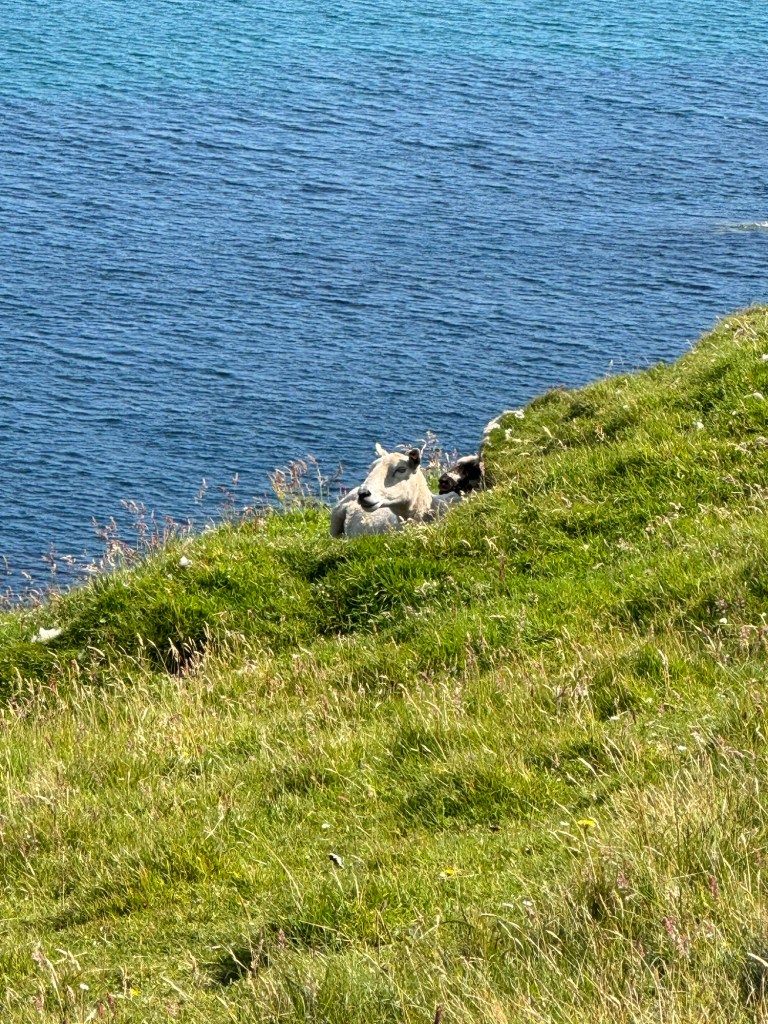
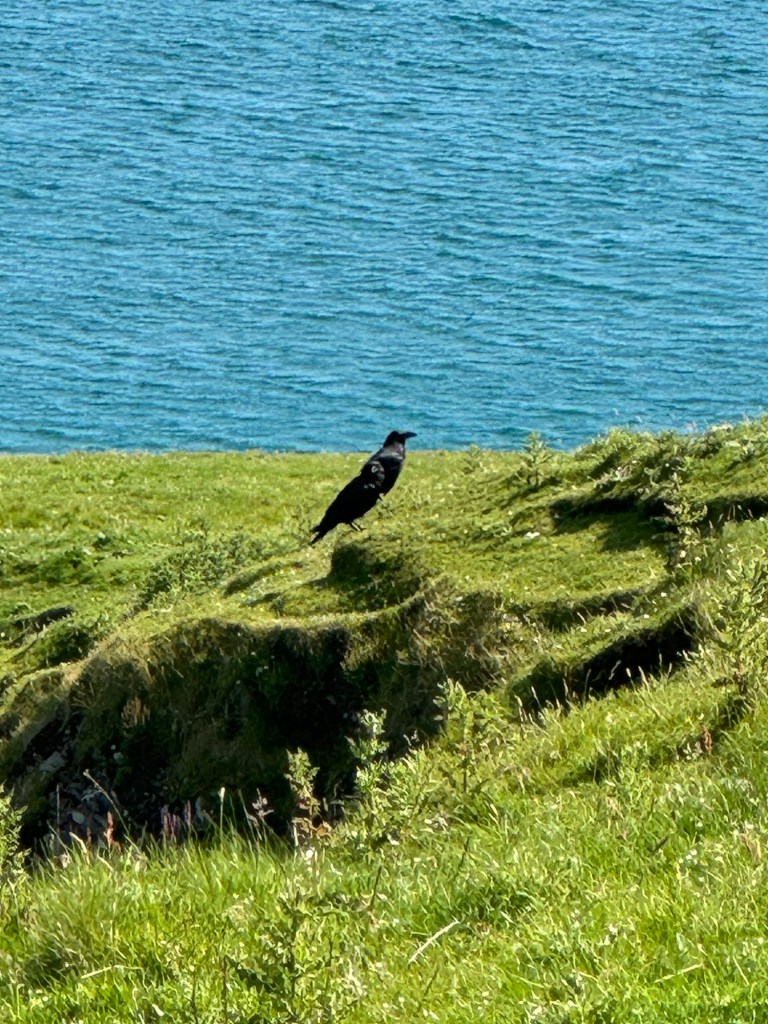


We stopped at a lot of artists and crafters studios, following the Shetland Craft Trail as much as we could. Some of them weren’t home, and some we couldn’t find, but we still found beautiful knitwear, paintings, prints, pottery, and jewelry to admire, and sometimes purchase, doing our bit to support the local economy!
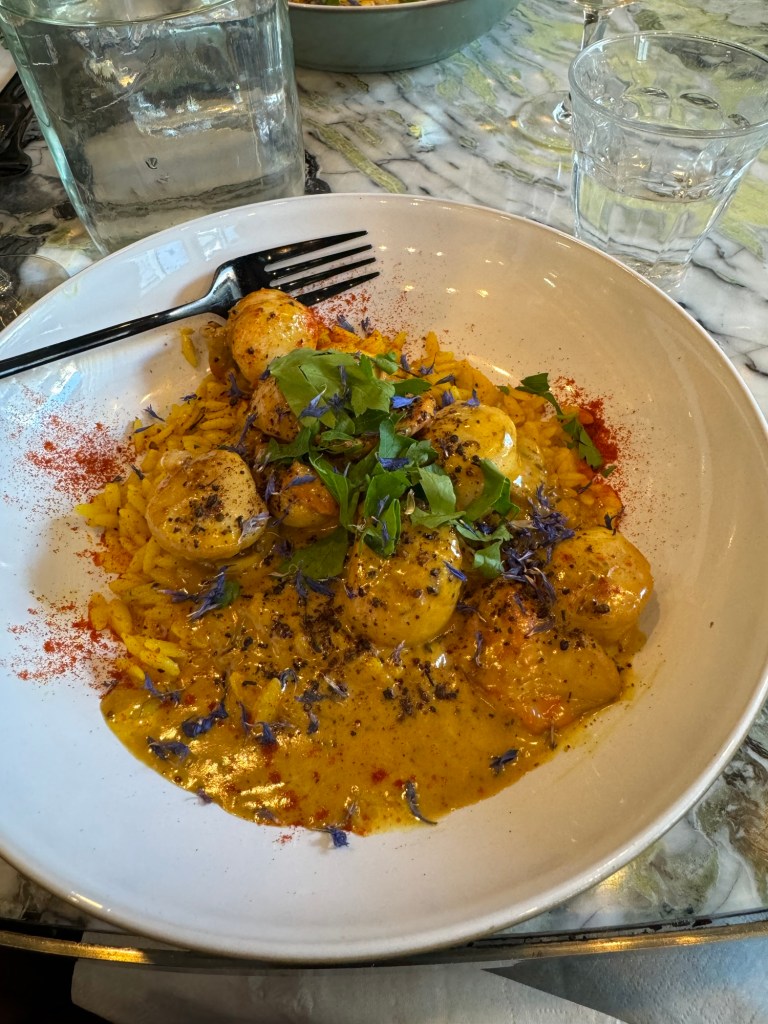
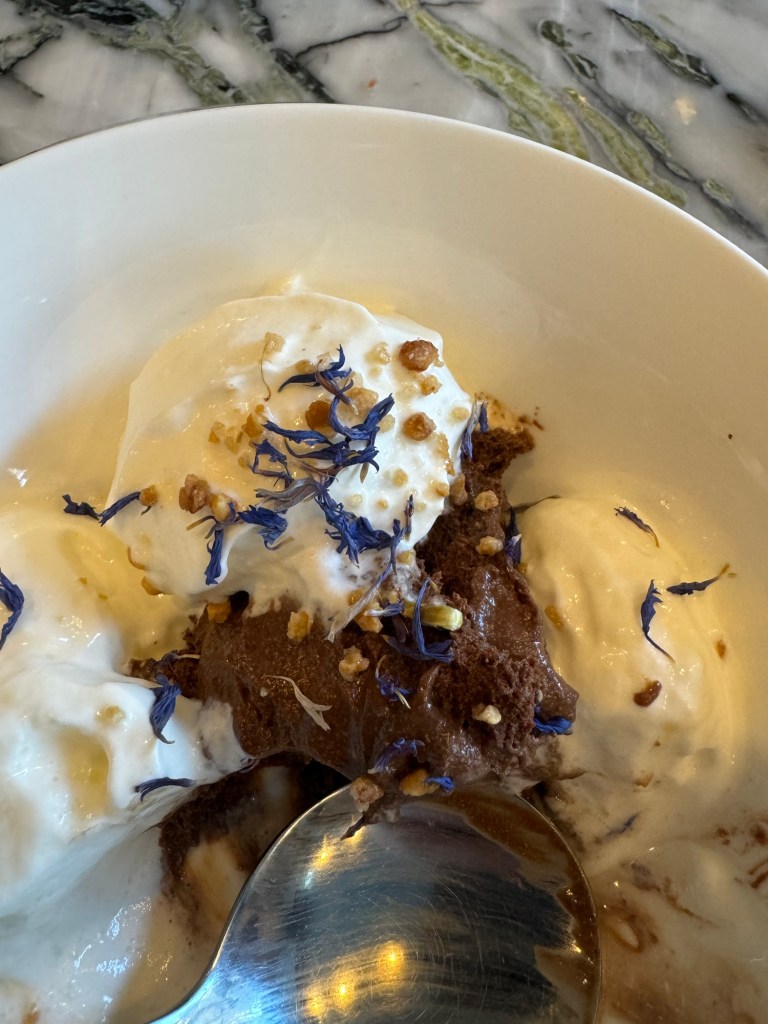
We had a fabulous lunch at the cafe in the community center in Hoswick, after leaving St. Ninian’s. Actually, we have eaten VERY well on Shetland! Wonderful fish, a fabulous meal at a French restaurant in Lerwick, and another fabulous meal in Lerwick the second night we were there; good food at the local cafes, wonderful seafood at Frankie’s—the northern most fish and chips shop in the UK, and the owner of the B&B we stayed in the last three nights on Unst was a very fine cook.


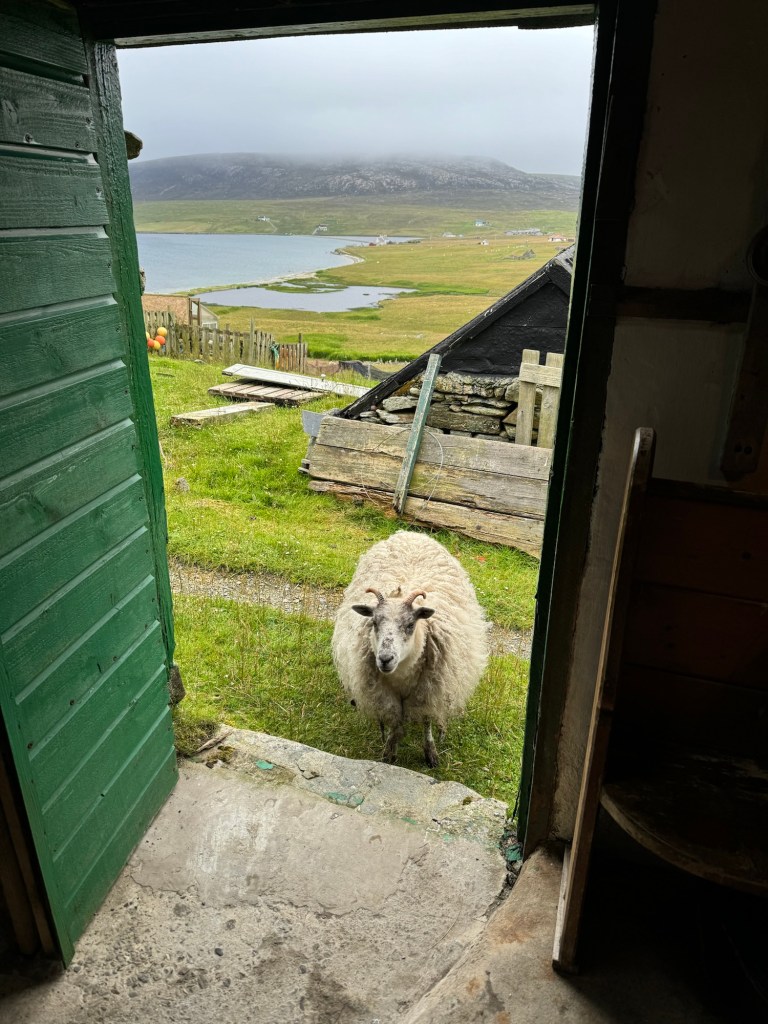
After the second night in Lerwick, we drove north and crossed over Mavis Grind—a narrow spit of land separating an inlet of the Atlantic from an inlet of the North Sea—so if you can throw, you can throw a rock from the Atlantic into the North Sea, or vice-versa. In the old days, they used to haul their boats over the grind rather than make the treacherous journey around the northern coast. We drove all the way up North Mavine to find the North Roe potter. We were happy to find her at home. She makes beautiful, unique pottery by rolling lace patterns into the clay. She was a delightful person—showed us how she makes her pottery, and of course, sold us some. She had sheep that were clearly pets. One kept coming to the door of the shed that served as her shop, looking in and even putting her front hooves on the doorstep as if she would come on in. She didn’t. But she clearly wanted the potter’s attention.


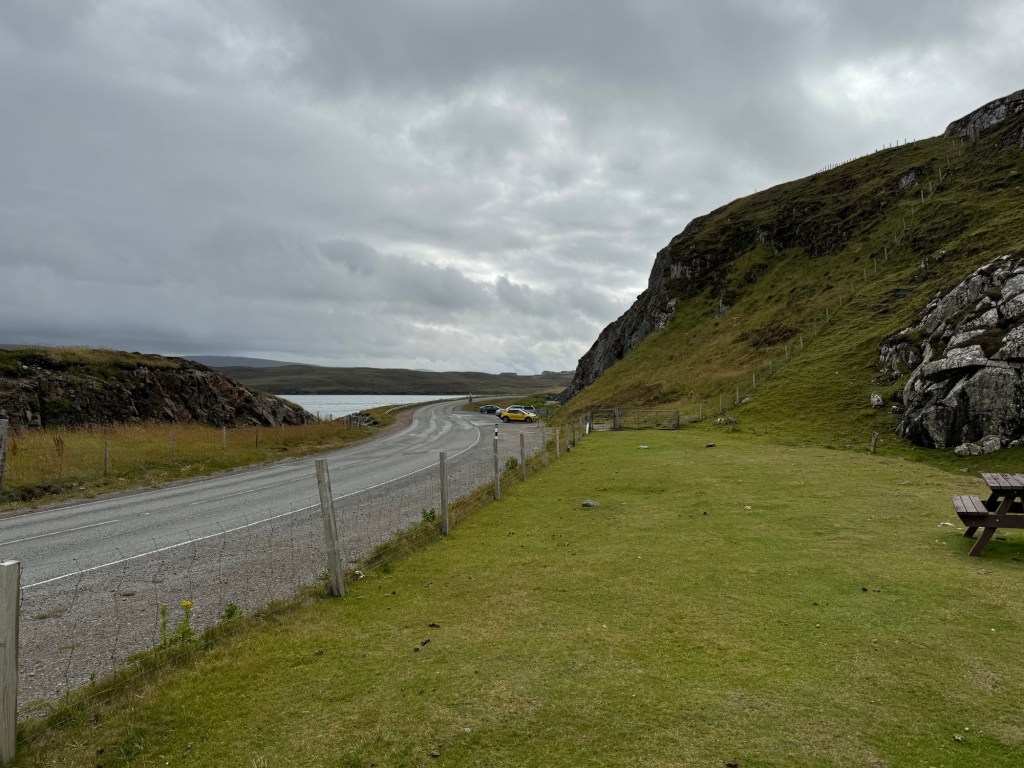



After our trip to North Mavine we had lunch at Frankie’s then headed north to catch the ferry from The Mainland to Yell, then drove like bats out of hell (that’s what it felt like) 20 minutes or so across Yell to catch the ferry from Yell to Unst, the most northerly inhabited island of Shetland, and thus the UK. I was driving at this point, and we were the first off the ferry, so the first in the line of cars racing from one ferry to get on the other. And it did indeed feel like a race. I was going at a pretty good speed on an unknown road with unpredictable sheep on the sides of the road, with cars on my tail urging me to go faster. I wasn’t about to pull off and let them pass and risk losing my spot on the ferry! The other people staying at the house with us that night were a few cars behind us, and they agreed that I was going quite fast enough, thank you very much, and they couldn’t believe there was a car trying to pass us all. So I felt vindicated.


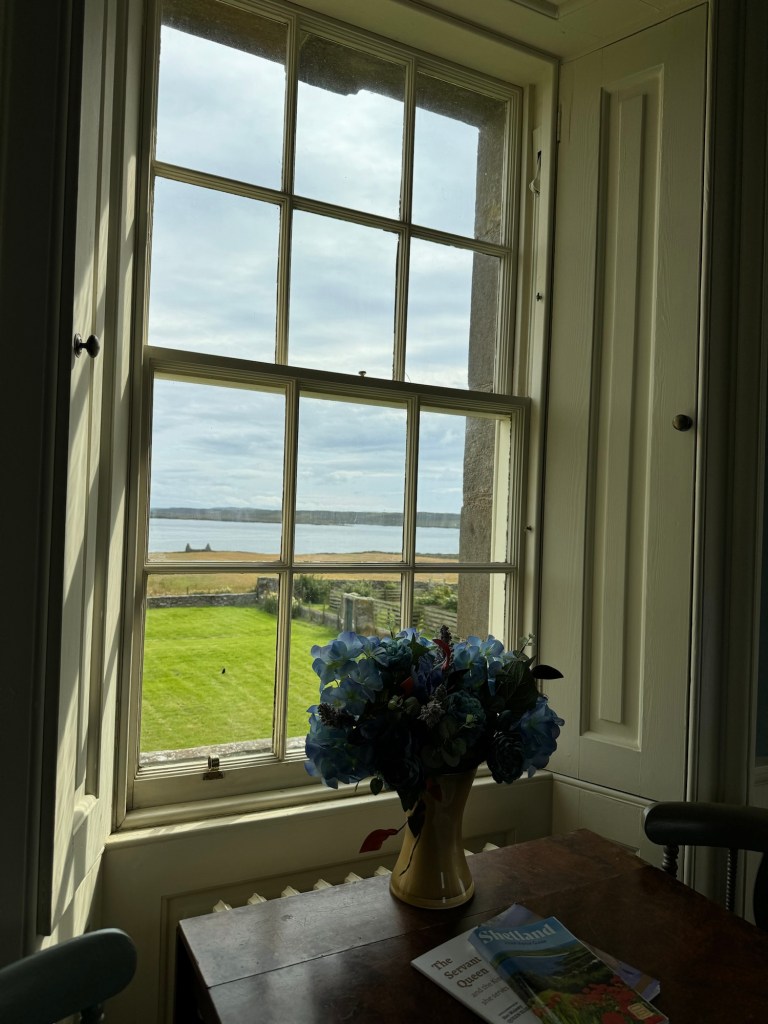
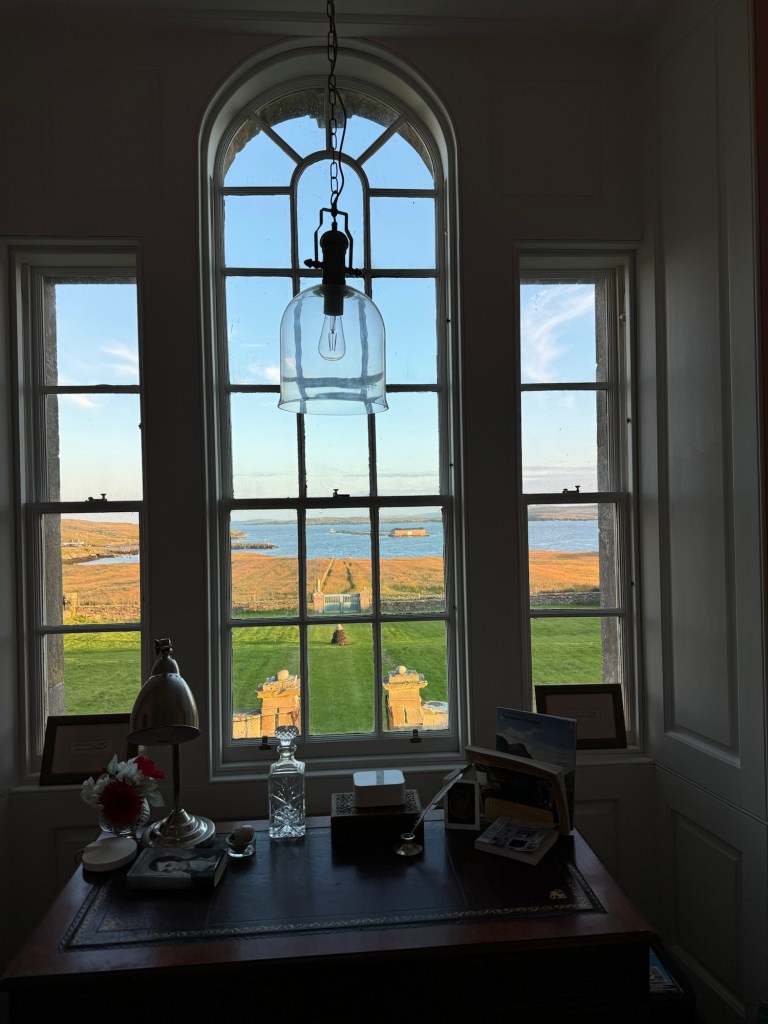
We stayed at a Georgian manor house built in 1756 (I think that’s the right date). It has been lovingly and beautifully restored by its current owner, Martin. It was a beautiful place to stay. We were there for three nights, and I wish we’d had longer. We saw so much on Unst, but could have used more time simply sitting and reading, writing, and knitting in the sitting room with gorgeous views of the water and windswept hills out every window.



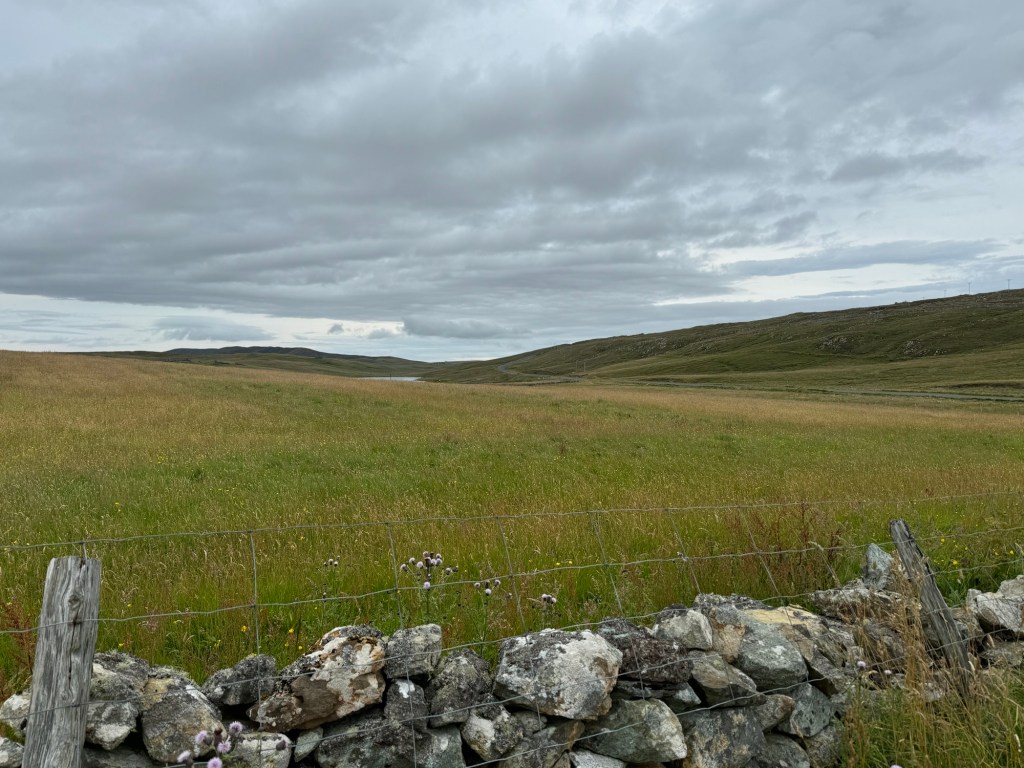
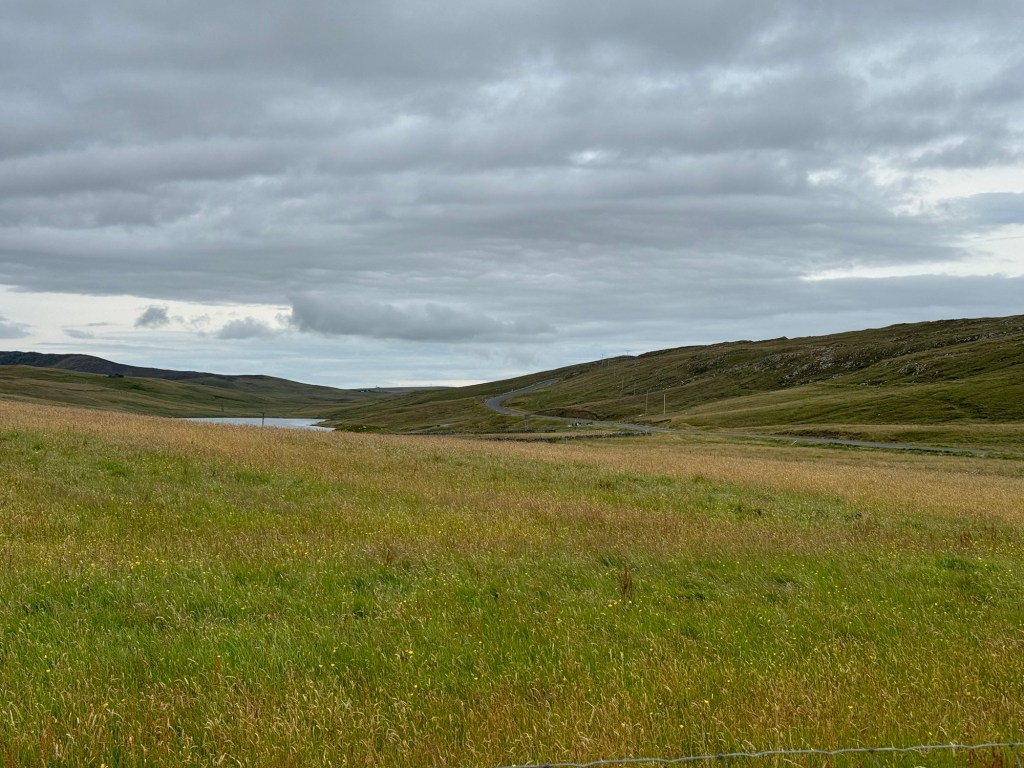


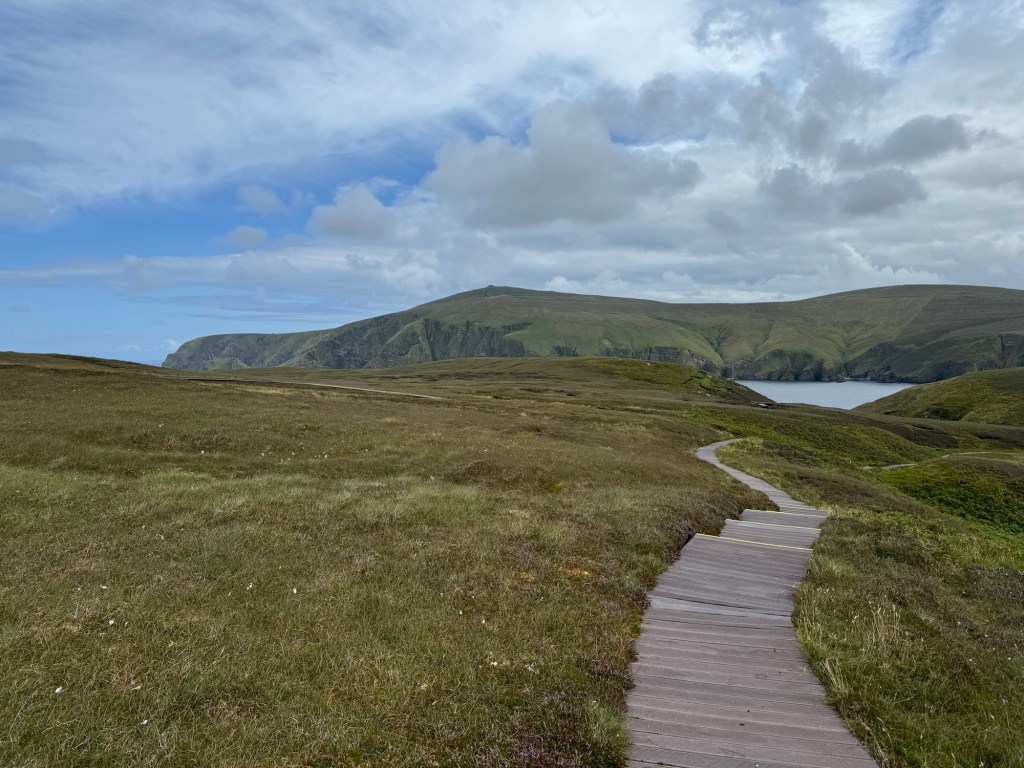
Martin knows the island very well and lent us his ordinance map of Unst with everything marked that we should try and see. The first full day we were there we headed north and walked across the Hermaness nature sanctuary—a 45 minute walk, mostly on boardwalk—to the western side of the island where there are tens of thousands of gannets on the cliffs and steep, rocky islands. We saw several of the big skuas. We later learned that the skua population has been hit hard by avian flu. As you enter and leave the preserve, you walk across a disinfecting mat that is part of the effort to stop the spread of avian flu. The cliffs and rocky outcrops were stunning, as were the tens of thousands of seabirds. We had hoped to see puffins, but apparently we didn’t go quite far enough along the coastal path. Later, at lunch, we talked to people who had seen them. Rats. Next time.
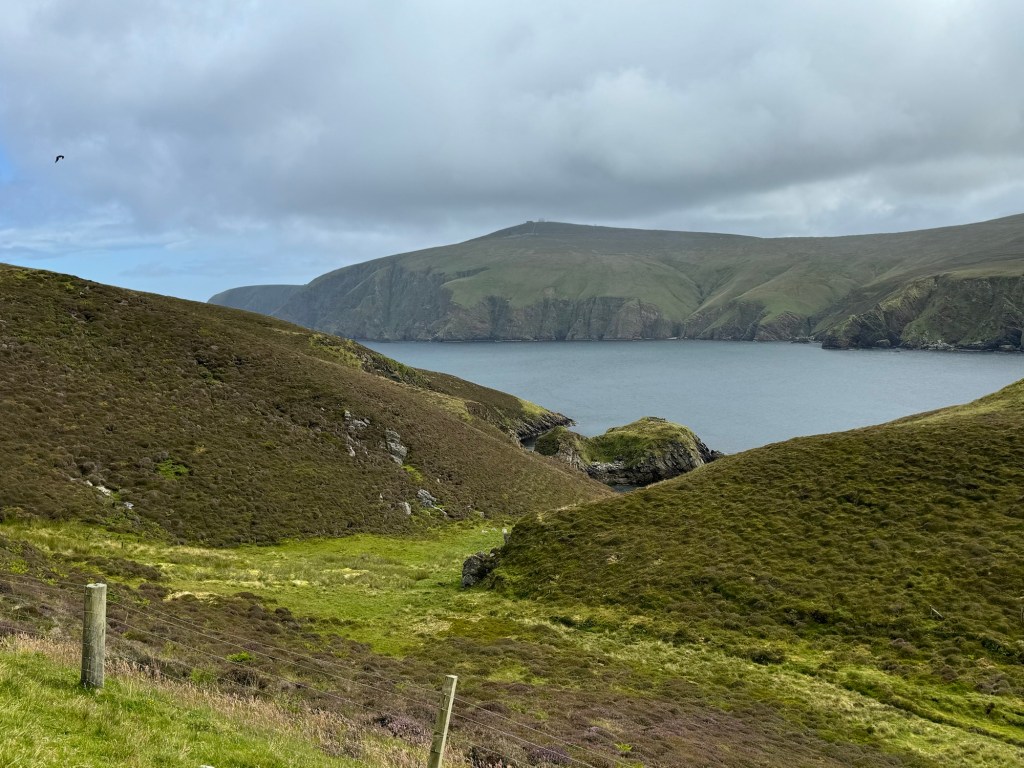
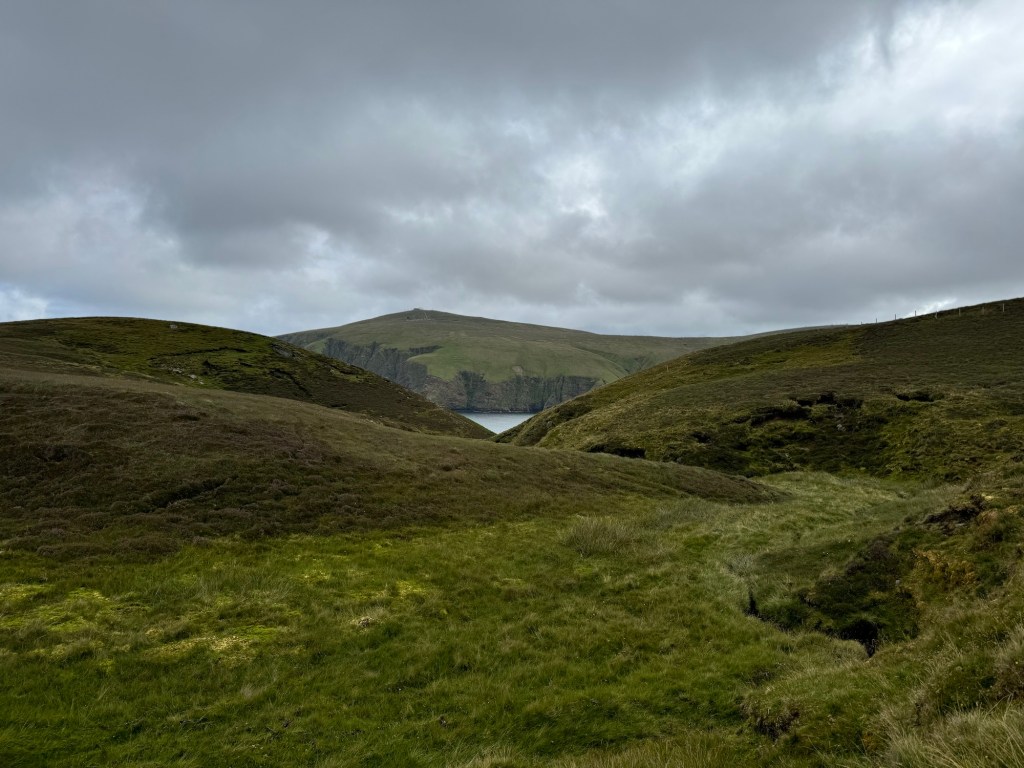


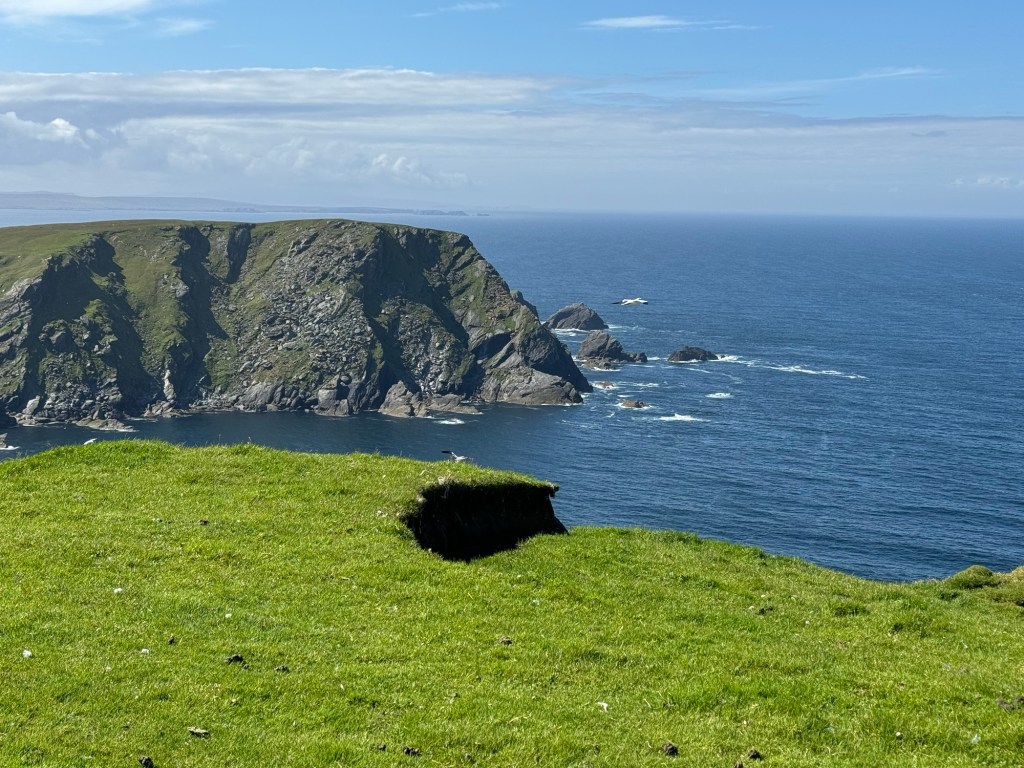

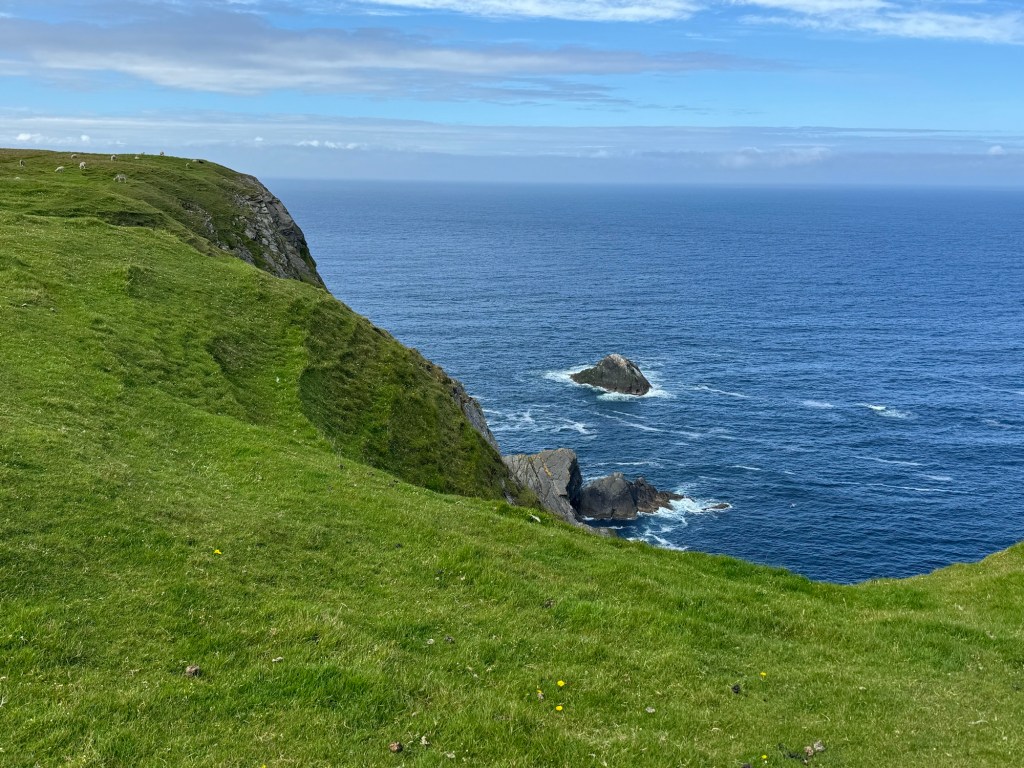
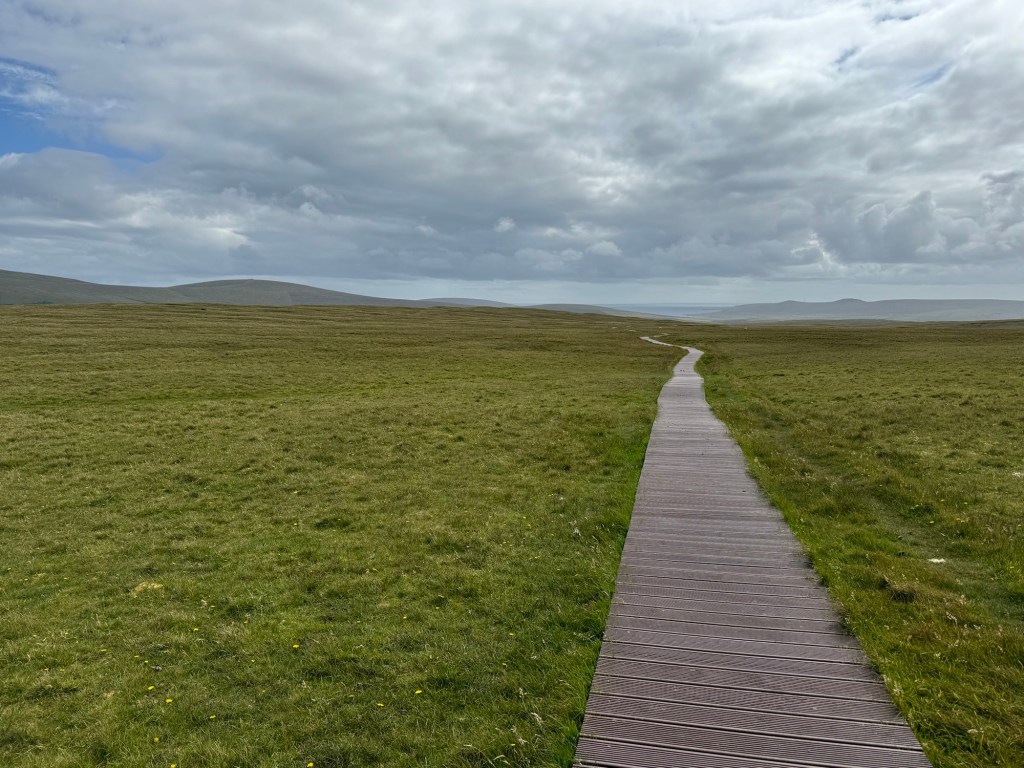

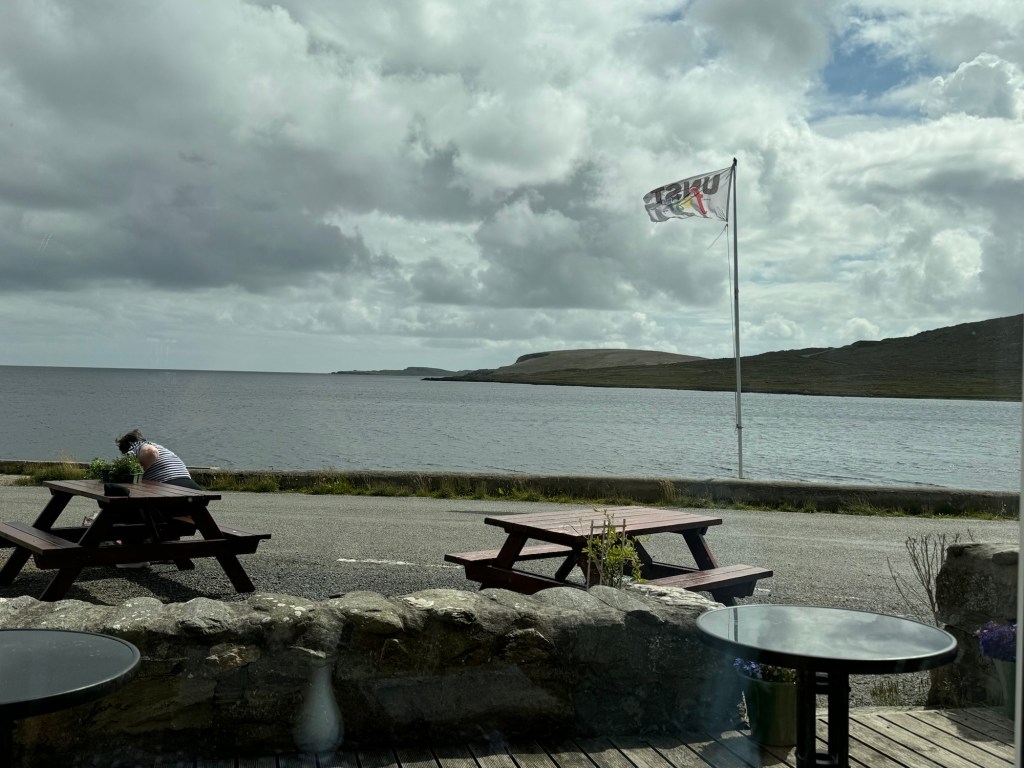
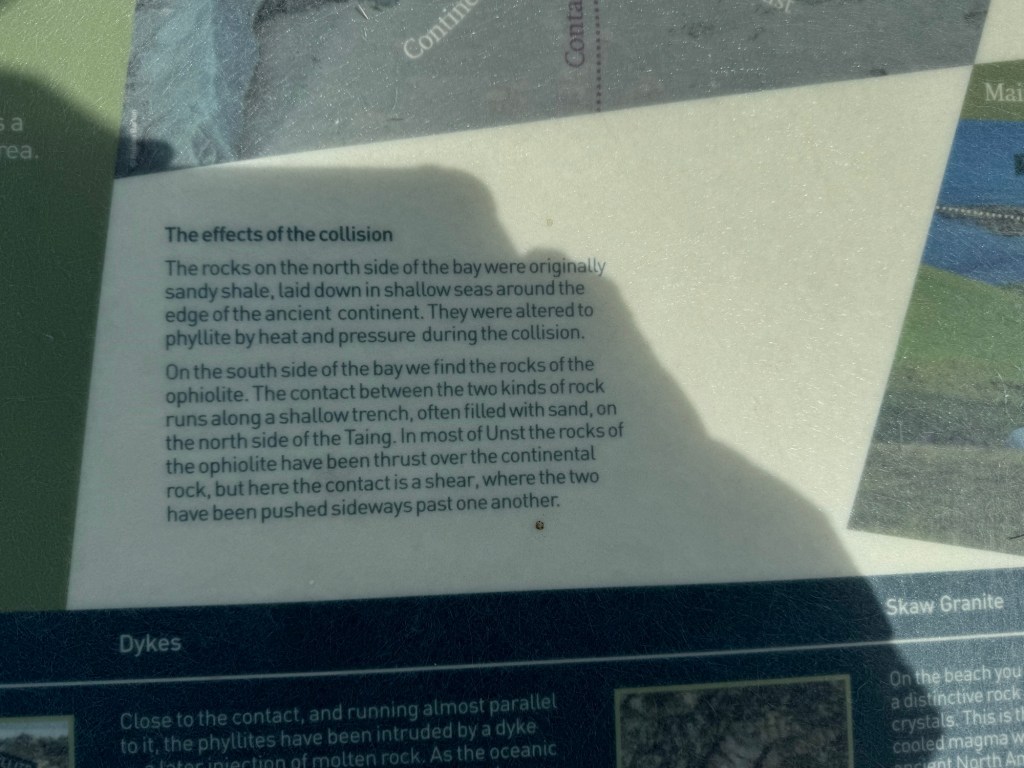
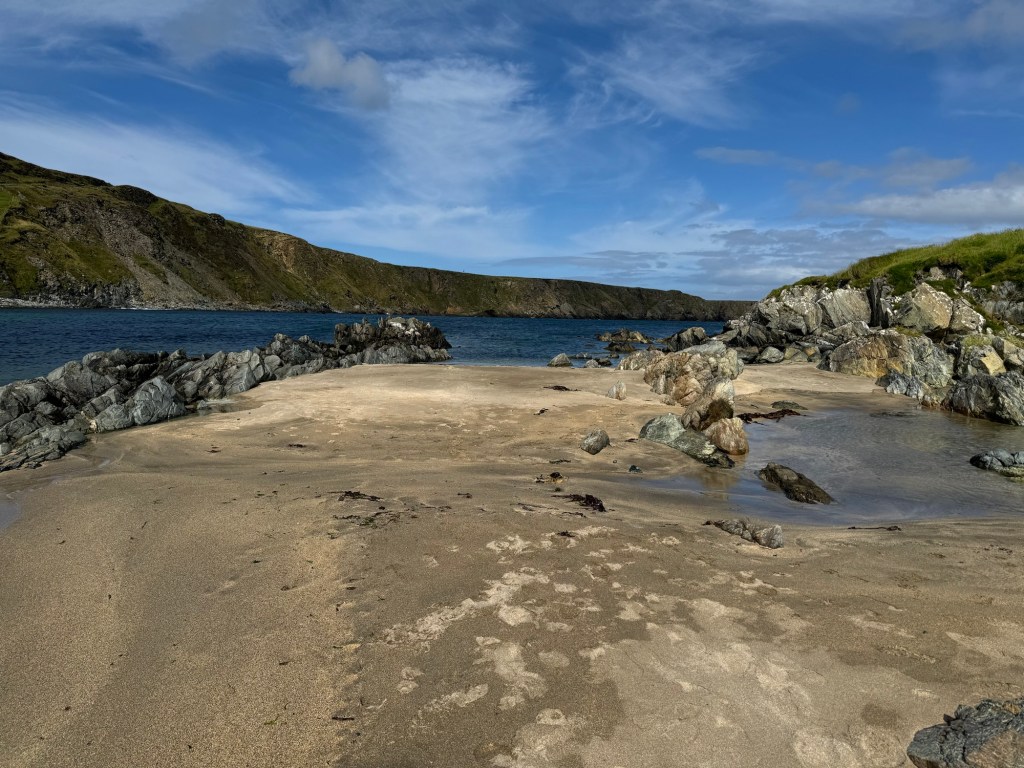
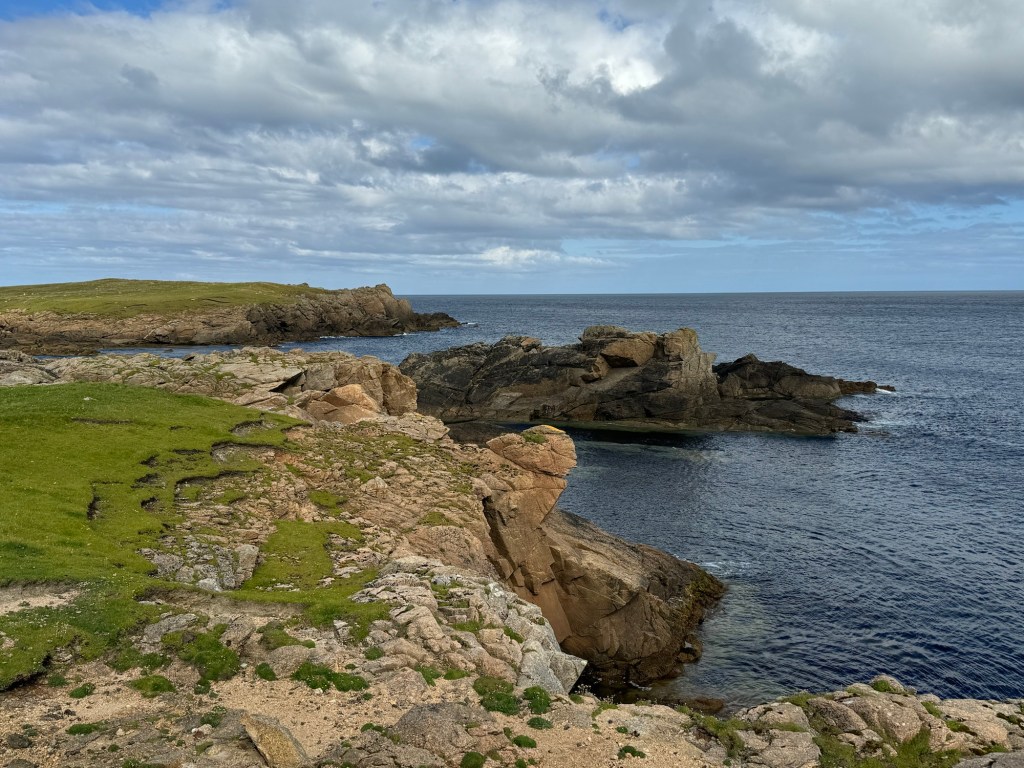
After our long walk to Hermaness and back, we drove to Haroldswick to have lunch at Victoria’s Vintage Tea Rooms, “Britain’s most northerly tea rooms!” Frankly, anything on Unst can claim to be “Britain’s most northerly.” Another really nice meal and a cute place. Then it was up to Norwick Beach to see the Taing (something that makes geologists very excited) and take another walk. We drove by the Space Port. Yes. There is a Space Port on Unst. It’s weird. And takes itself far too seriously. They had security personnel monitoring what is a public road, a public beach, and public walk. They were clearly trying to be intimidating. There was something James Bond-ish about it. Martin said they sometimes try to stop people from going up there. They stopped him once, when he was driving guests up to that area and told him it was private property and they couldn’t go. This former police officer was having none of it and told them they might get away with that with tourists but it was a public road and public area and they needed to get a way from his car because he was going on. They had a security guard at the beach, making his presence known, and another on the road as we left. This place would seem like a joke, but Lockheed Martin has invested in it, so it’s not just a joke. I can’t believe they are really going to launch rockets from here. What effect are rocket launches going to have on the tens of thousands of birds in the area? Or the seals and otters? Like Hermaness, this area was full of seabirds.







seriously.
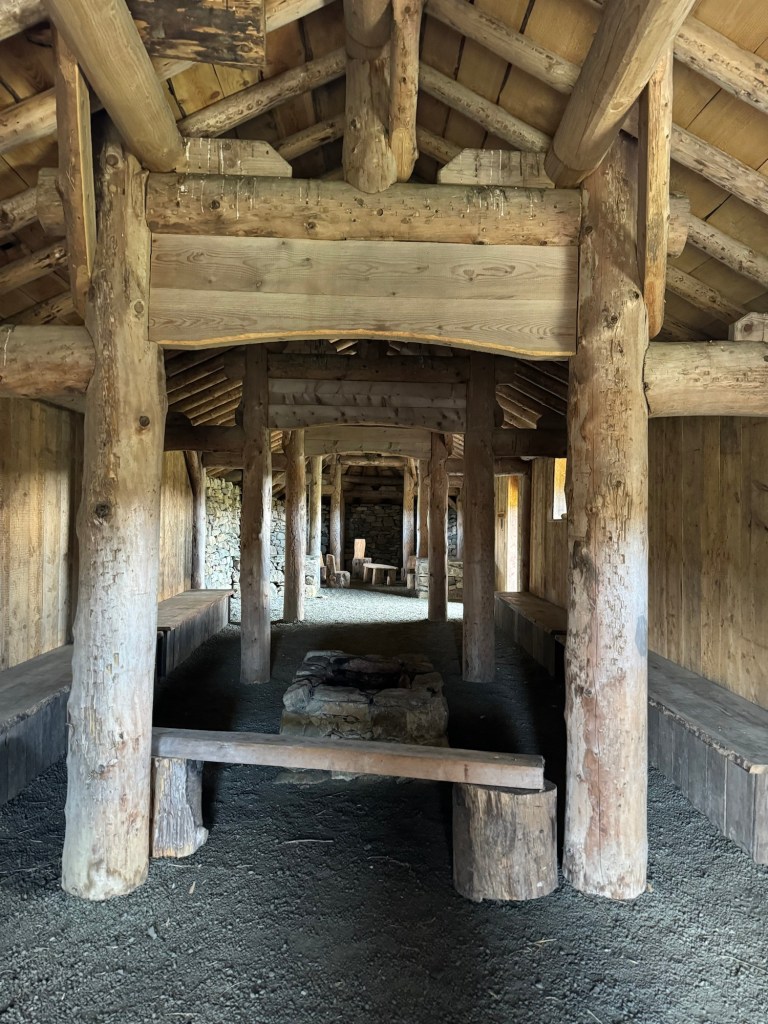
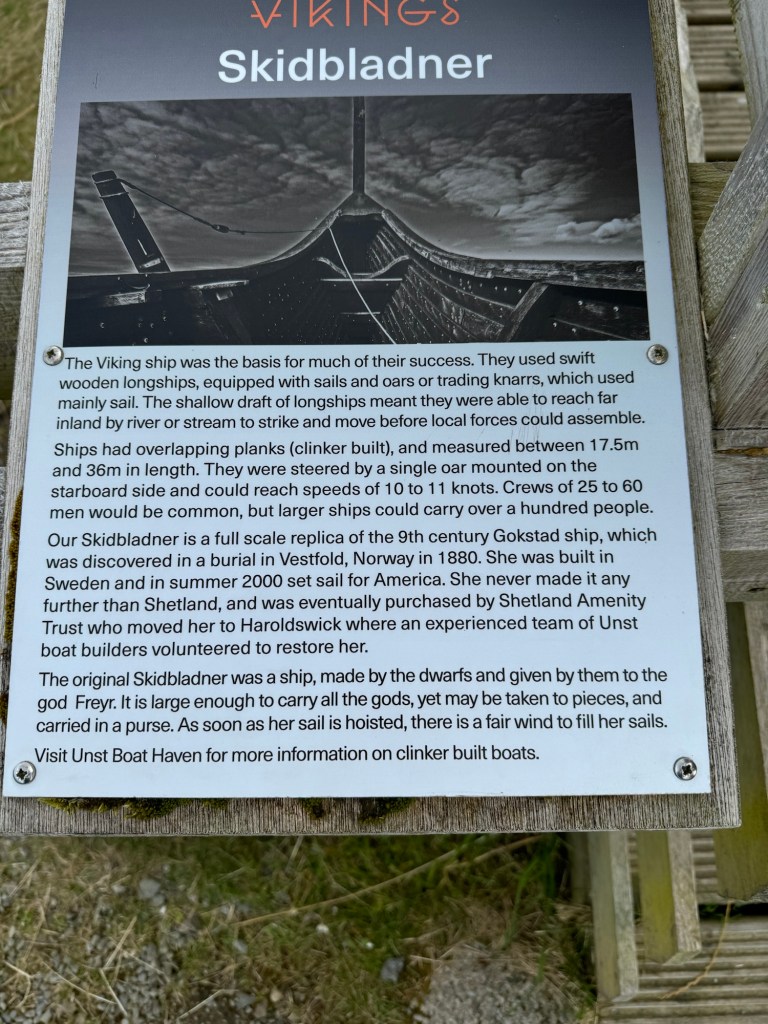
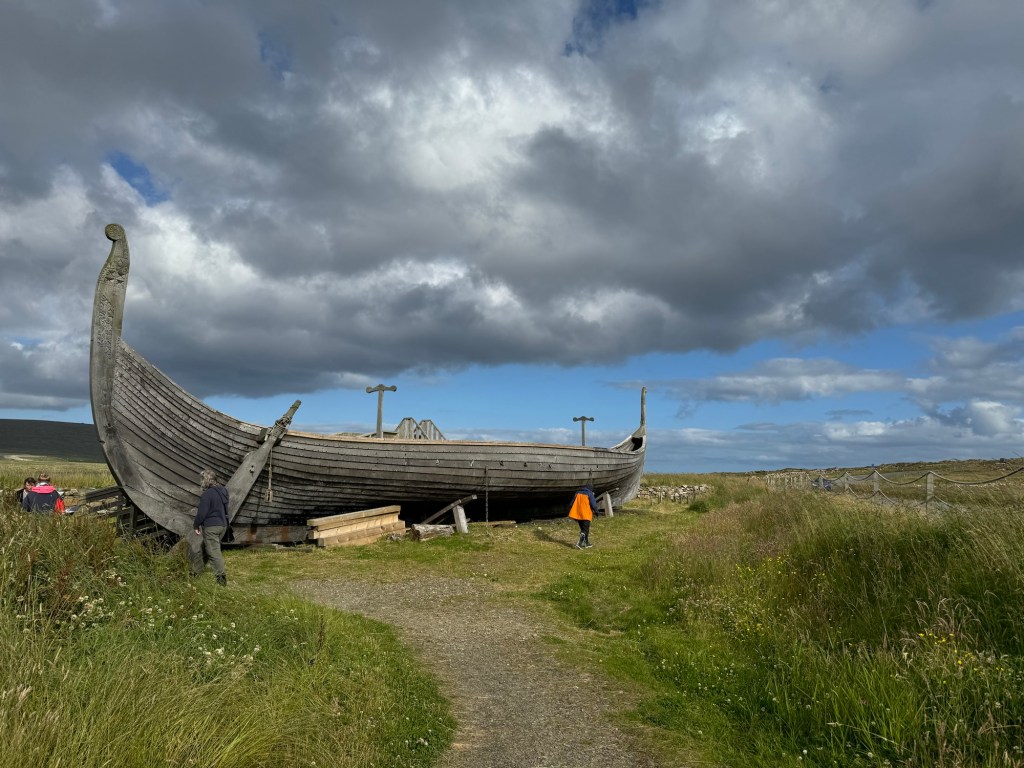
On our way back to the southern part of Unst and home for the night we stopped to visit the replica Viking long house and ship. The long house was built based on the ruins they have excavated on the island. The ship was built in Norway with the intention of sailing it all the way to America. They got as far as Shetland, realized just how hard it was to sail and row these things, and didn’t go any further. So it has stayed in Shetland as a museum piece. Those Vikings were incredibly fit to be able to sail these across oceans.





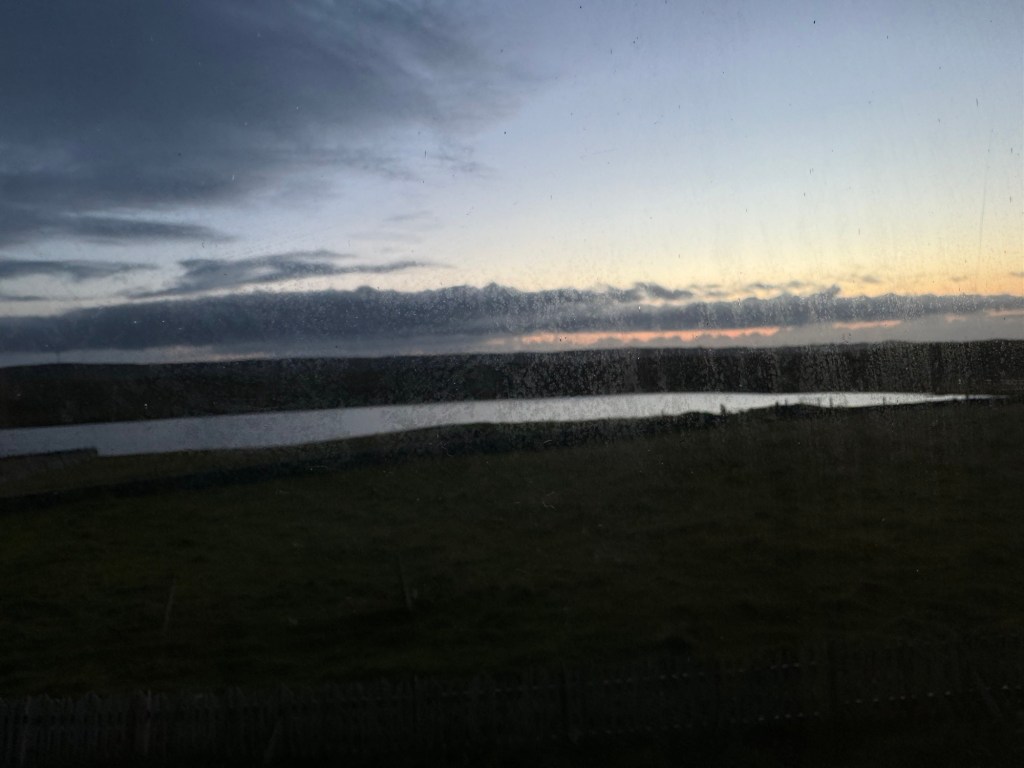
This is getting too long for one post! Day two of our adventures on Unst will have to wait for another post. Shetland is so remote, and takes a lot of effort to reach, but I can’t believe I won’t be back. I want to come and stay for a while—a few months, maybe a year? The wind, water and sky are wonderful for clearing away the cobwebs—it is a restorative place—both invigorating and relaxing. I ended each day feeling a good kind of tired—a “spending the day outside in a beautiful, windblown place” kind of tired.

I am very behind, but going to try and finish the Madison Ave Presbyterian Church part of the tour. As they did when I was on sabbatical and trying to blog my way across France and Spain, tiredness and lack of adequate WiFi get in the way of keeping caught up!
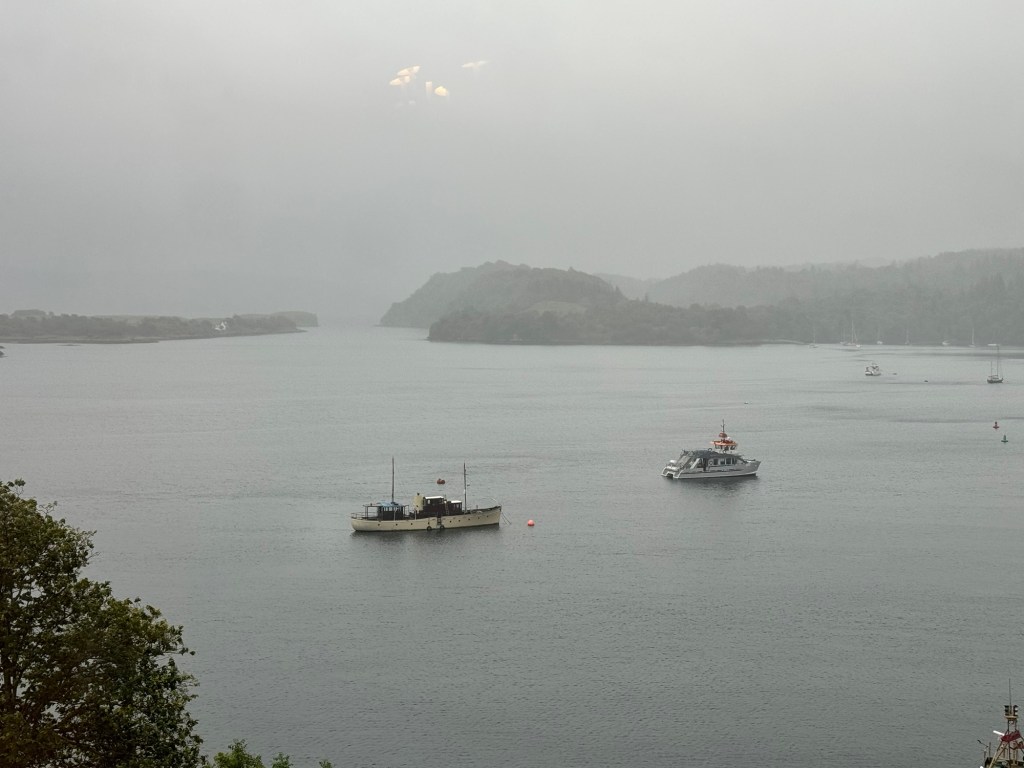
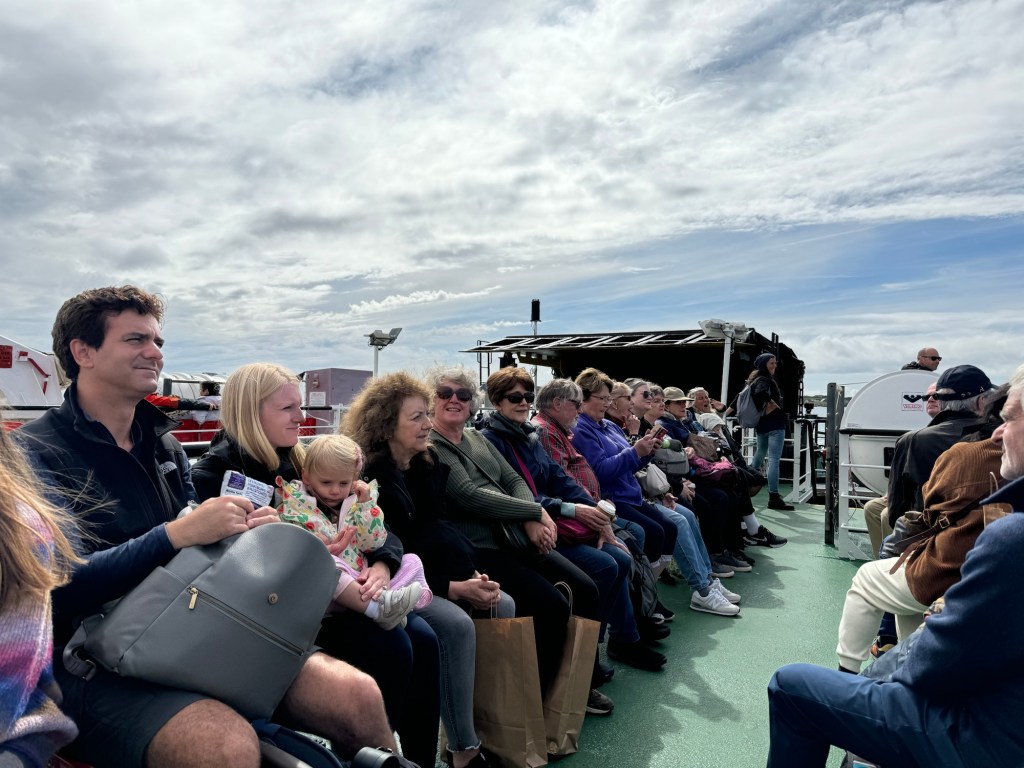
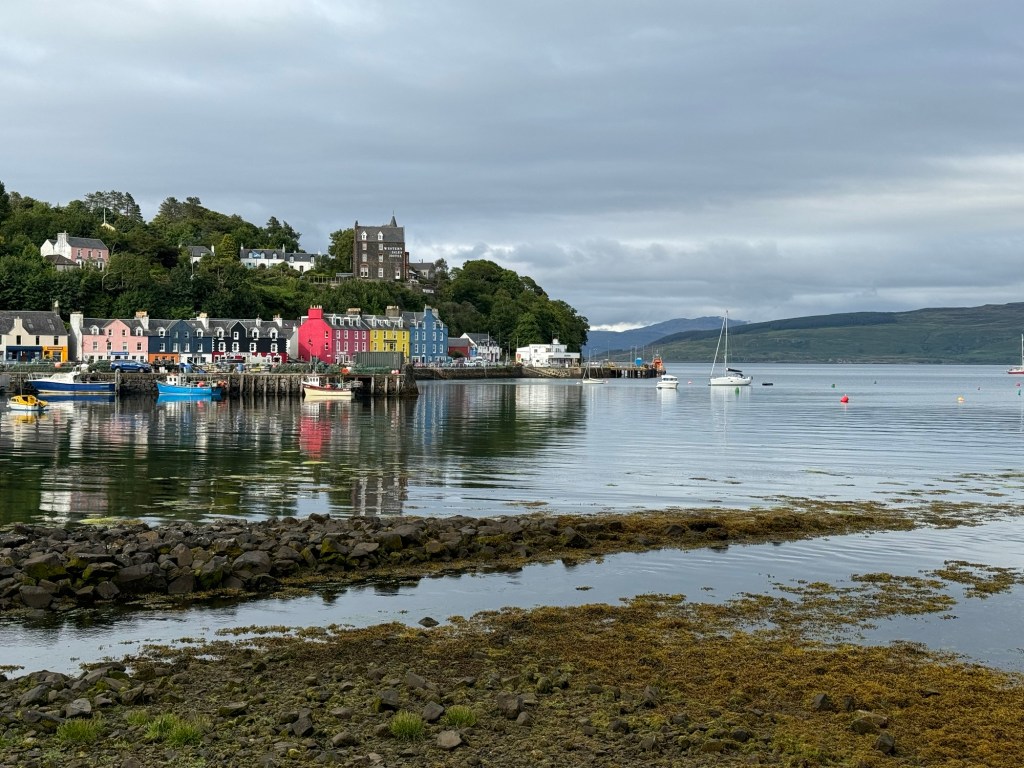
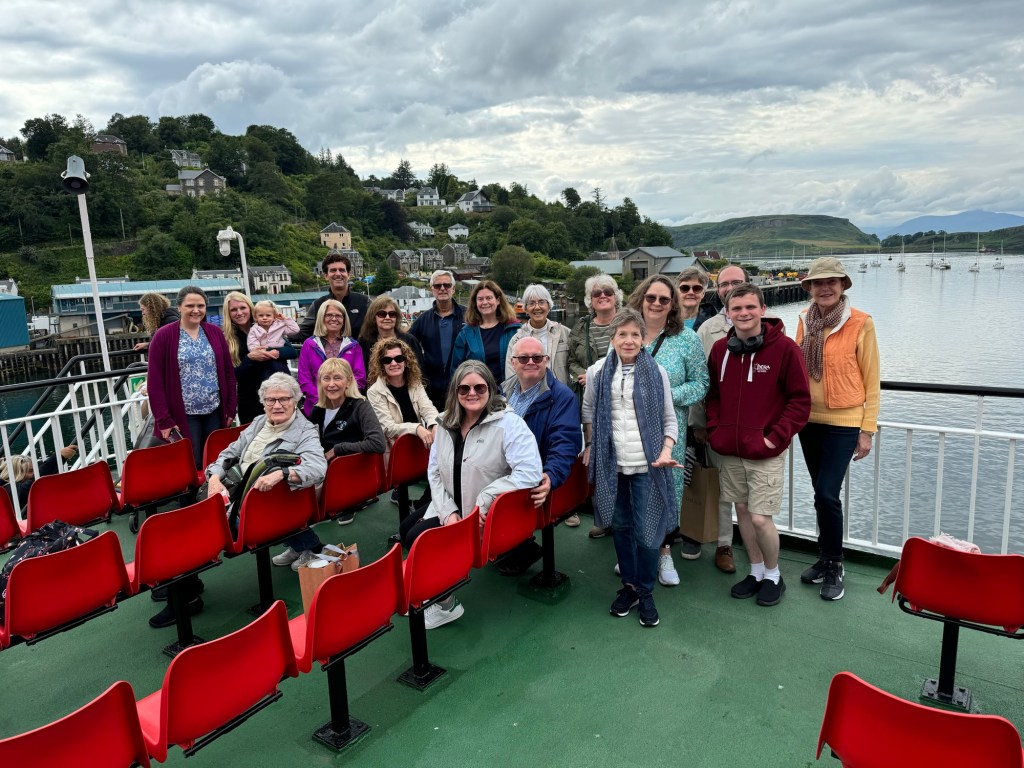
On July 19th our group had a free day in Tobermory. Many of us had signed up for the boat trip to the Isle of Staffa to see the puffins and Fingal’s Cave. As we were about to board the bus for the long trip back over to Fionnphort (the same place where we caught he ferry to Iona the previous day) we were notified that the Staffa trip was canceled because the boat had mechanical problems. We were grateful we got the notice before making that long, winding bus ride! Several of us decided to take the ferry across the Sound of Mull to Kilchoan, on the peninsula of Ardnamurchan. It is the most westerly village in mainland Britain. The views from the ferry were stunning, of course, and we got a pleasant surprise when we arrived and learned that the Kilchoan community Highland Games festival was taking place. We walked a mile or so up the road to the field by the community center and watched a couple of the “heavy contests”—tossing the caber and the shot put—heard a pipe and drum band, had yummy, homemade cake, and just enjoyed stumbling upon a local bit of culture.
I’ve just realized I have no photos from the highland festival—only videos and I don’t think I can post a video here. But here are some photos from the ferry ride over and back.


On the way back, we had another delightful surprise—several of the young people that were part of the pipe and drum band played for us the whole ferry ride back. I think I’ve figured out how to post a video—so here’s a short clip. You all need to say a prayer that the WiFi is strong enough to post this!


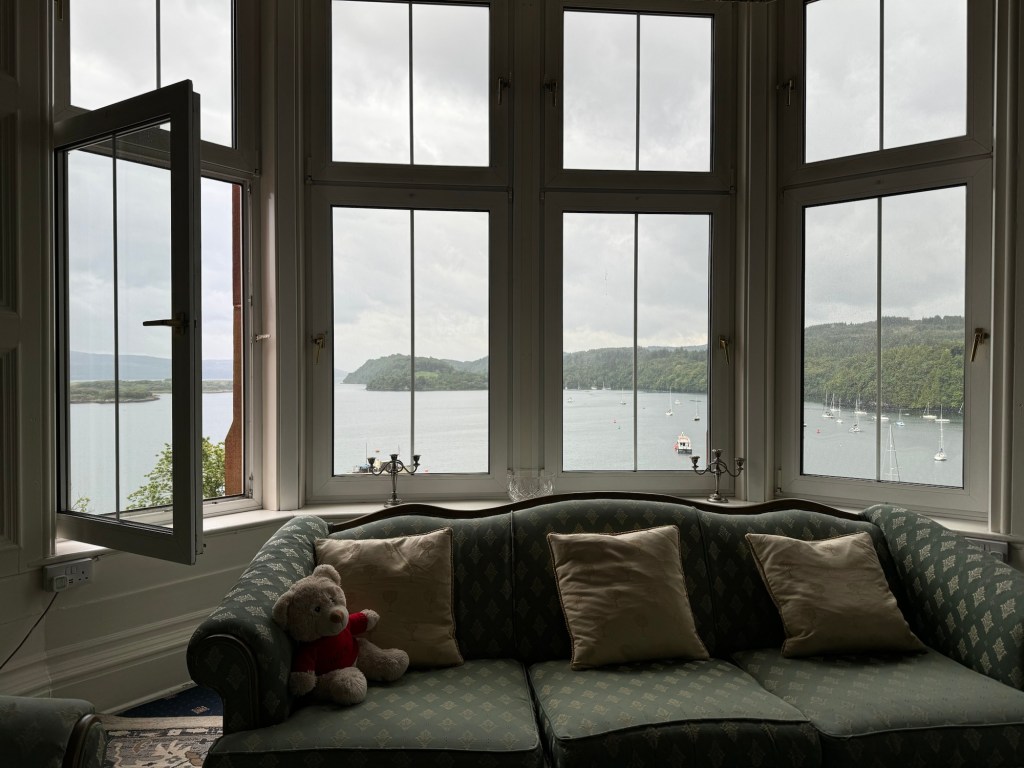
After dinner we had a final evening prayer service since there would be no space for a closing worship service at the hotel in Glasgow. There was a beautiful, big sitting room at the inn in Tobermory that was perfect for such a gathering. It was a wonderful, quiet time to reflect on the trip together.
The next, final, day we made our way to Glasgow—back across Mull by coach, ferry across to Oban then a bus ride down to Glasgow which involved a quick stop for photos at Loch Lomond. On the ferry from Mull to Oban a few of us saw a seal and dolphins—that was a great way to finish our time on the islands.

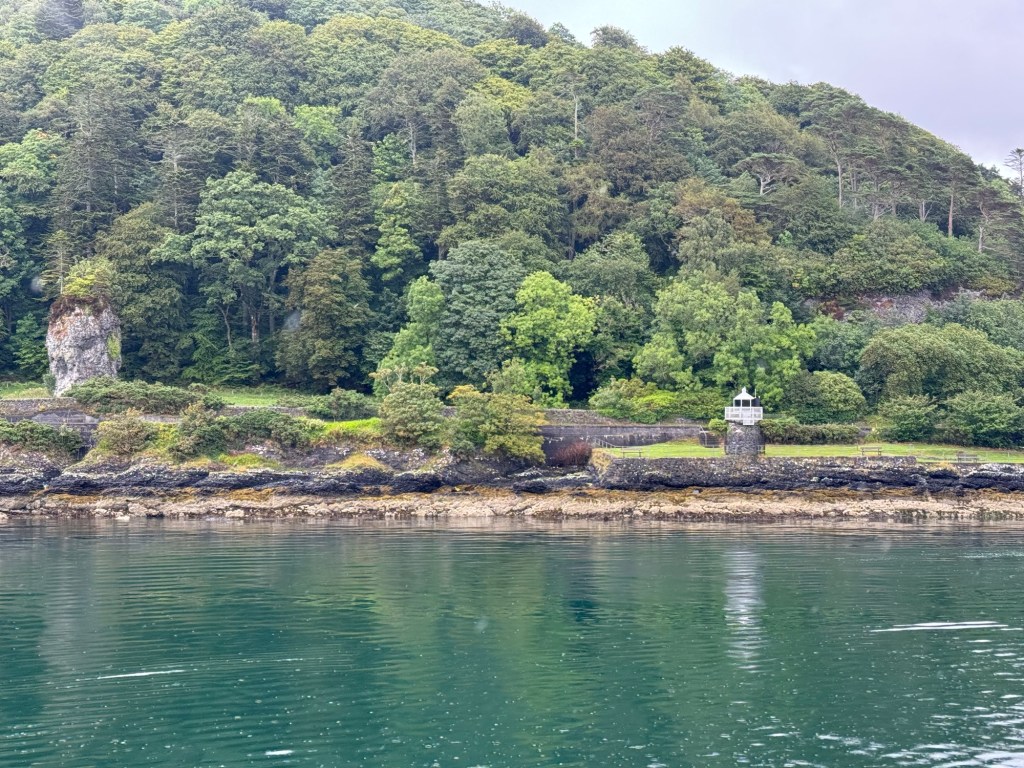

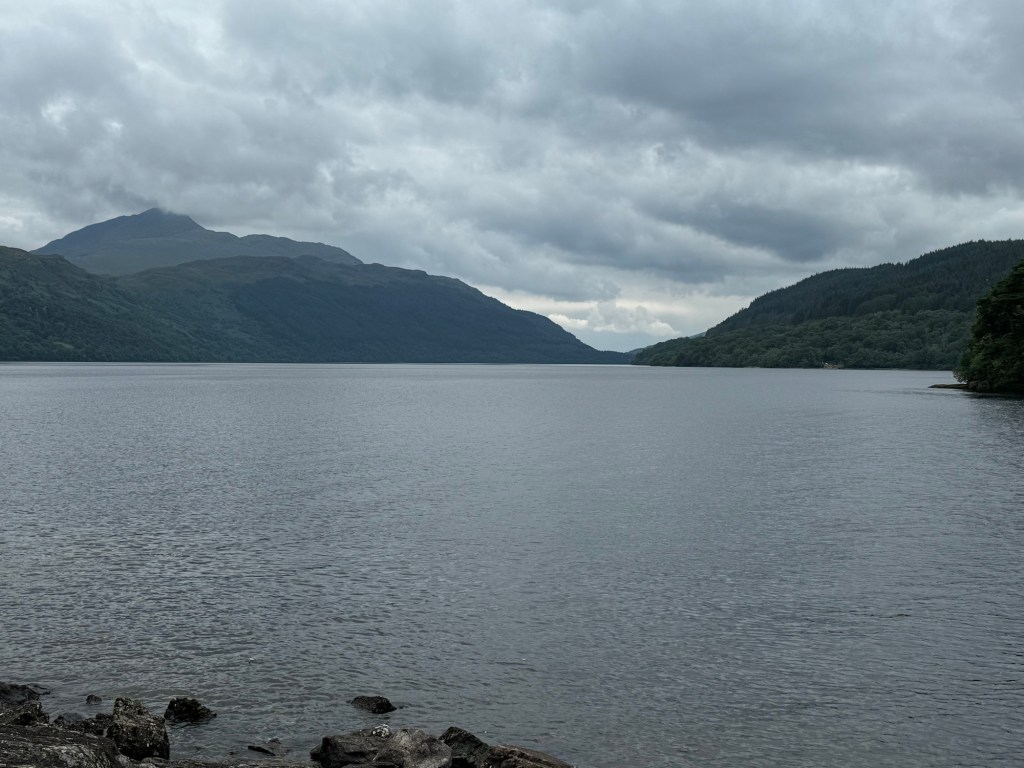
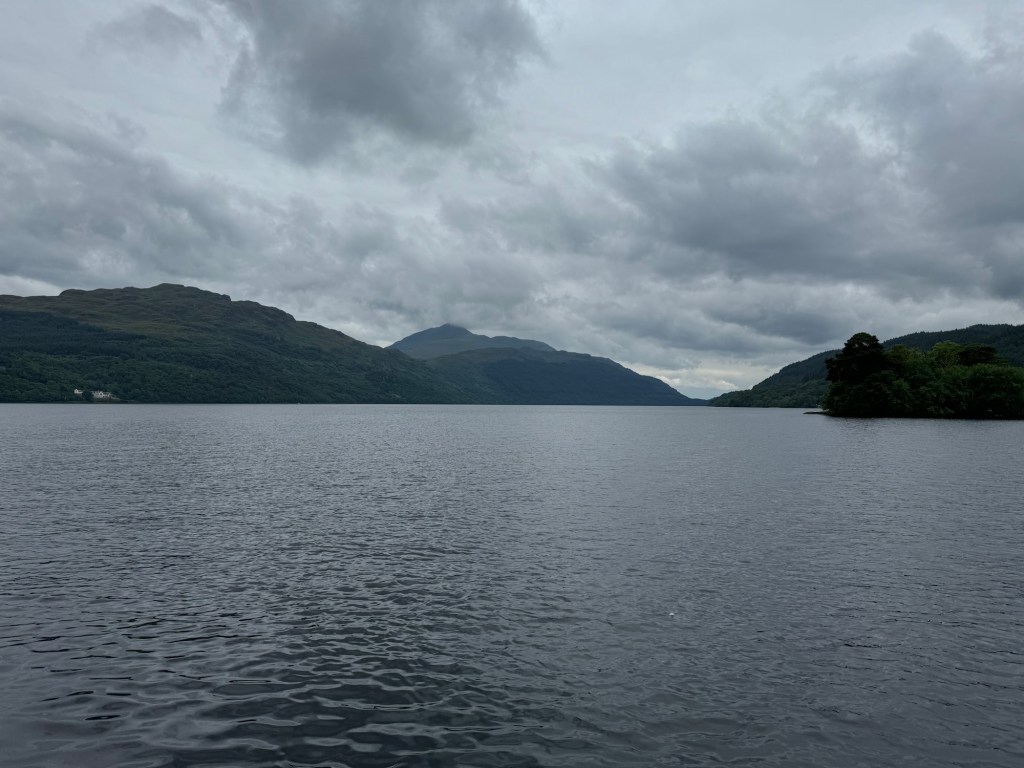

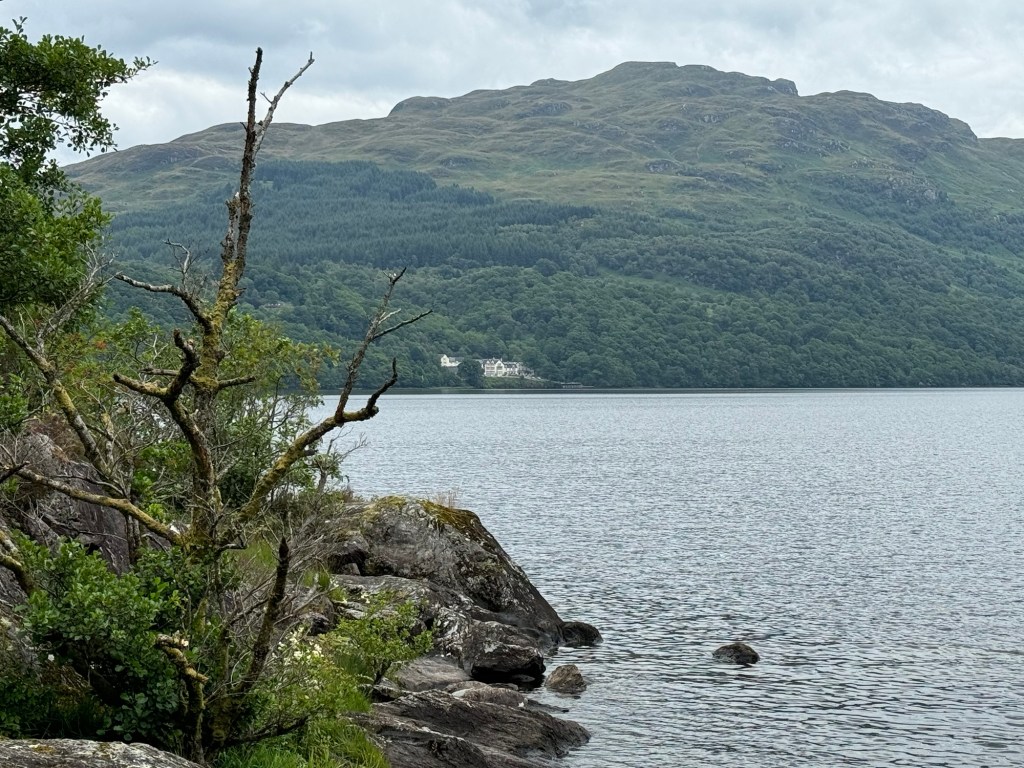
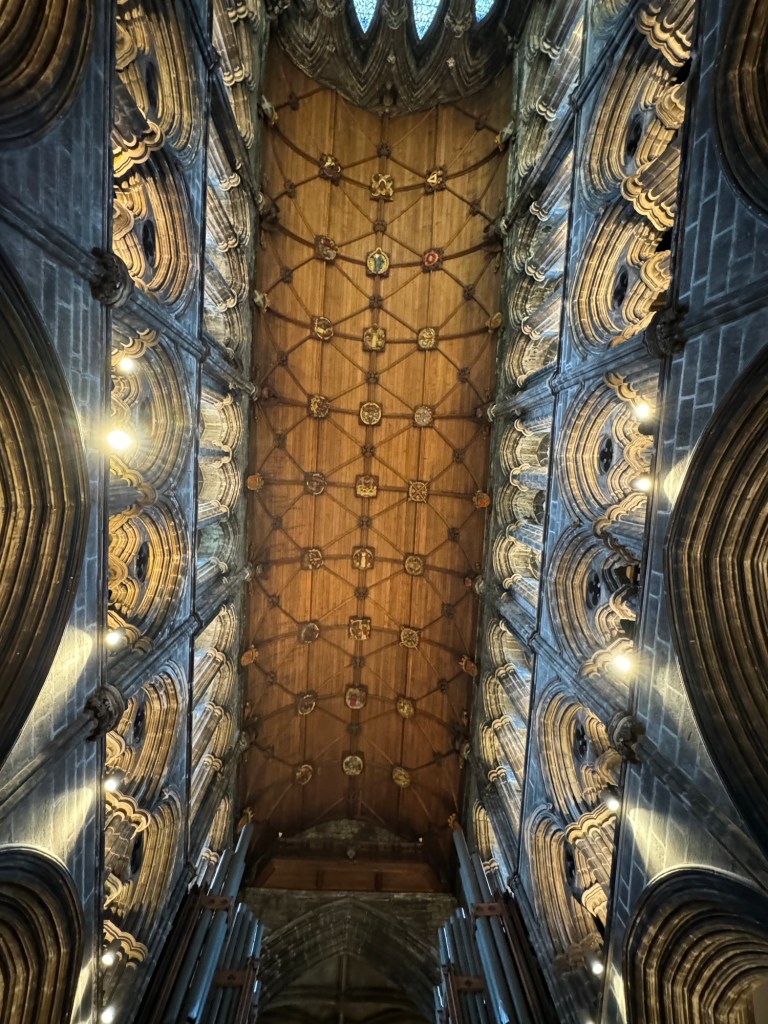
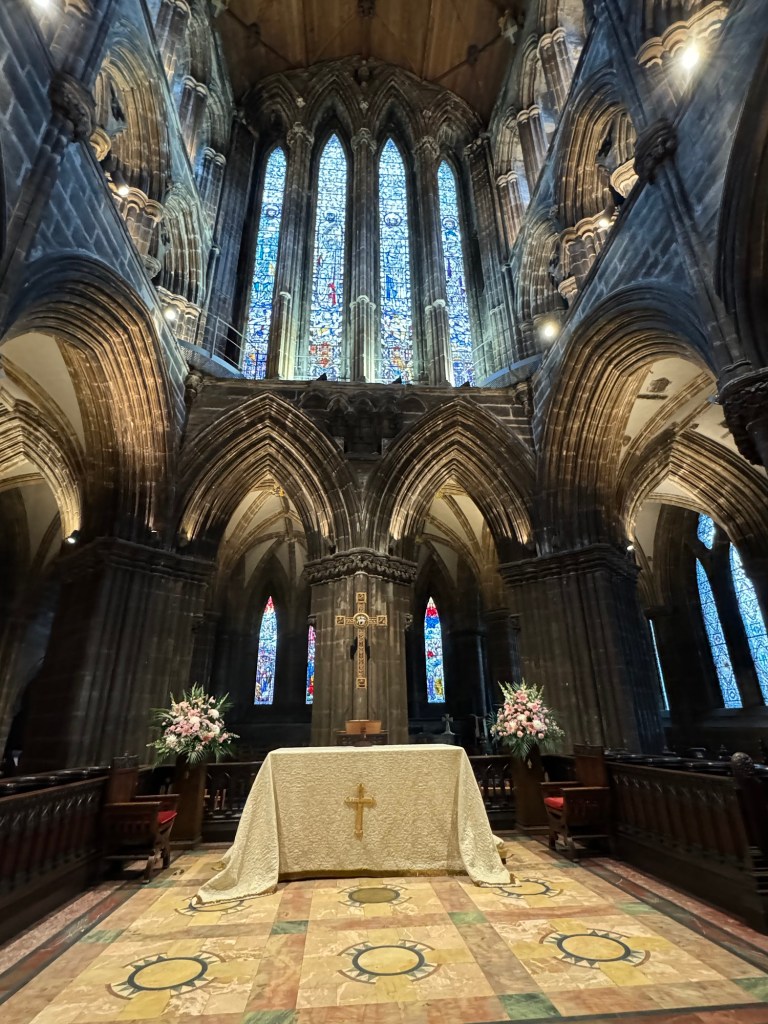
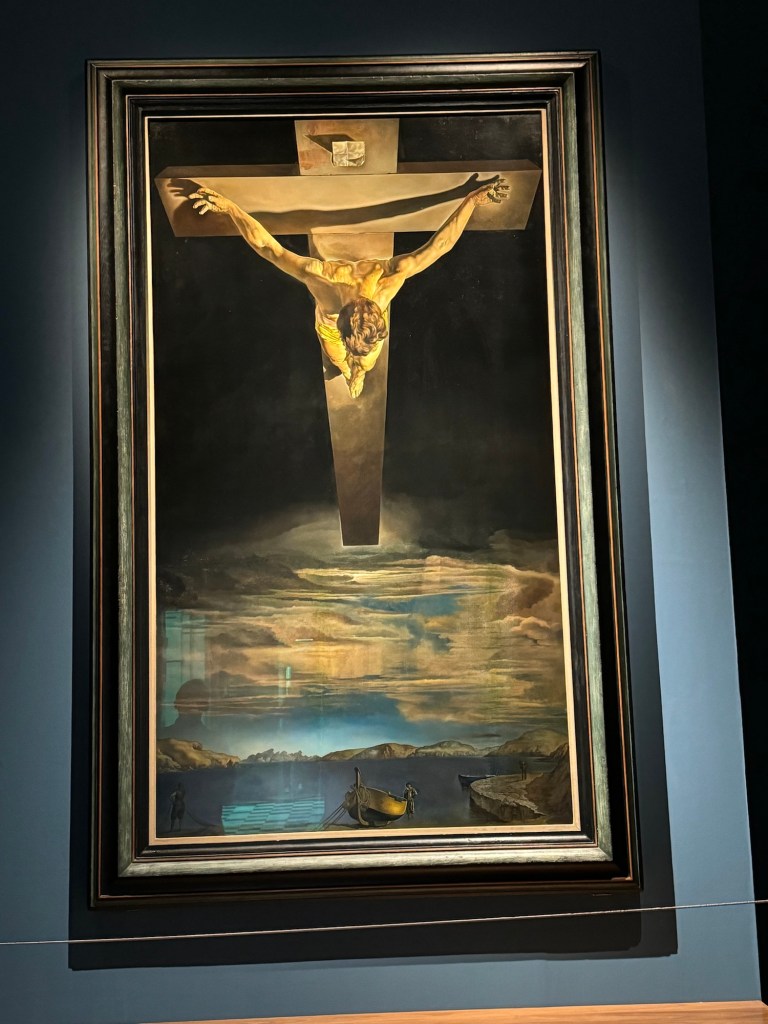
When we arrived in Glasgow we had two final pilgrimage stops to make—first to the Glasgow Cathedral where St. Mungo is believed to be buried (it is Church of Scotland now). We happened to go in at the tail end of a wedding and enjoyed being amongst the congregation at the recessional. The windows in the cathedral are gorgeous. I’m going to have to go back when I have more time. Our final stop before dinner was a very quick one at the Kelvingrove Art Museum to see Dali’s “St John of the Cross”. It is powerful and moving.


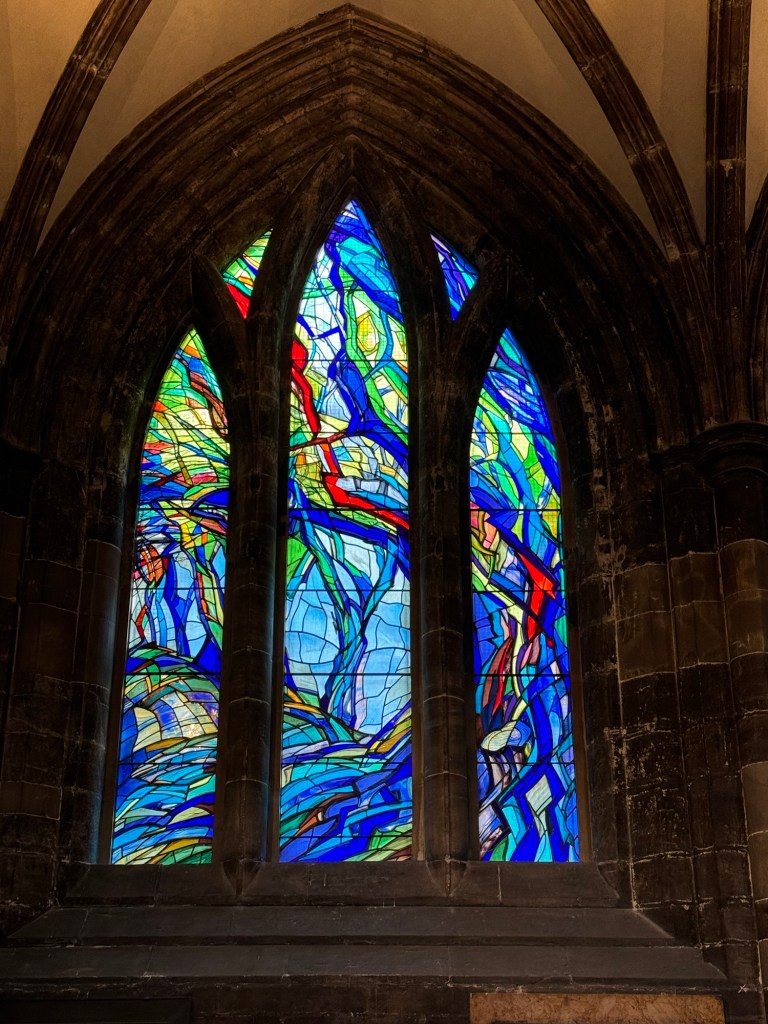
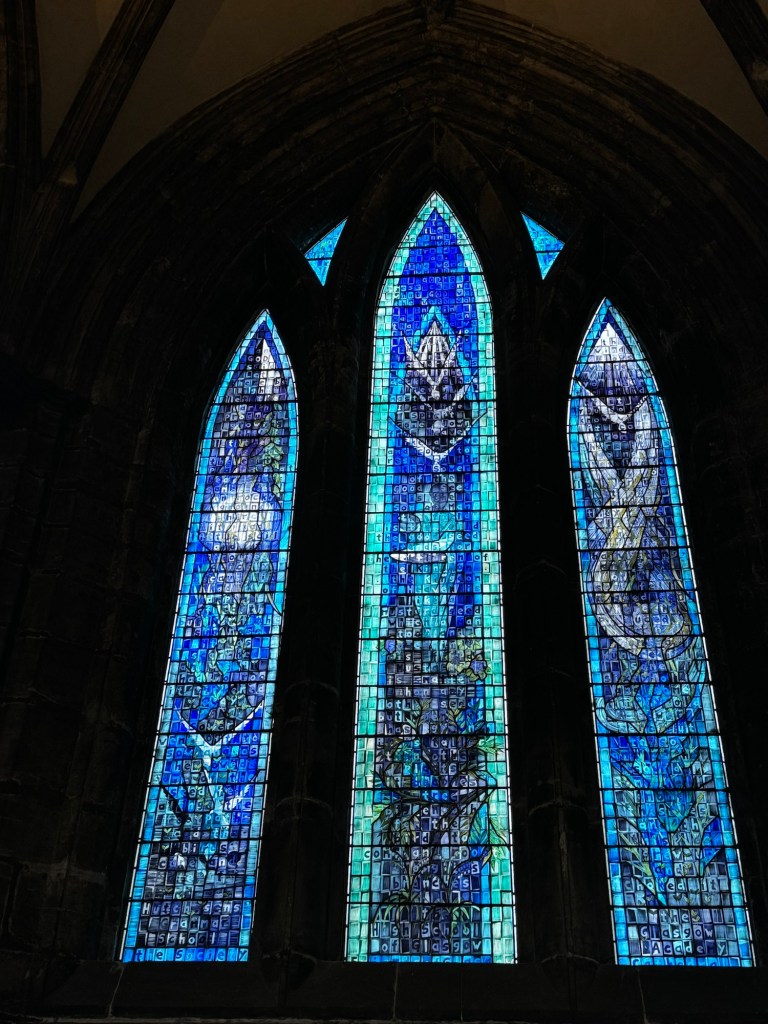

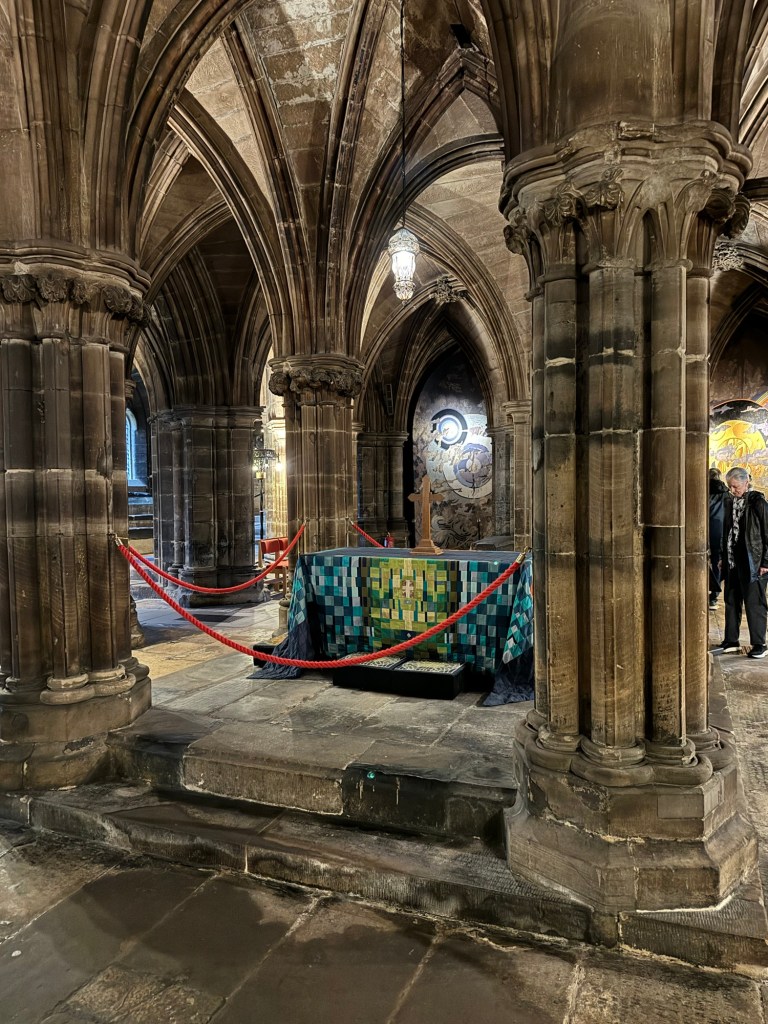


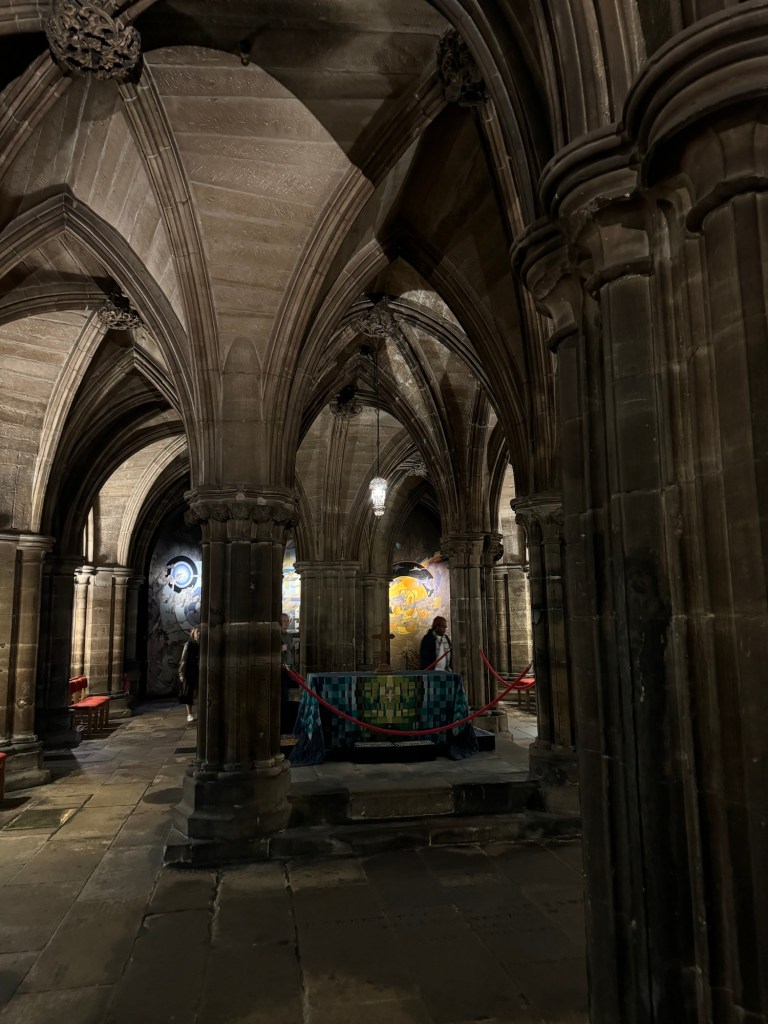


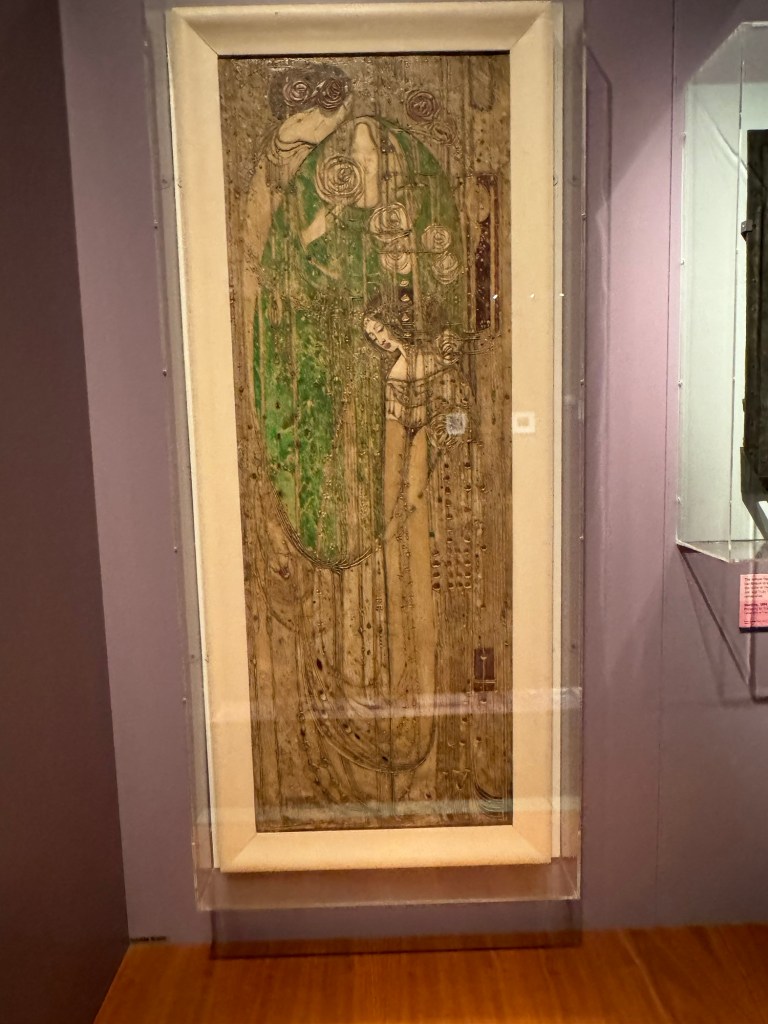
And it wouldn’t be a trip to Glasgow without some Charles Rennie Macintosh and the work of his wife, Margaret Macdonald who worked alongside him. A lot of what people lump in as Macintosh is actually her work.


It was a wonderful trip, and meant so much to be able to share Iona with folks from church and introduce people to Celtic spirituality. We learned about both our reformation heritage and our Celtic Christian heritage going back to St. Patrick and St. Columba. We became a closer community, and I hope these ties will add strength to our larger church community.
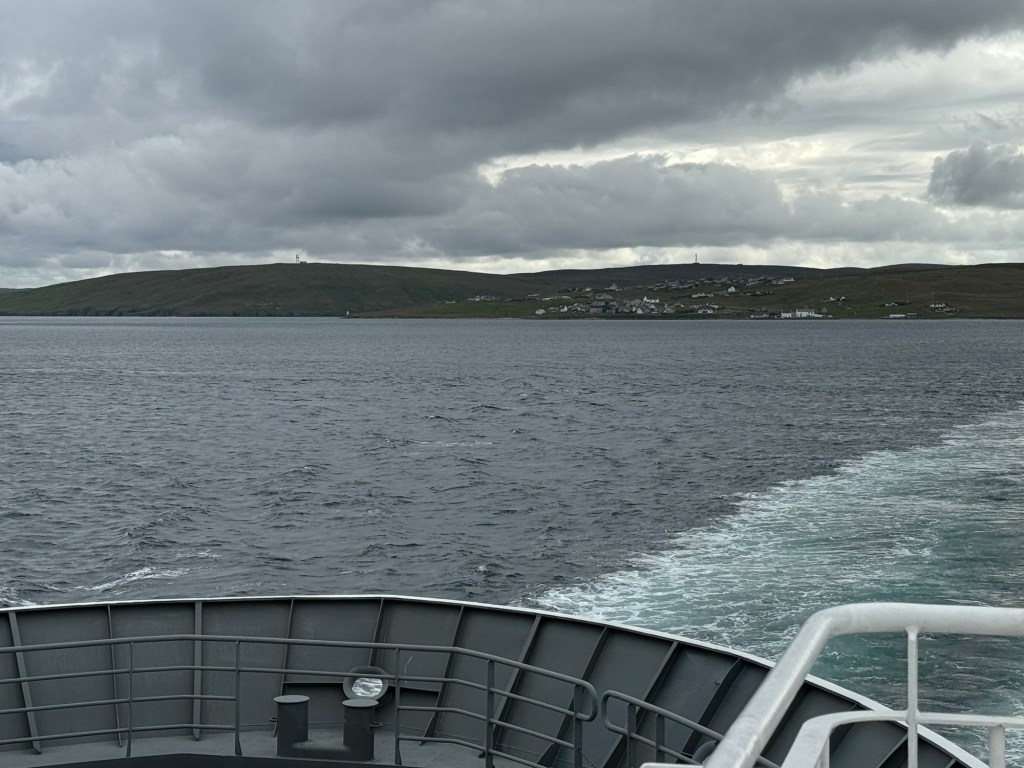
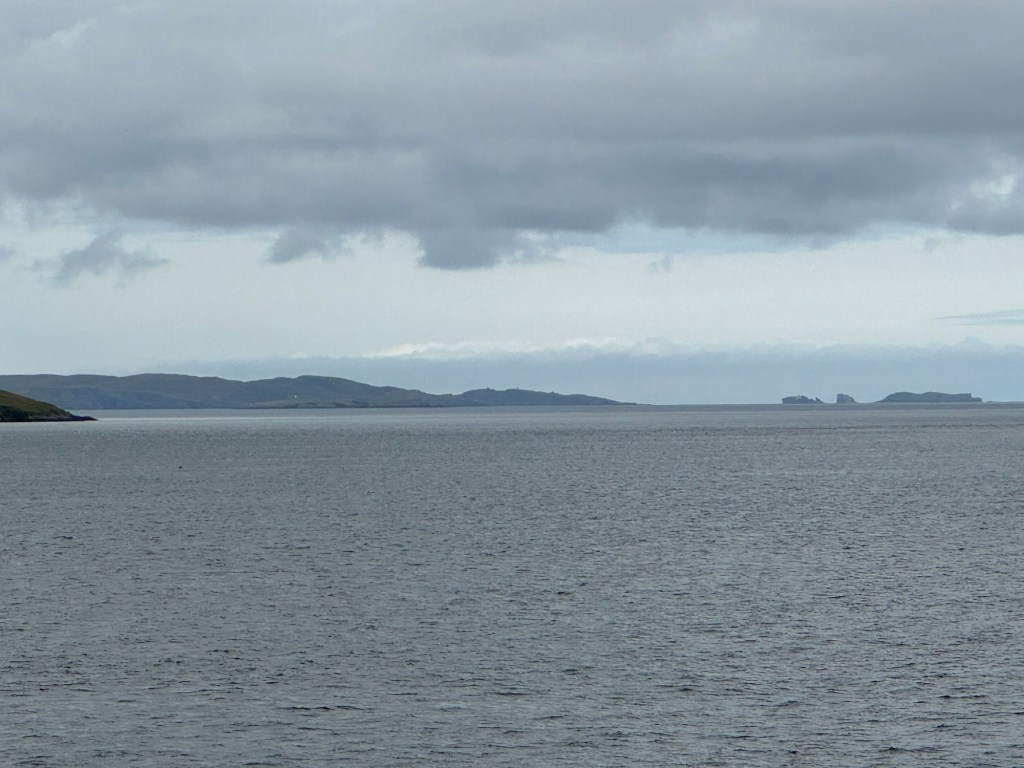
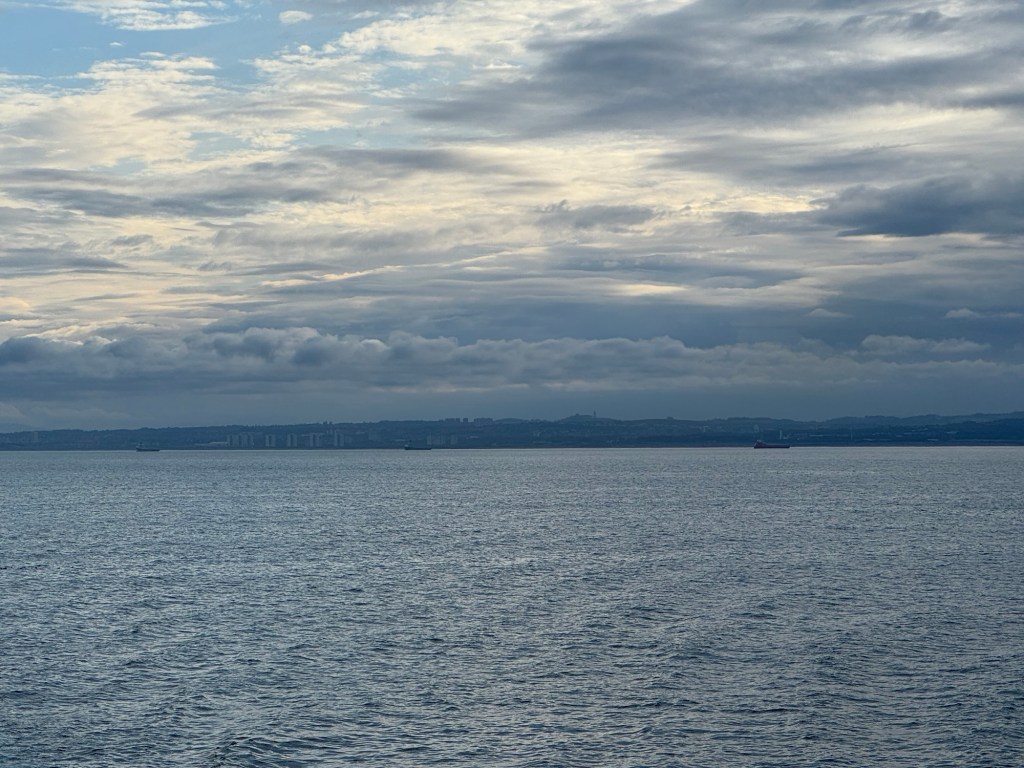
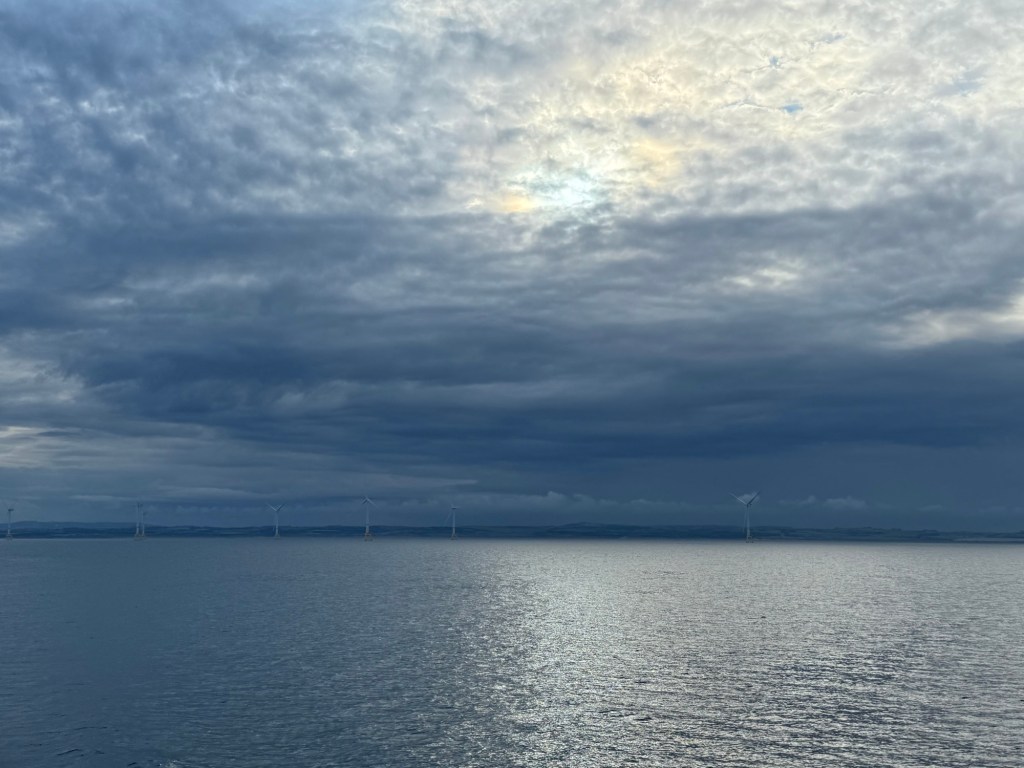
Now, on to the vacation part of my time in Scotland. We are now in Shetland. Here are some photos from the ferry, but other than that Shetland commentary will have to wait!


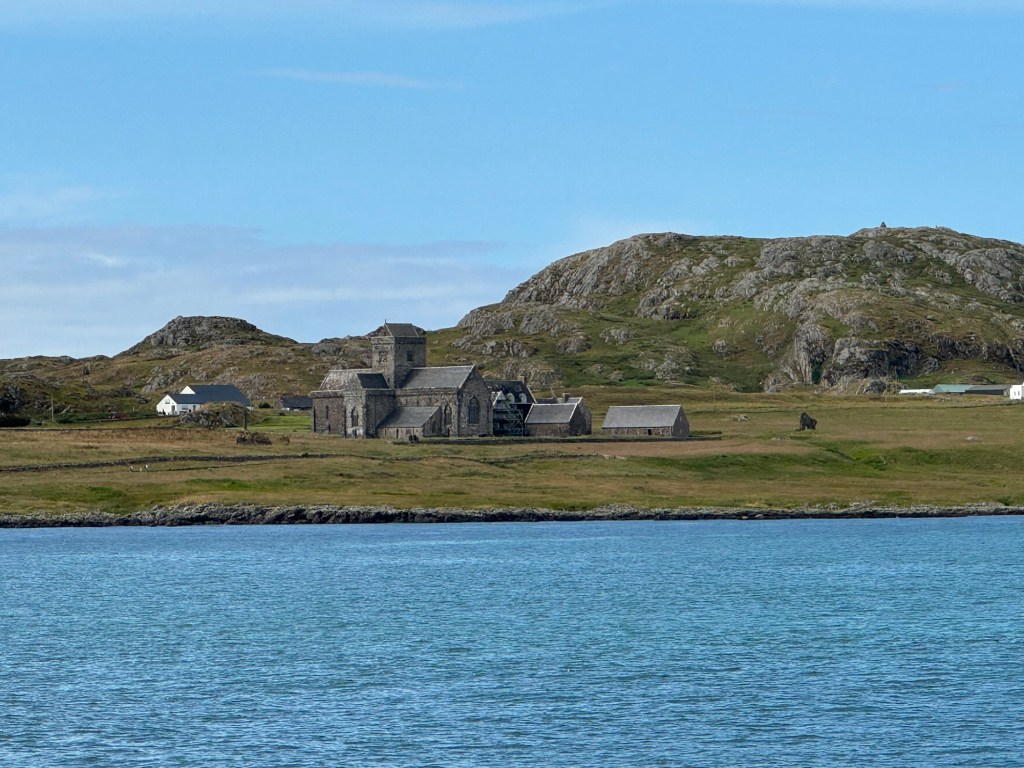
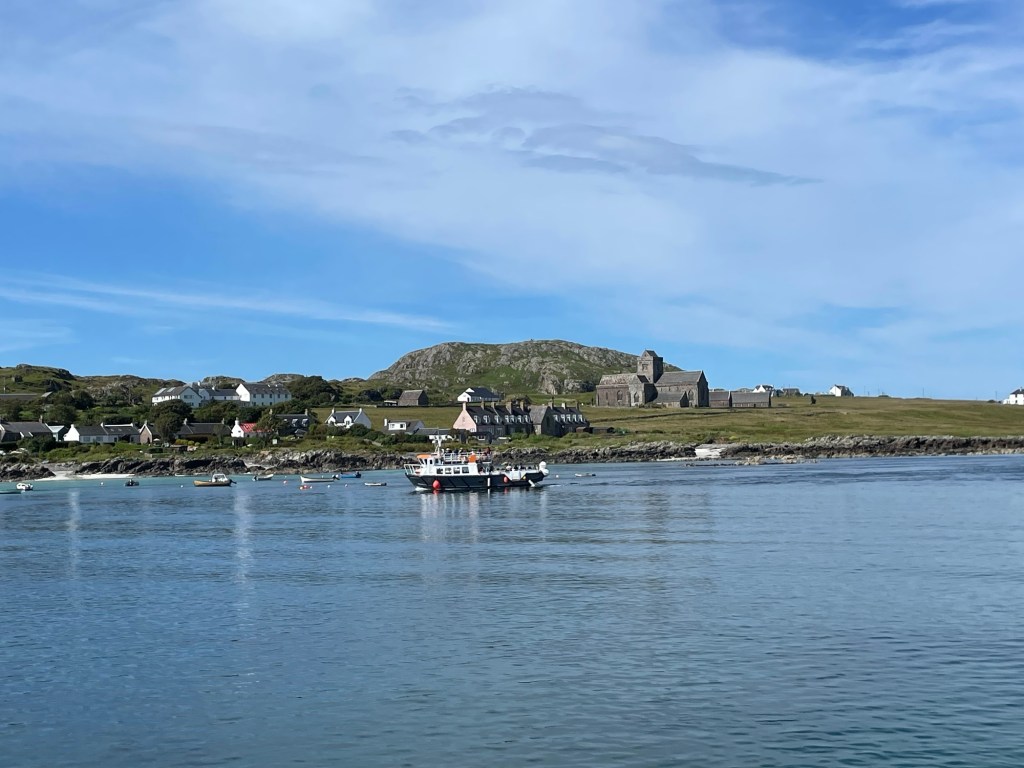
Yesterday we went to Iona. It was my first time on Iona as a day-tripper, and of course I found myself wishing we could fit far more in! But we made the most of the few hours we had on the island, and it was fun to share Iona with church folk. Since it was raining when we got off the ferry (it’s just a ten minute ferry across the Sound of Iona from Mull) we didn’t linger in the Nunnery ruins and garden on the way up to the Abbey. Even though I was here two years ago, I’m still adjusting to how different things are since I worked here 32 years ago with the Abbey now in the care and management of Historic Scotland. The Iona Community is still there of course, but it’s very different to visit the Abbey now with a gate house and fee to get in. But it is still a wonderful place to be and they have done such a good job with the museum, which has three of the standing crosses, many carved grave slabs, and historical information.


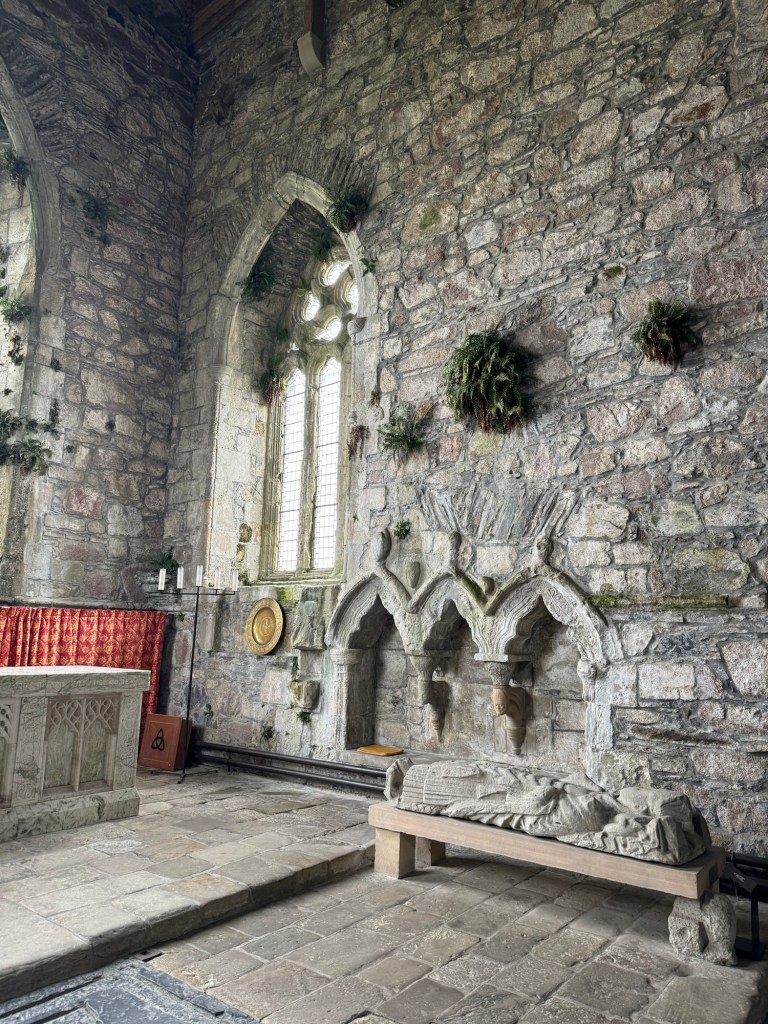


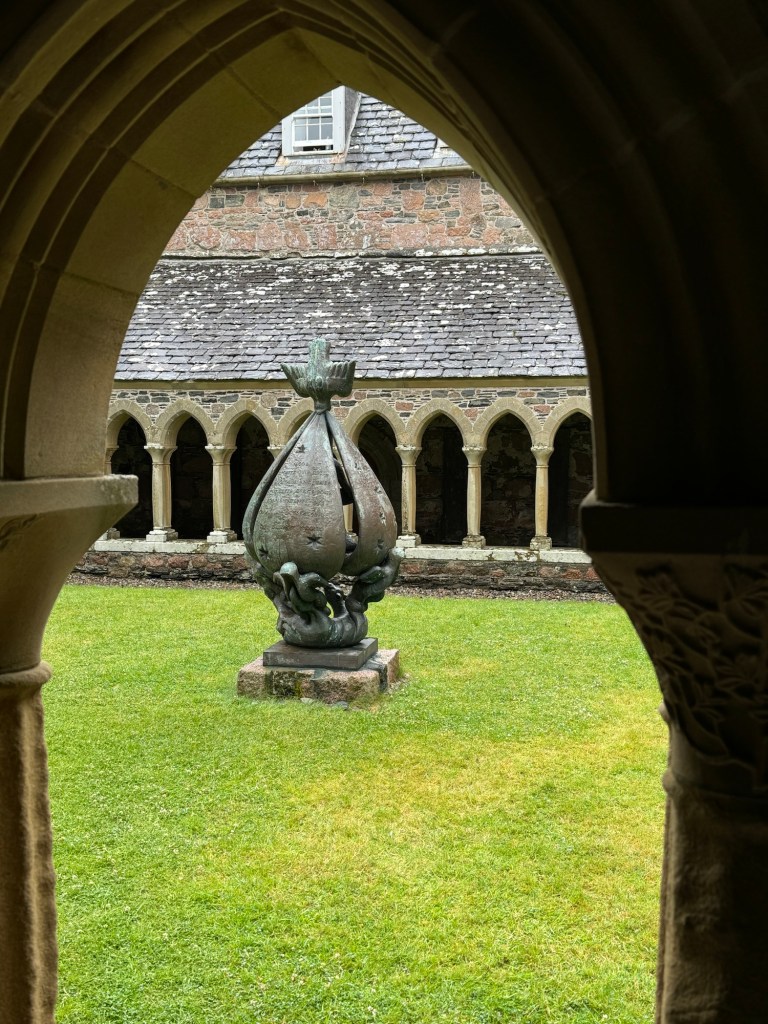
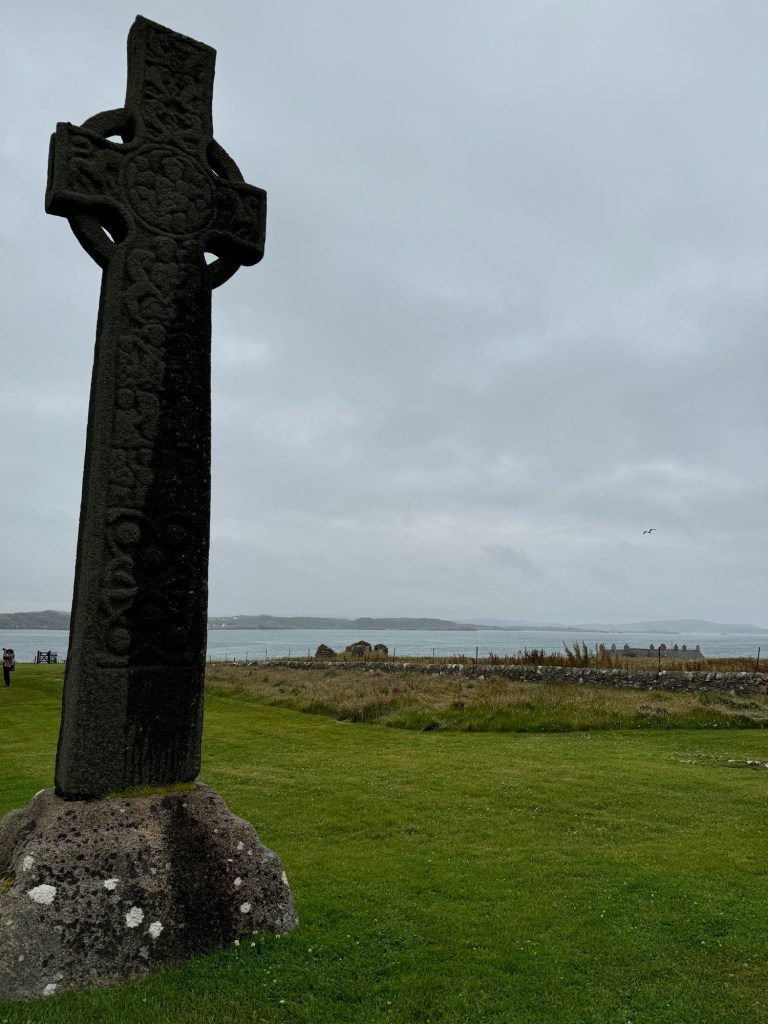


The Benedictine Abbey dates from the 12th century, and is more or less on the site of Columba’s original 6th century monastery.
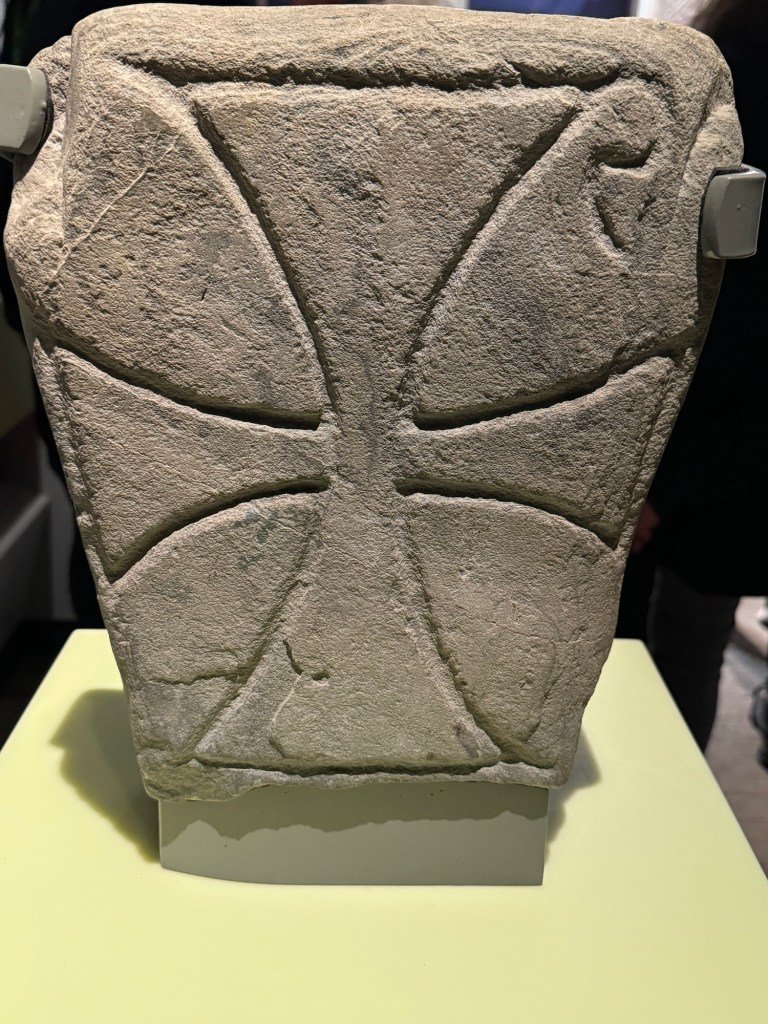


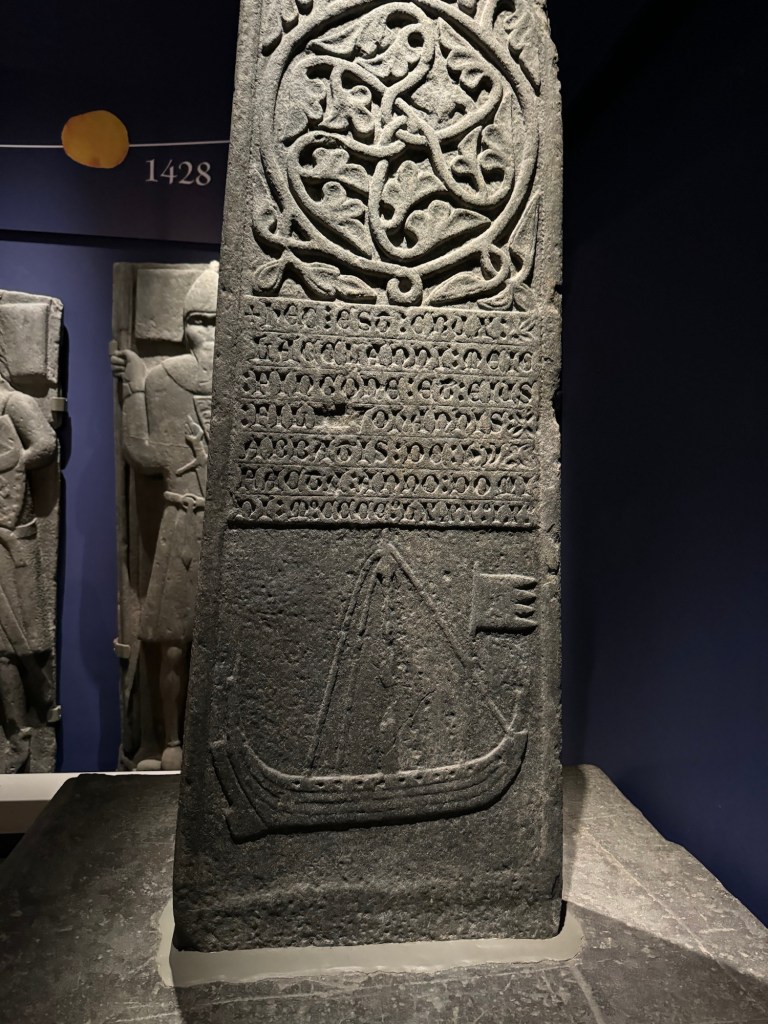
After visiting the Abbey and finding some lunch we walked to the North End. We started off in rain but had some sun by the time we got there.
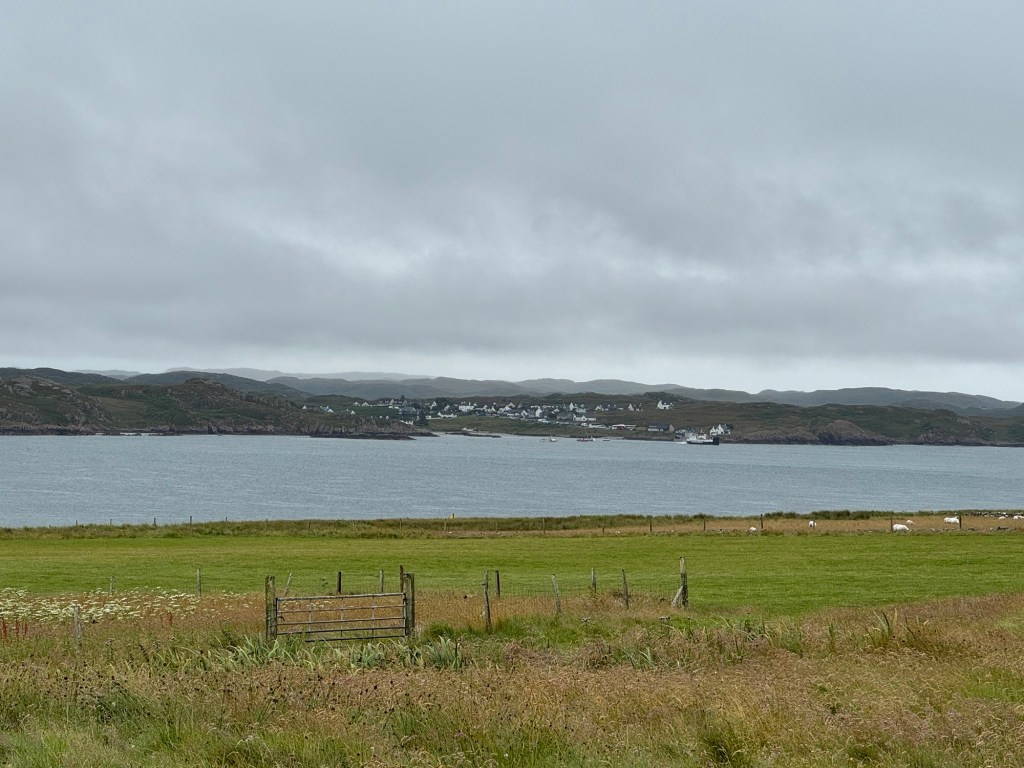


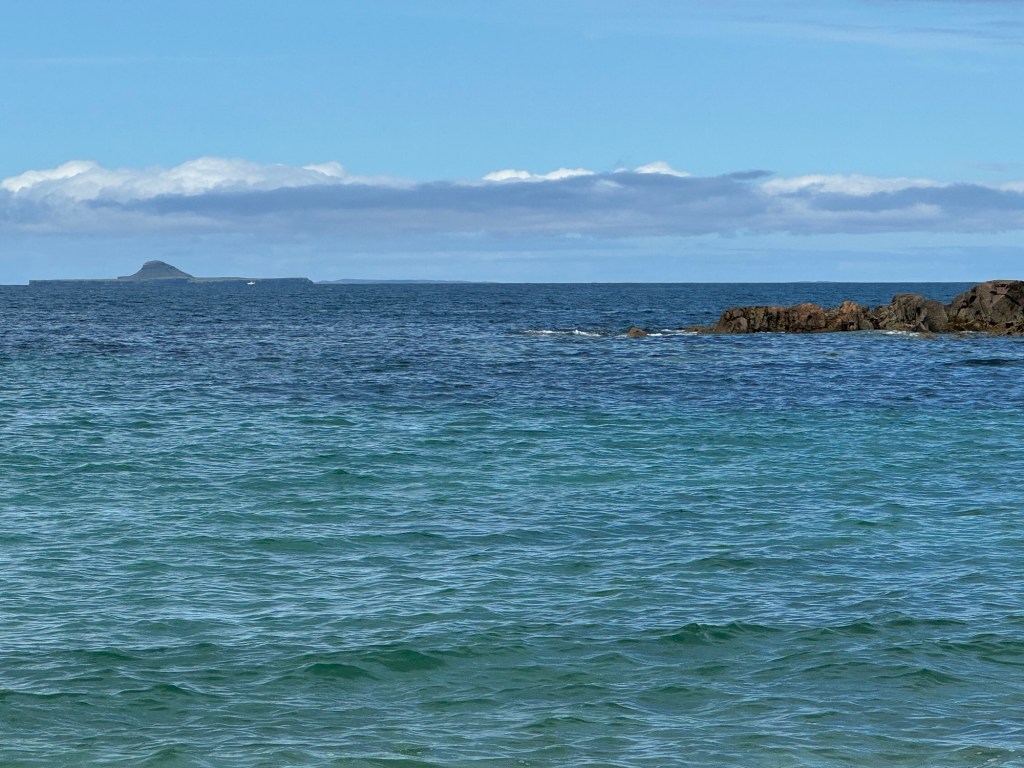

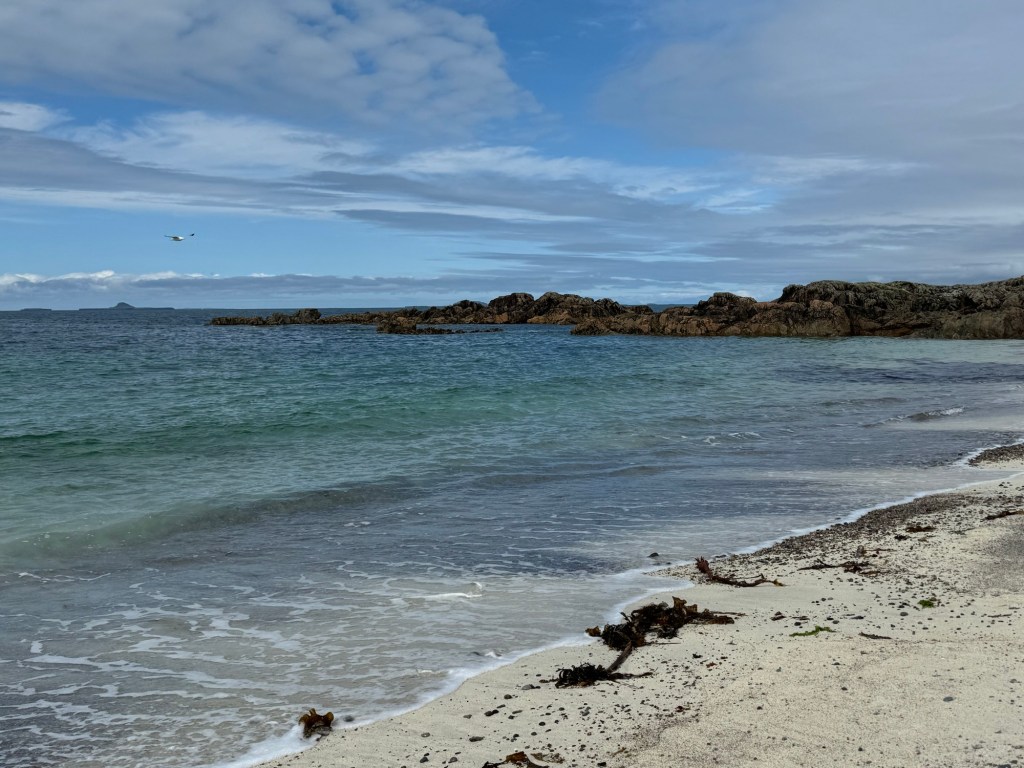
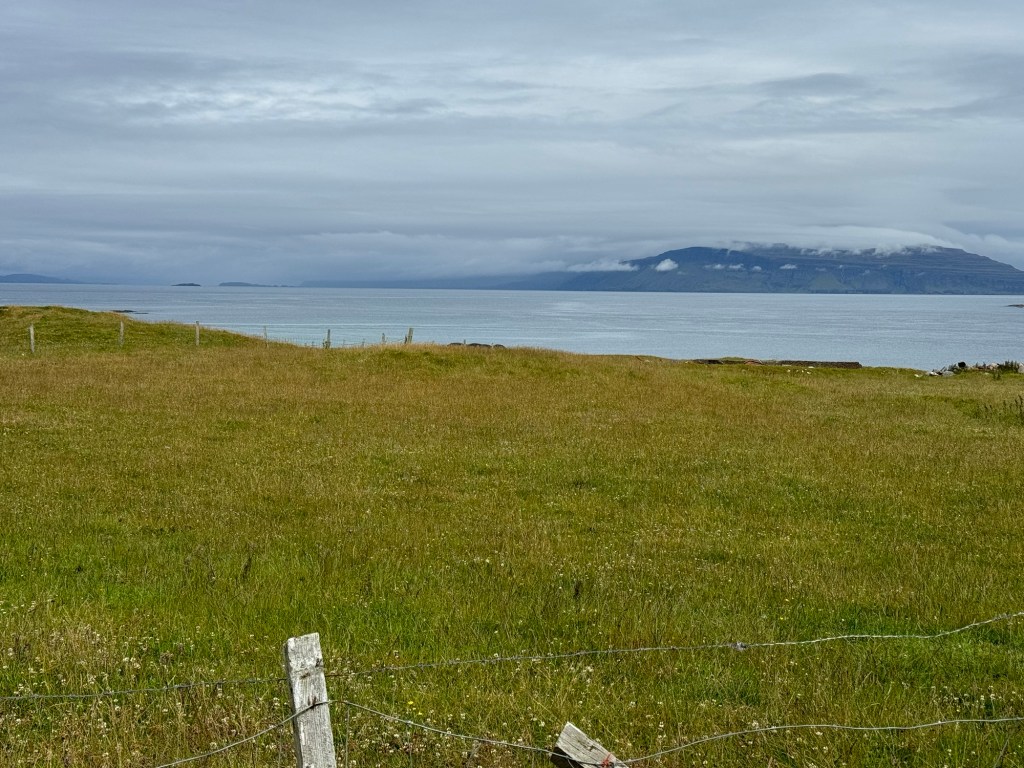
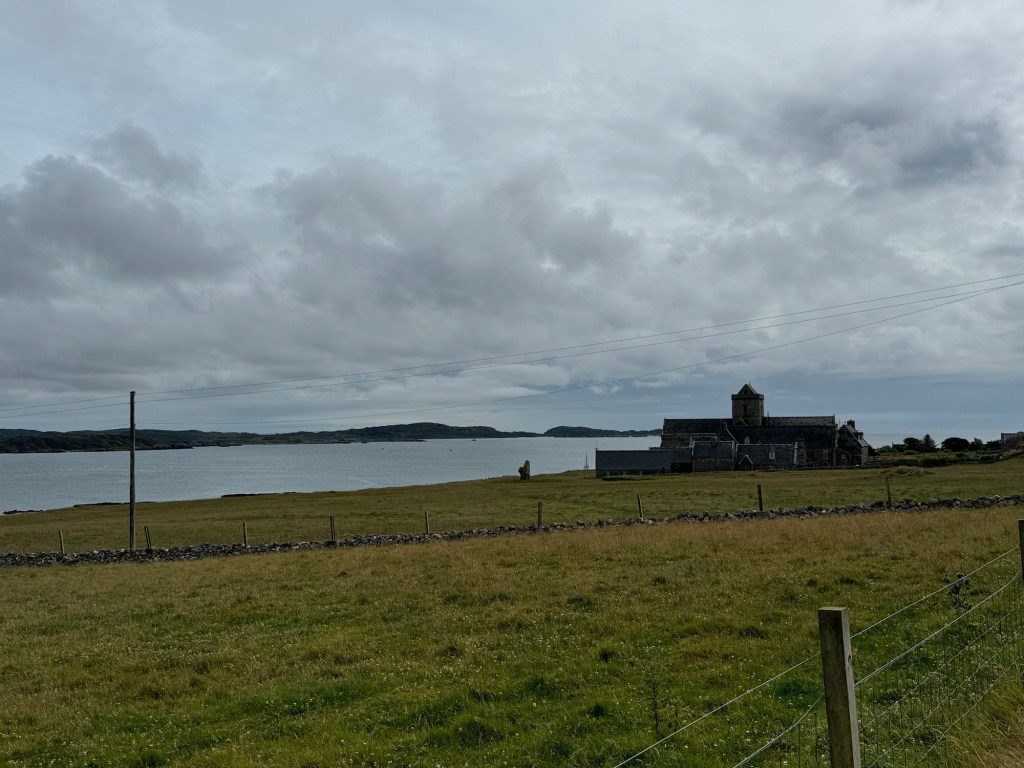
It is always hard to leave Iona, but I know I’ll be back. There is something deeply meaningful about being in a place where people have worshipped and prayed for centuries. It’s like the stones are holding the energy of all those eons of prayer.






My intentions of writing every night are not panning out! Either I’m just too tired at the end of the day, or I have work to do (like preparing for my ‘bus lecture’ about Celtic Christianity/Spirituality today). The last three days have been very full and involved a lot of travel—our last day in Edinburgh on Monday, Stirling on Tuesday, and today we traveled across Scotland to Oban, then by ferry to the Isle of Mull, then by coach to Tobermory at the northwestern tip of Mull.
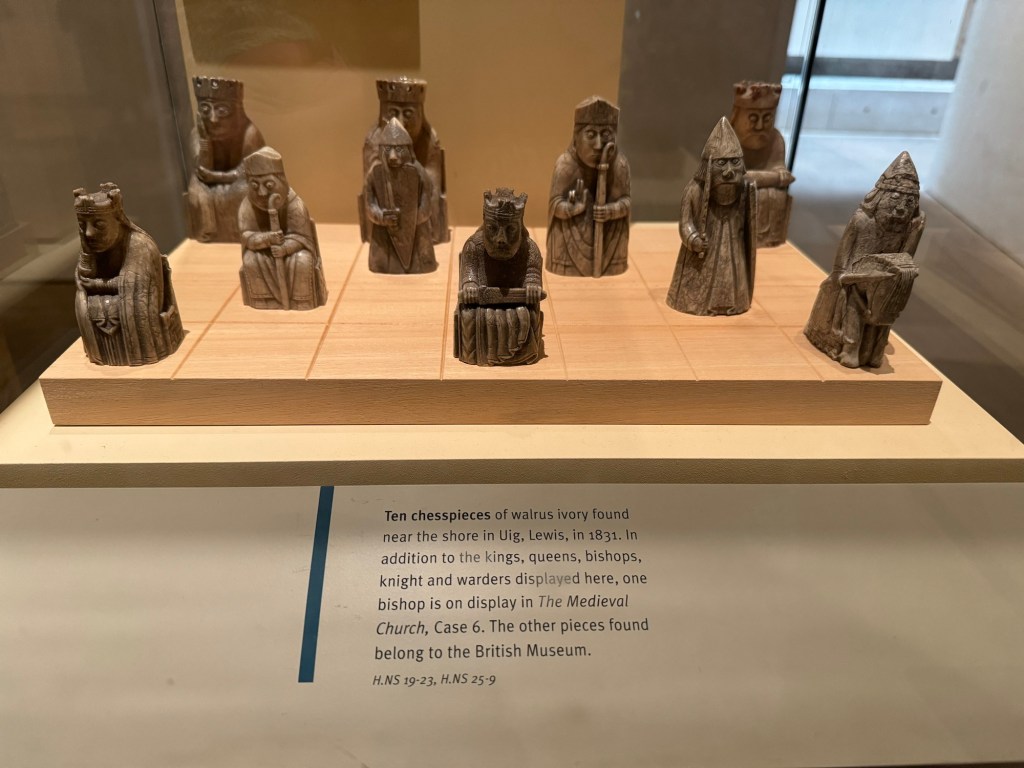
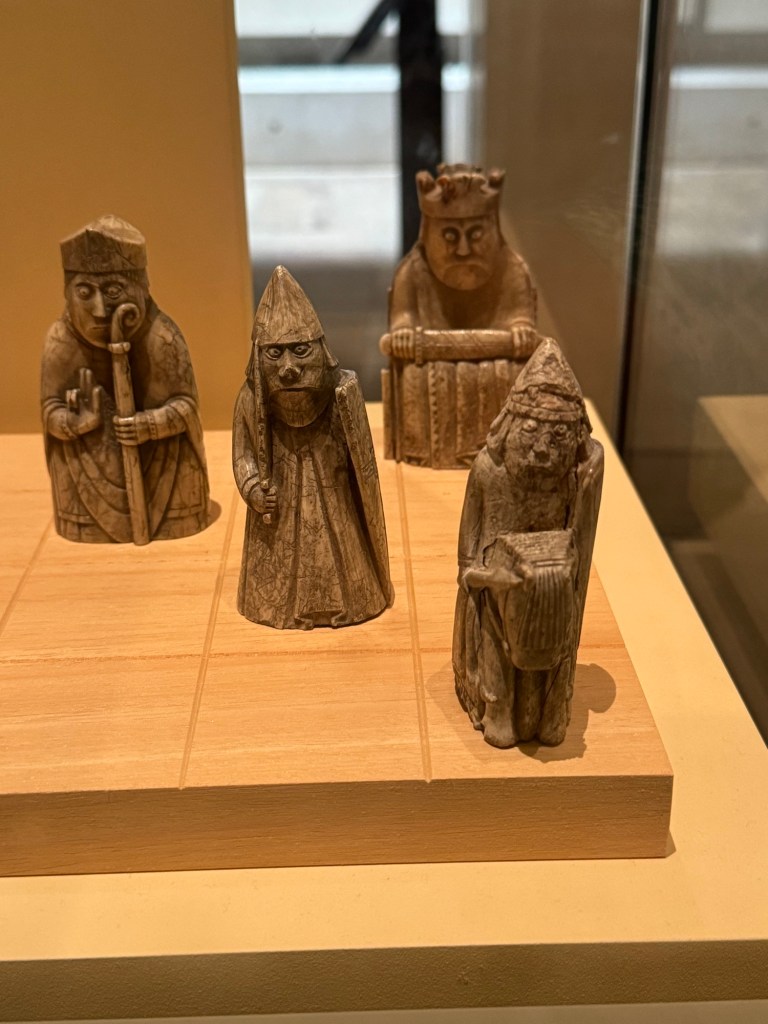
On Monday we started the day by going to the National Museum of Scotland (which is free, SUCH a deal!) to look specifically at the Reformation exhibits. We also went up to the roof terrace space which has a spectacular view of the skyline of Edinburgh.


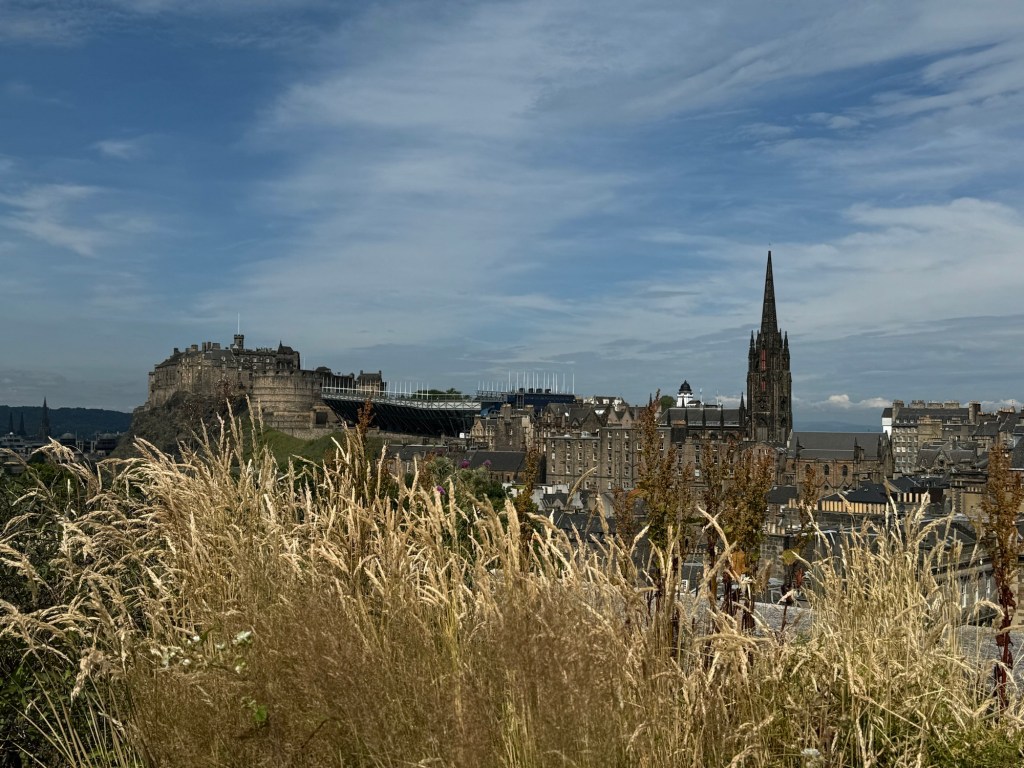

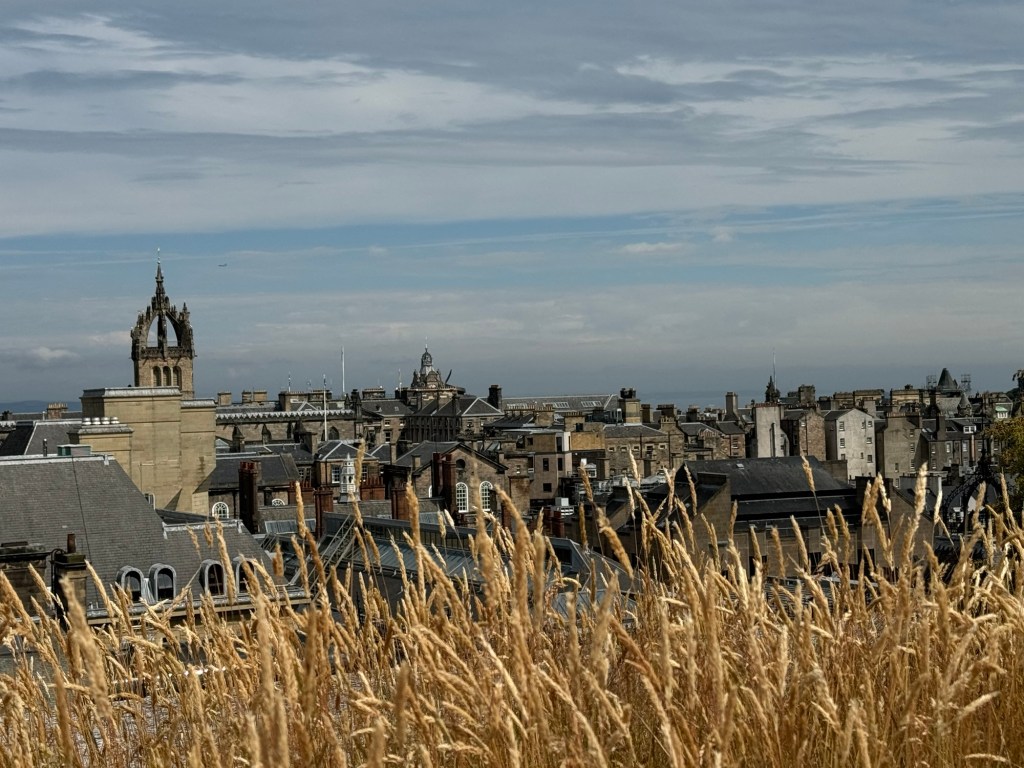
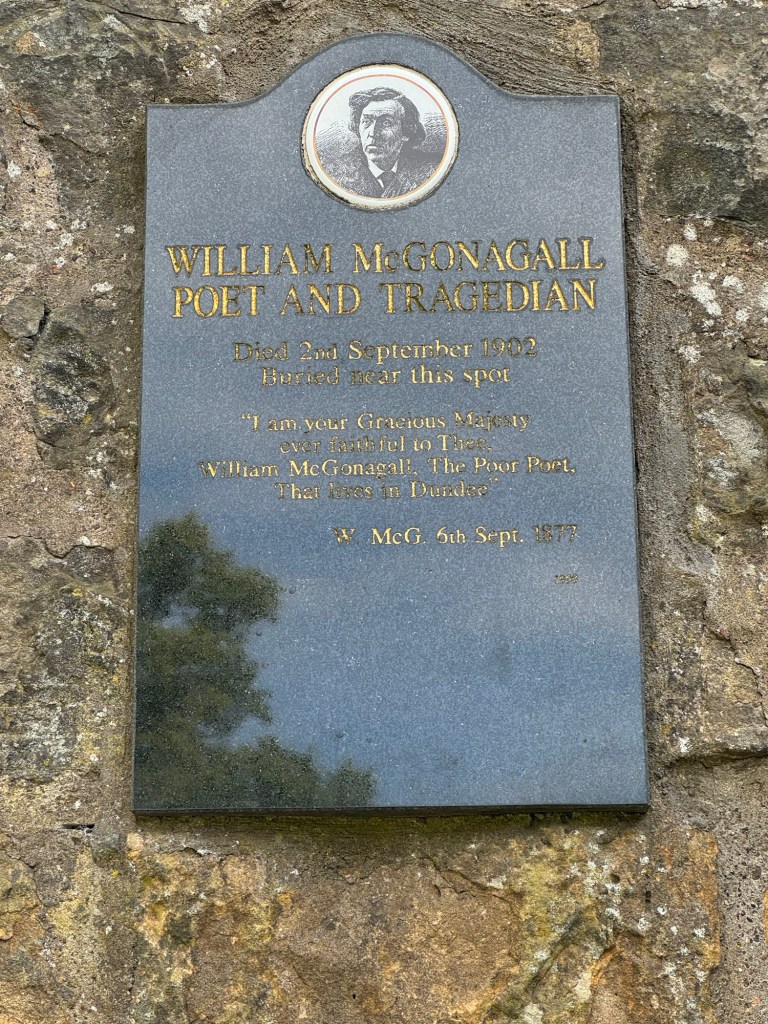
Then it was on to Greyfriars Kirk for an organ recital by Andrew, then a talk on church music during the Reformation (mostly singing unaccompanied Psalms in Scotland). It was a rich morning, and it is always wonderful to hear Andrew play, especially when I’m not having to think about what I’m doing in worship that morning! After the organ recital, talk, and a brief worship service we took a quick stroll through the church yard to see the grave stones that inspired the names of many of the characters in the Harry Potter series—McGonagall and Thomas Riddell in particular.


Later that afternoon I took two of our group to visit my friend James’ weaving studio. We learned about his and his students’ work, the various kinds of looms he uses, yarns and got to see some works in progress as well as his beautiful finished pieces—and we enjoyed some retail therapy. It you’d like to see James’ work, please check out his website: https://www.pickone.co.uk/

On Tuesday we boarded the bus and drove to Stirling, stopping to see the Kelpies on the way. I’ll let the photos of them speak for themselves, and I’ll let you google what a kelpie is!


Tuesday was pretty much a straight tourist day—visiting the castle and the Wallace monument. I was quite proud of myself for walking up the very steep hill to the monument. But I wasn’t about to climb the narrow, spiral, stone stairs to get to the crown of the monument itself—-I do not do those! The views from the base were amazing.


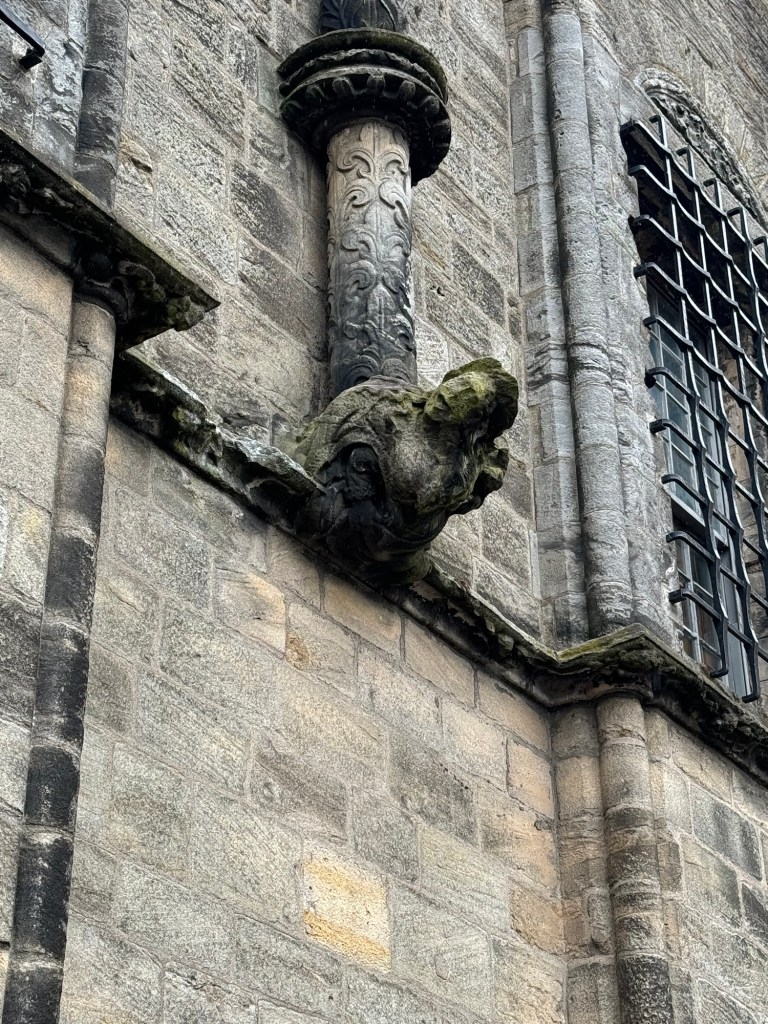


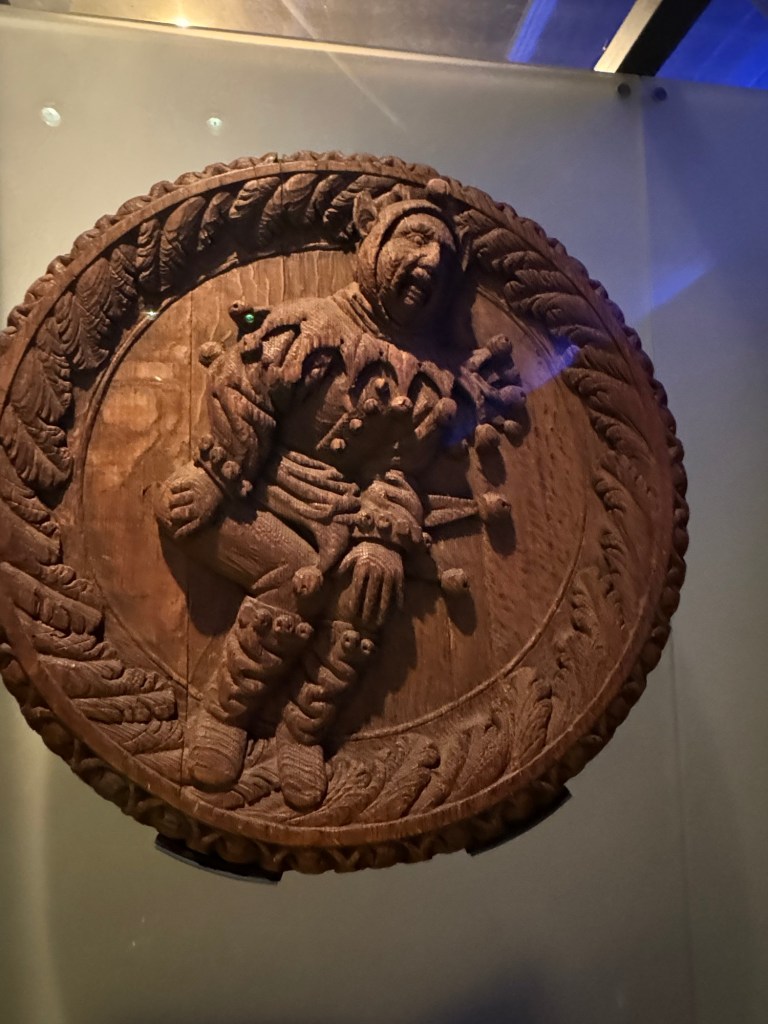


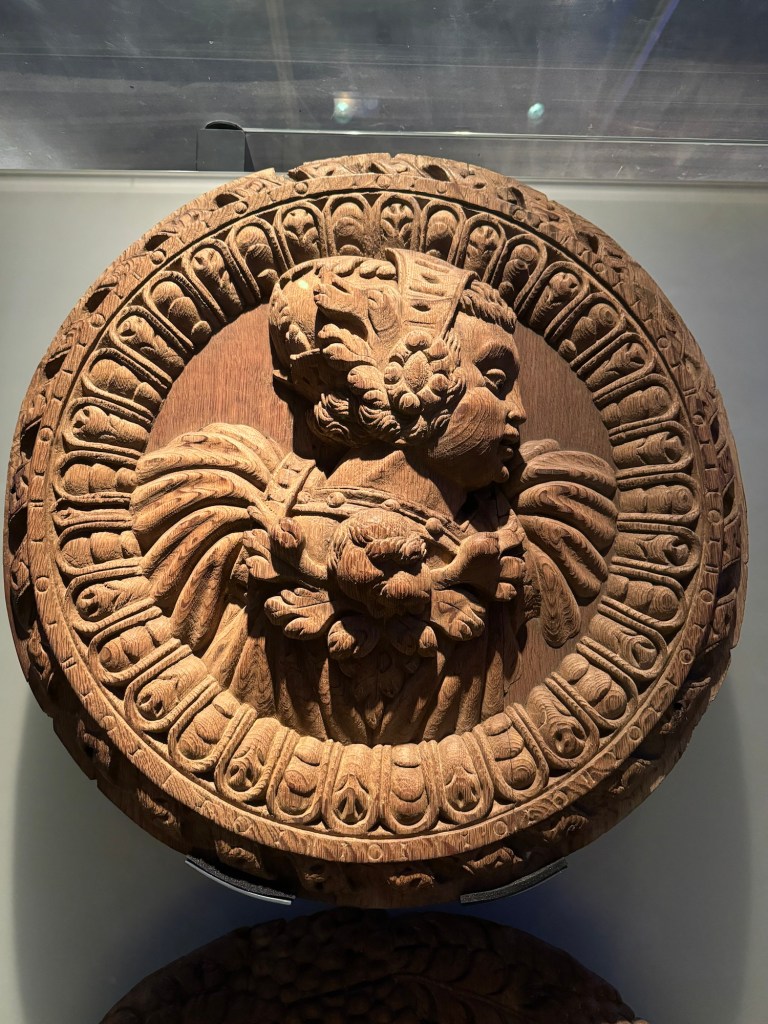
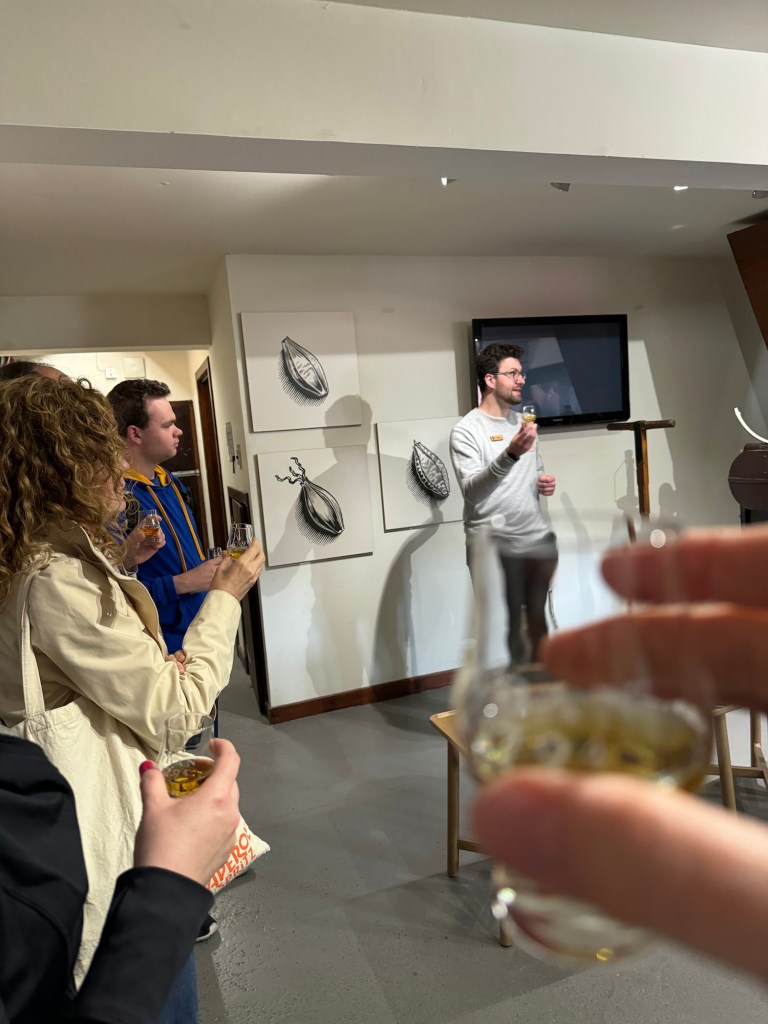
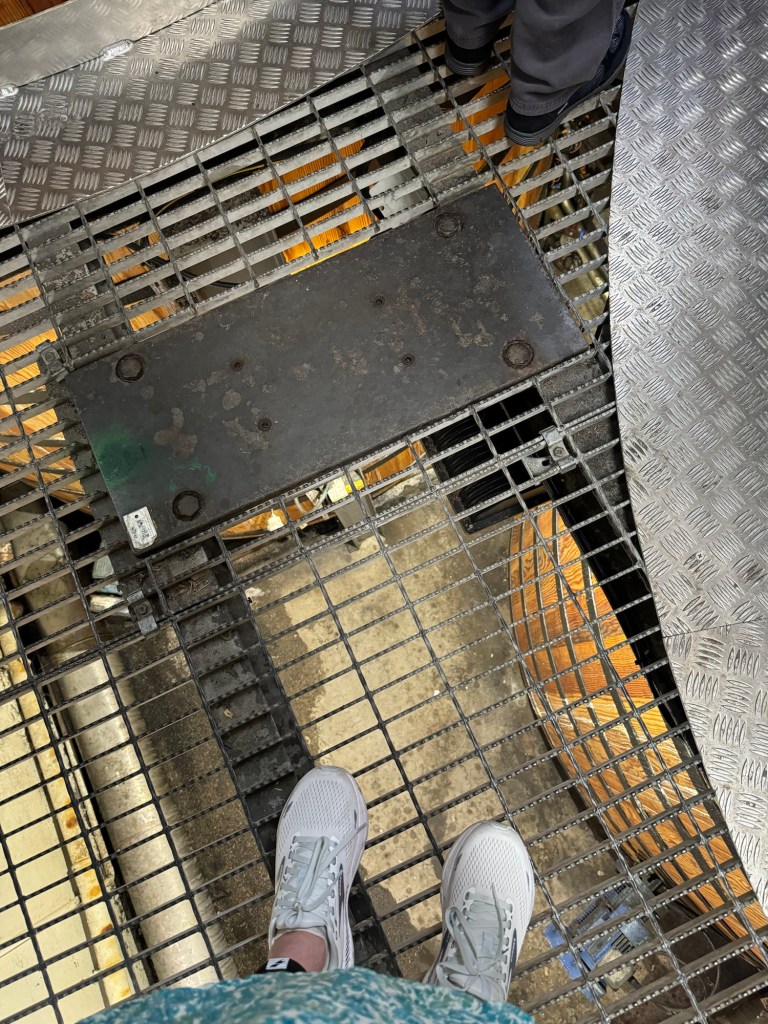
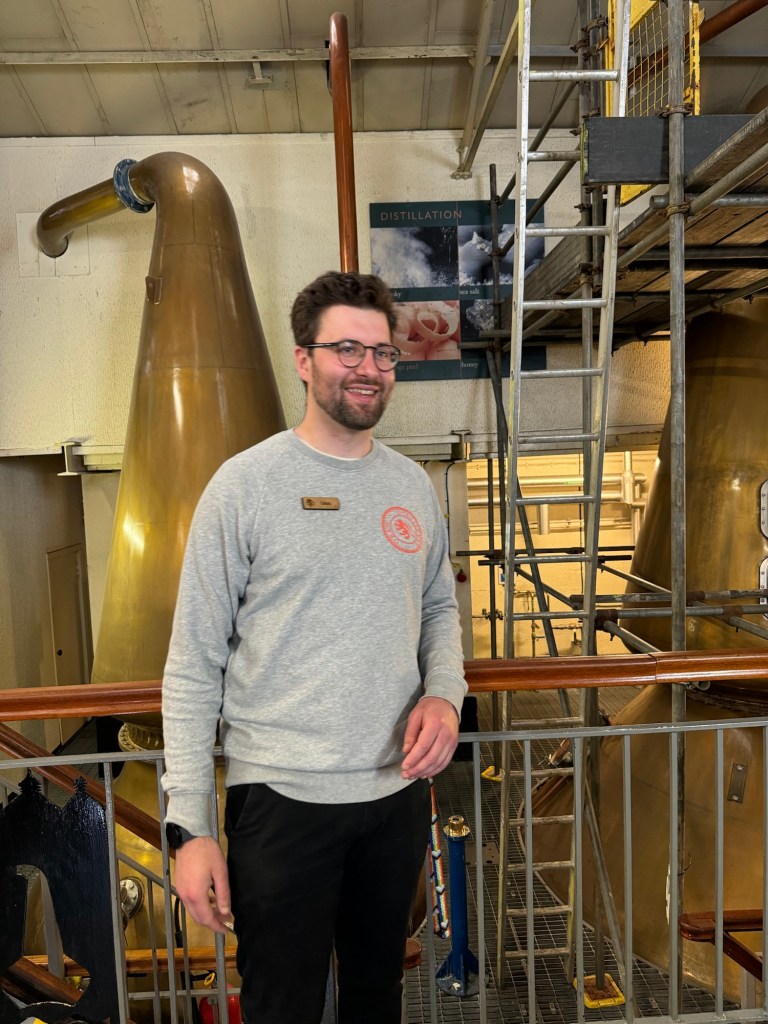
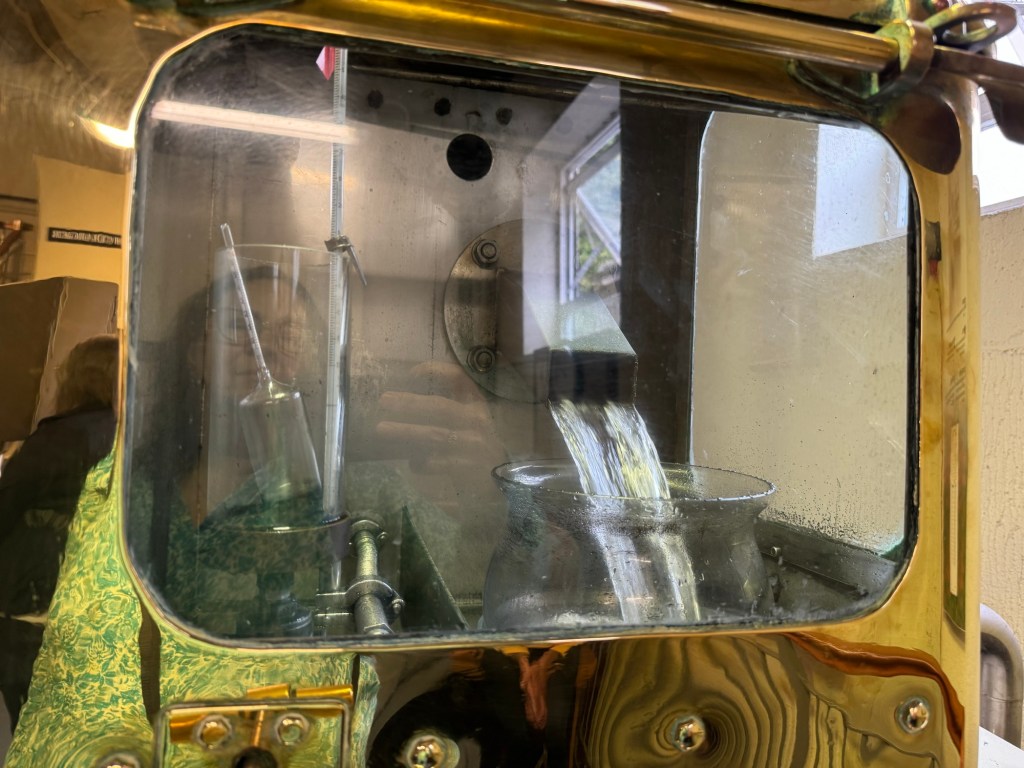
Today we got back on the bus and drove to Oban through the Trossachs. I managed to give my bus lecture on the Celtic church and Celtic spirituality even with very windy roads—well, I took a break through the windiest bits. Once in Oban we had the most scrumptious fish and chips for lunch and visited the Oban Distillery. The tour was wonderful, including the three whiskeys we tasted. And there are several bottles coming home in people’s bags—we are good Presbyterians after all.



Best of all perhaps is that I got to see my dear friend Louise from Iona days! She lives in Mull and was able to take a mid-day break and come join me for lunch for a half-hour. Much too short but far better than no visit at all!
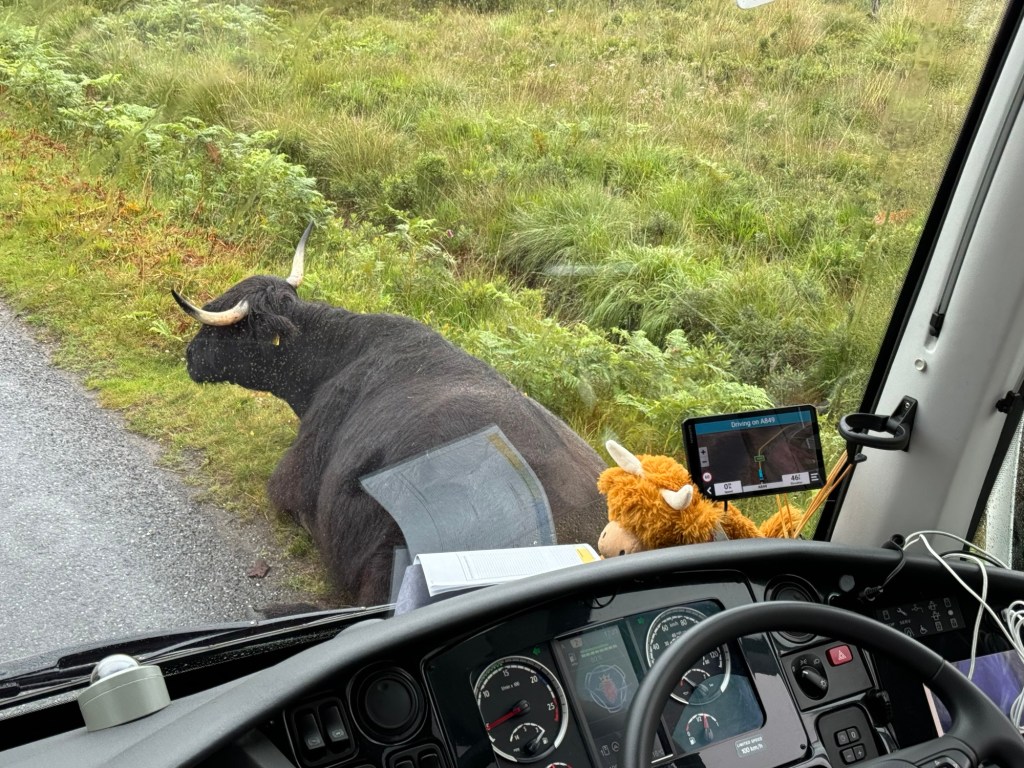
Then we took the ferry to Mull—which is such an awe-inspiring journey, the scenery is breathtaking. The ride across Mull to Tobermory is an experience, especially on a big coach—most of the way is single-track road with passing places, and I am most impressed with our driver’s ability as he maneuvered the bus up the steep, narrow roads to our hotel, Western Isles Hotel, and managed to get the bus turned around in a VERY small parking area.
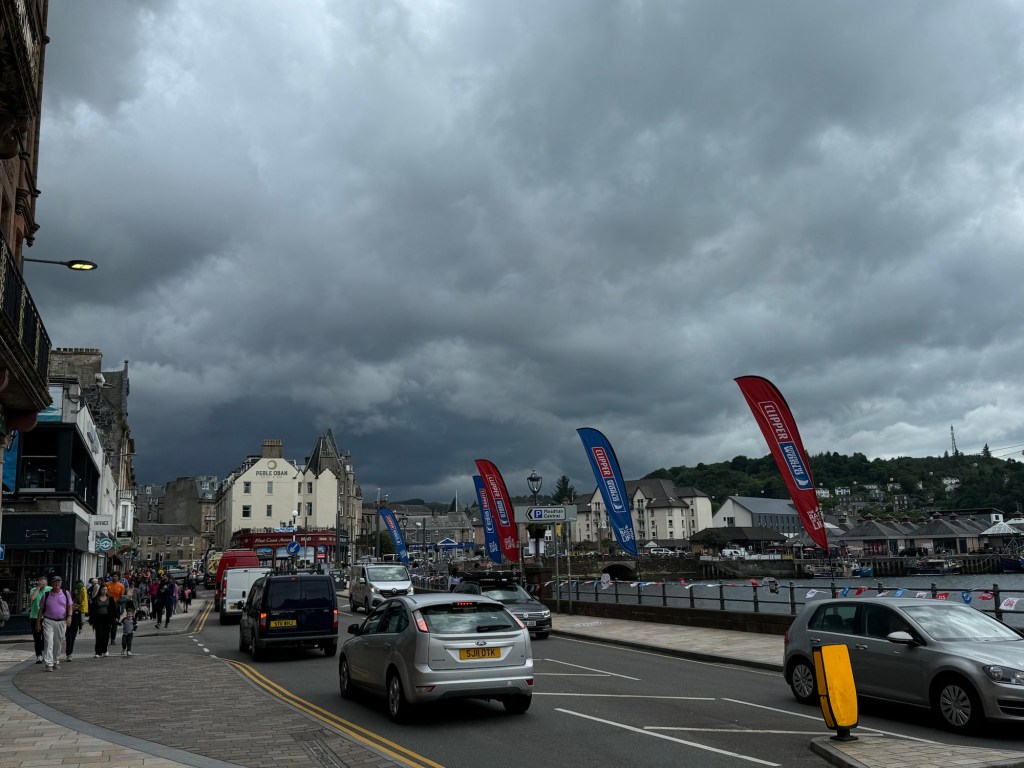
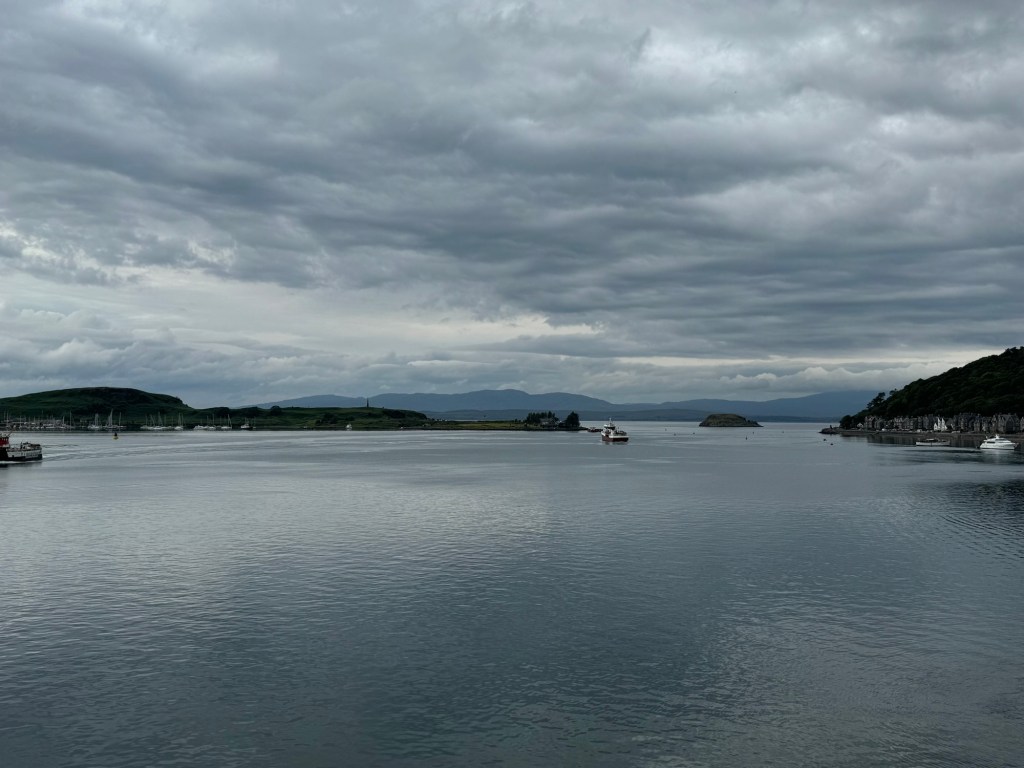

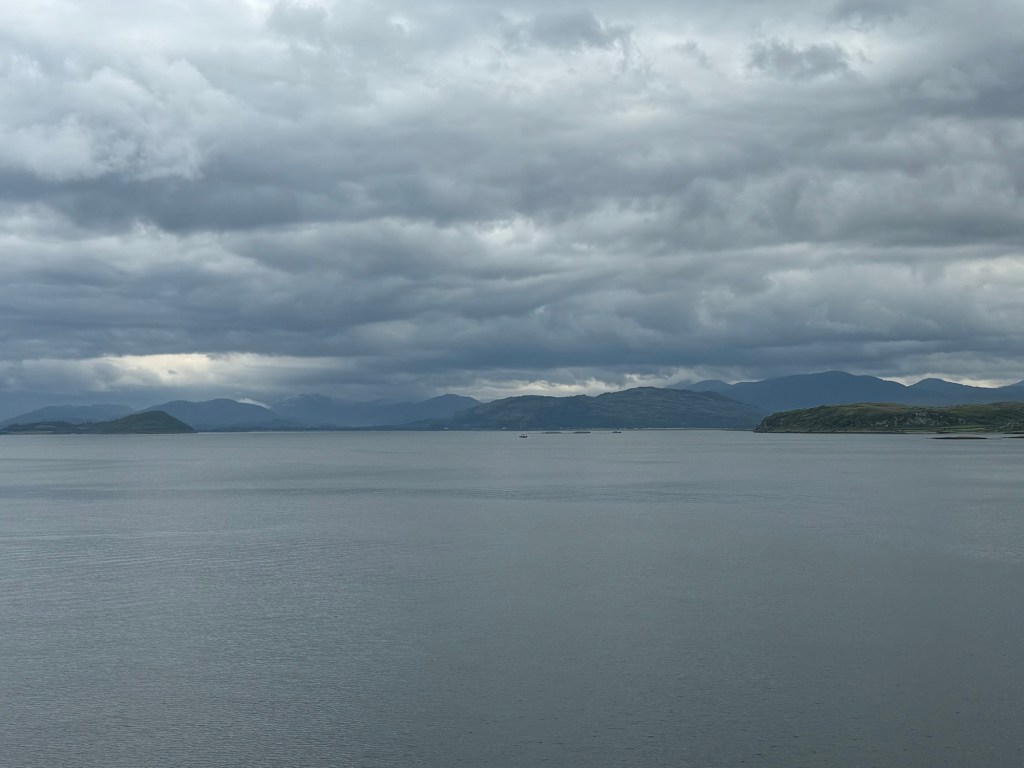


It is SO beautiful here. Once again I have a garret room—top floor on the end with windows overlooking Tobermory harbor. Had time for a walk around Tobermory before dinner—which includes descending 106 steps to get from the hotel to the Main Street—then climbing back up again. And since my room is on the fourth floor of this old inn with no lift, I have lots of climbing to do over the next two days!


We closed the evening with an evening prayer service and now it’s early (relatively) to bed because we have to take the coach around Mull to catch the ferry to Iona in the morning.

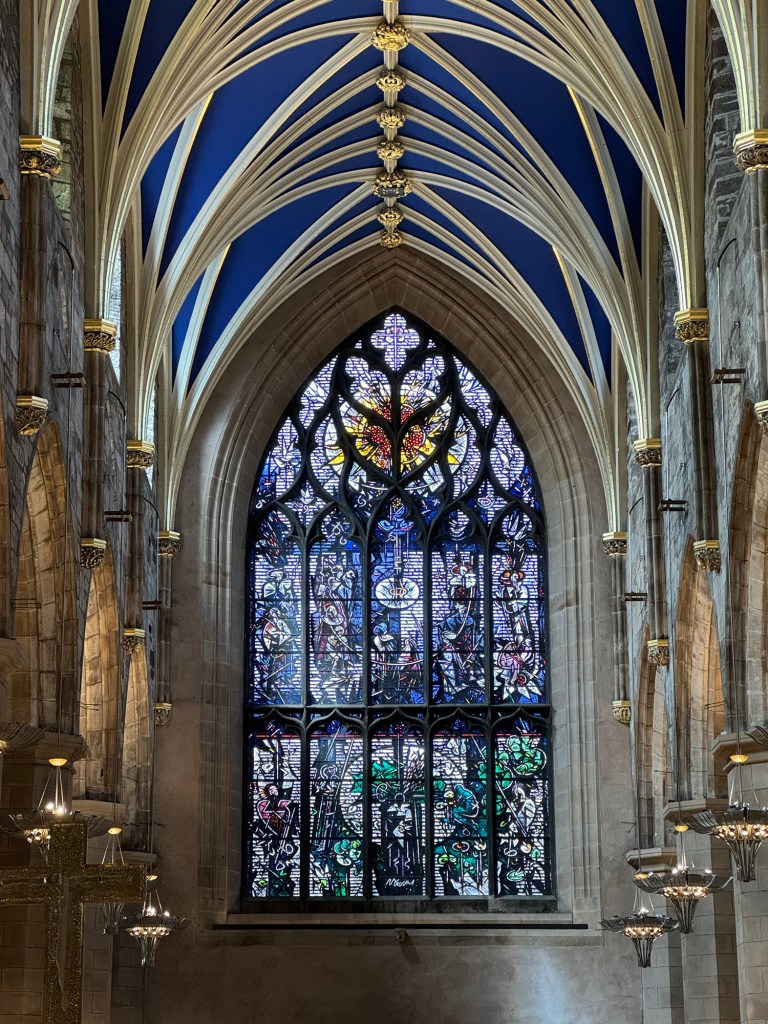
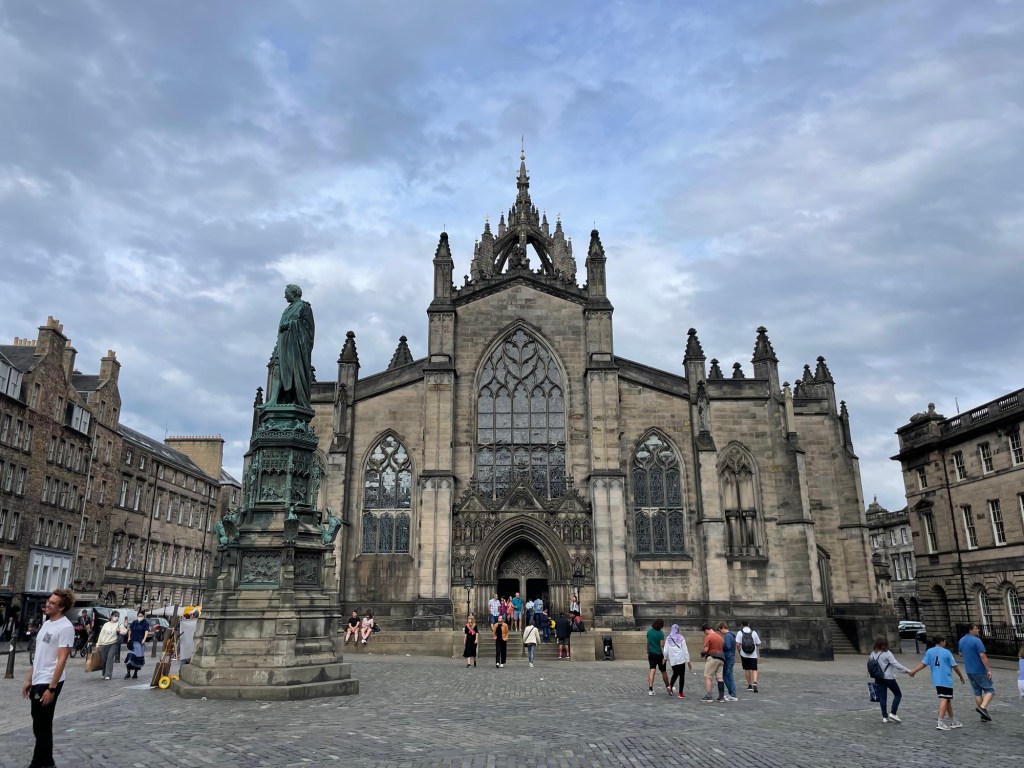
Yesterday we hit the ground running. Our coach picked us up from the airport after our overnight flight, and we had an orientation tour of Edinburgh. After lunch on our own, we gathered at St Giles’ Cathedral (or High Kirk, if your Presbyterian sensibilities just can’t call it a Cathedral) for a guided tour. I’ve been in St Giles a few times before, but never for a guided tour, and it added a lot—even though many of us were swaying on our feet at that point and in danger of falling asleep standing up. We were privileged to be taken into the Thistle Chapel, which is usually kept locked and most tourists don’t get to see it. This is where the order of the Thistle gathers. Just a couple of weeks ago King Charles was there, for his coronation ceremony in Edinburgh, and sat in the central seat to induct new members into the Order of the Thistle. I was so tired I can’t really remember just what the purpose of the Order of the Thistle is, but you all know how to Google it!

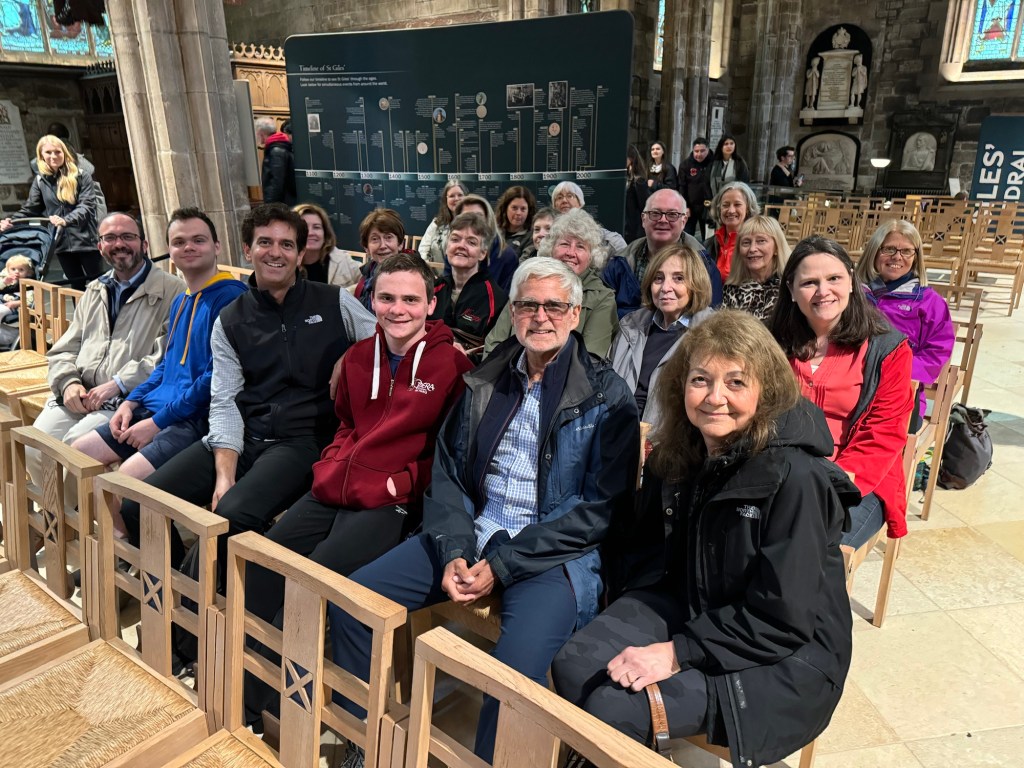

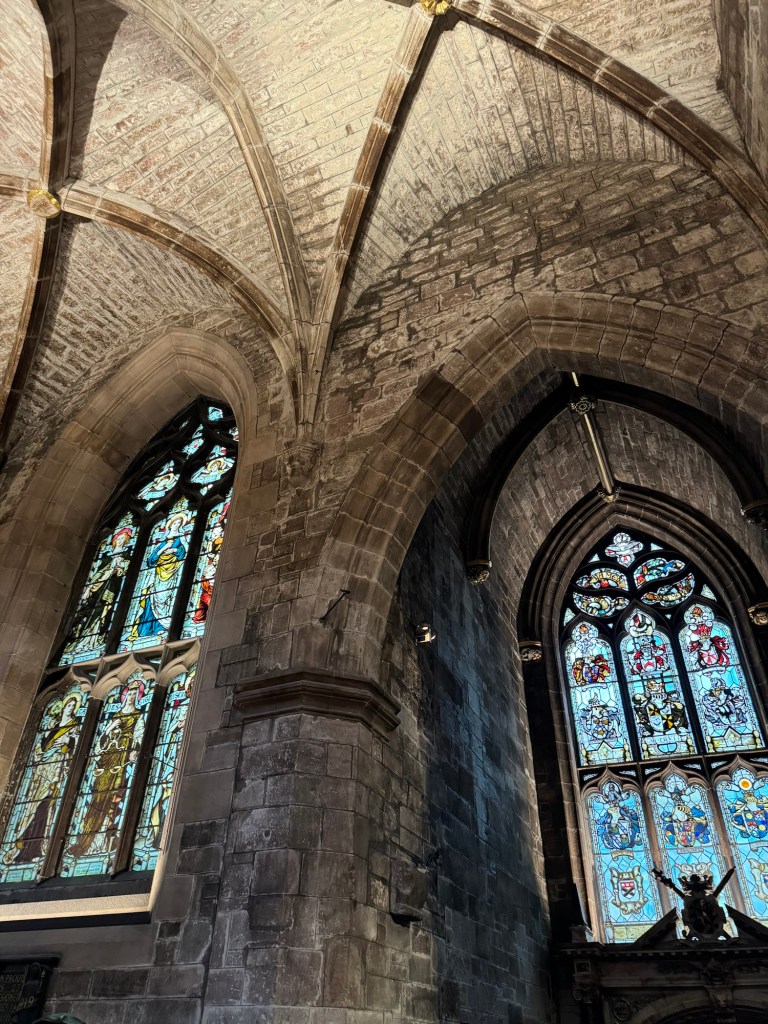
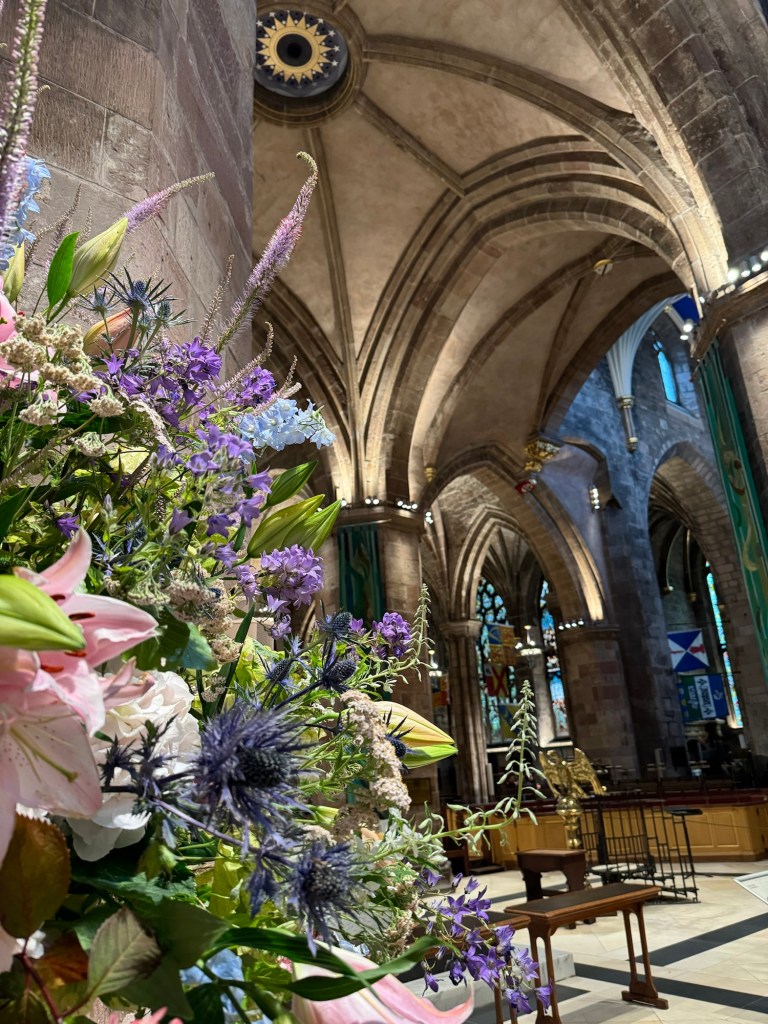


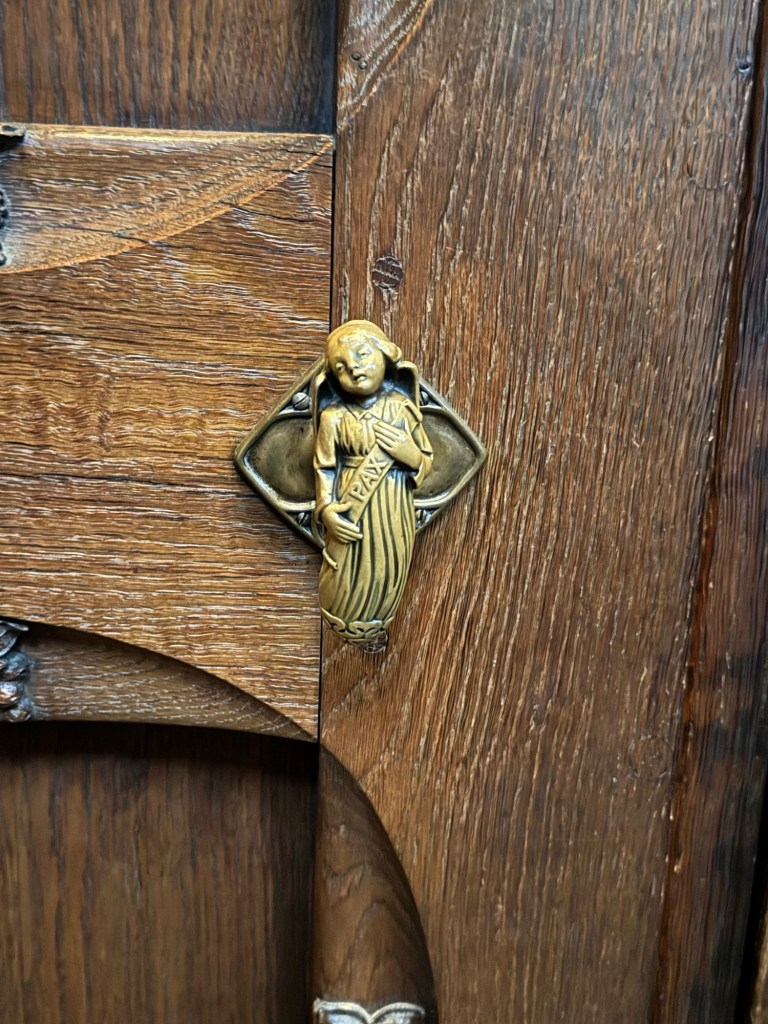

As one tour member remarked, “if Charles was sitting in this small space less than two weeks ago, this is probably the closest I will ever get to having an audience with the king”. It is a beautiful, small chapel and we were grateful for the privilege of seeing it.
St. Giles’ church’s known history goes back as far as the 11th century, though only a few stones in the Kirk today go back that far. We ended our tour with Aaron (our senior pastor Dr. Janklow) giving an abbreviated talk on the Reformation in Scotland—unfortunately cut short because we were due back on the coach, and everyone was falling asleep. We’ll revisit the Reformation tomorrow at the museum.
After a group dinner at an Italian restaurant we gratefully fell into our beds. When is the last time I slept 9 hours straight??? Couldn’t tell you.
Today we were back at St. Giles for their 9:30 service, which includes communion. The choir was beautiful, the liturgy as high as you can get and still be Presbyterian (I loved it), the sermon was good, and my friend Sigi from Iona days, who is currently the Associate Pastor at St. Giles helped lead the service, which made it even more meaningful.



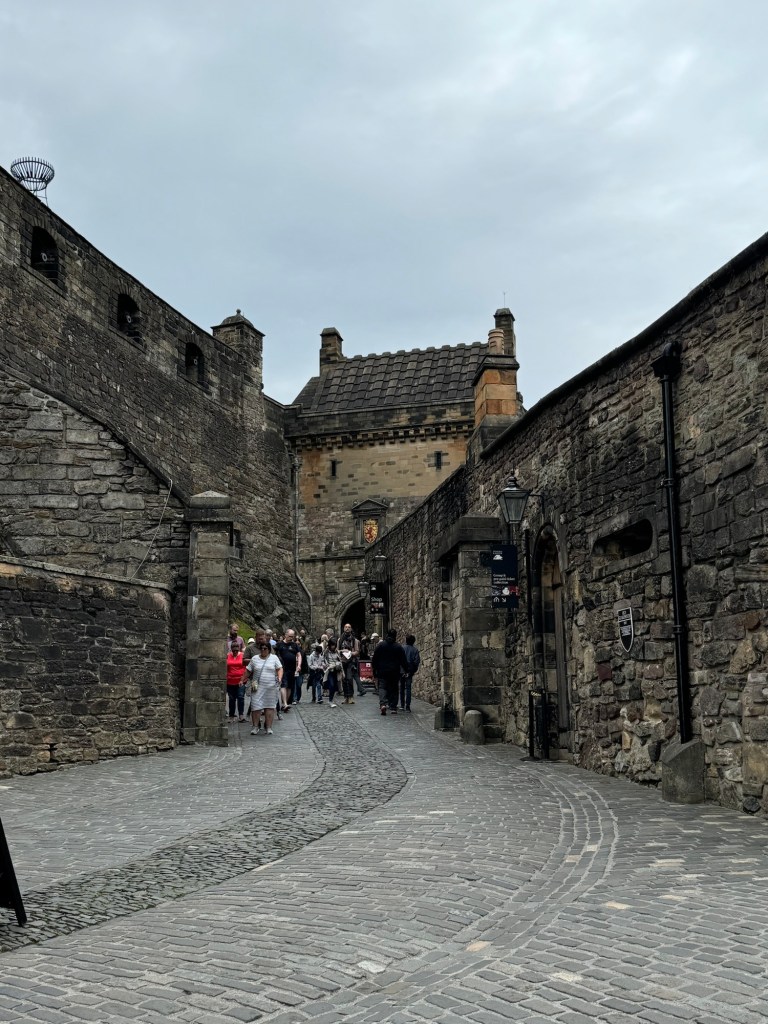
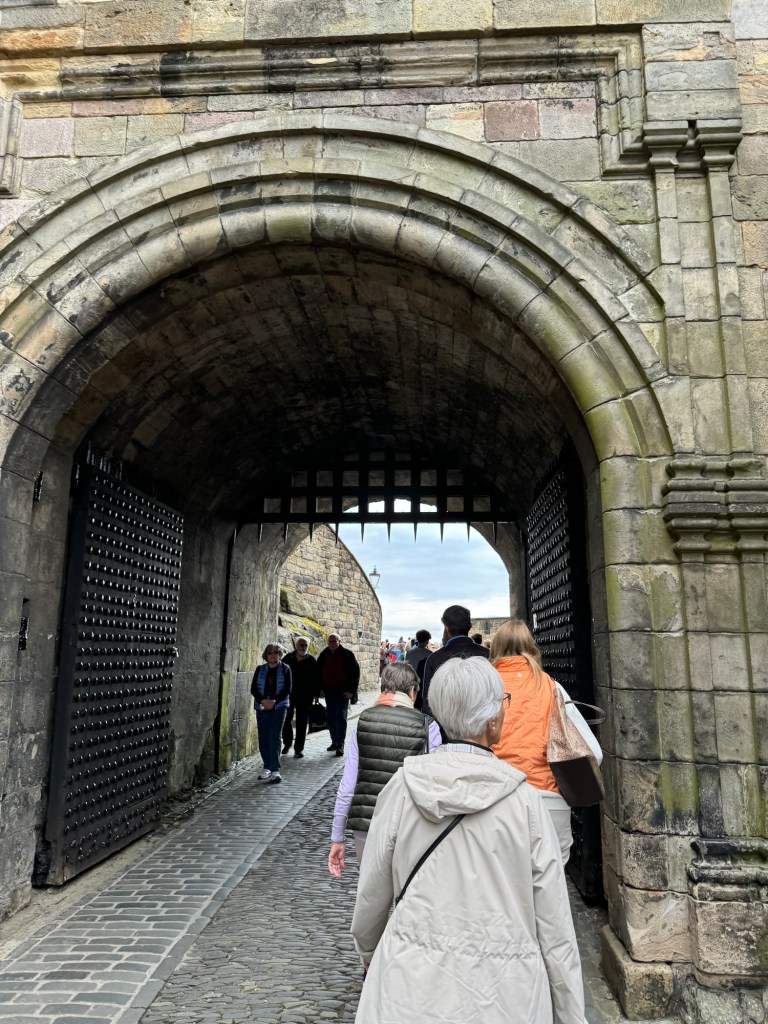
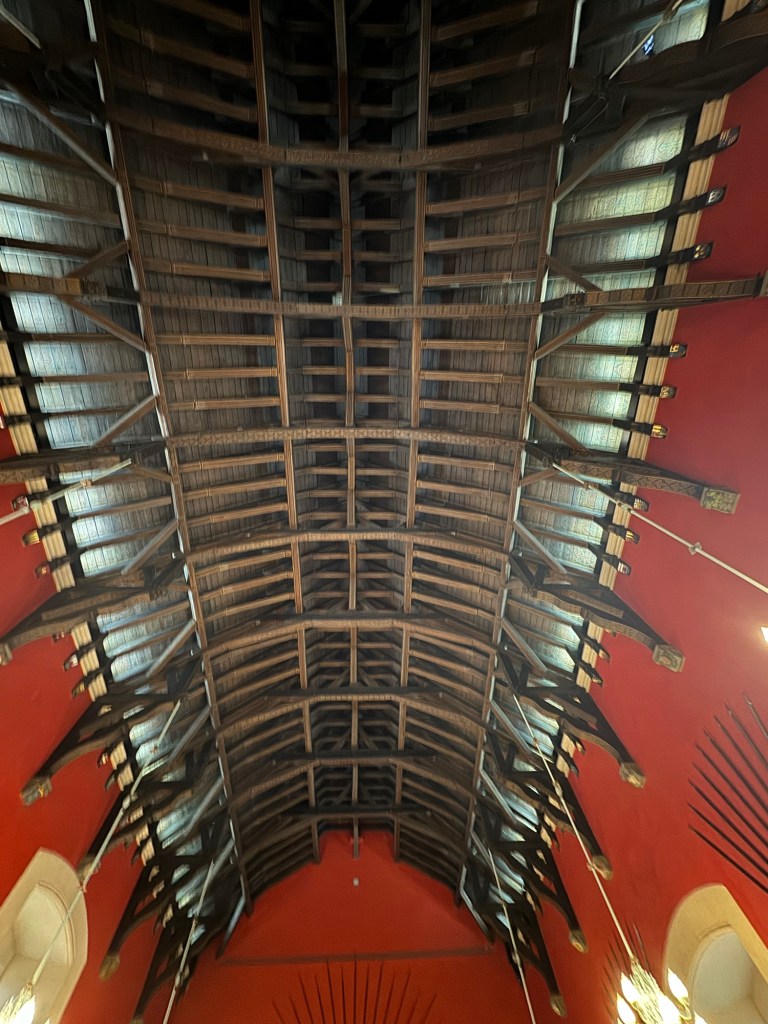
Then it was off to lunch, and then up to the Castle for an early afternoon tour. Andrew, Mary and I took time in the war memorial to find the name of the cousin of a church member, James Fleming McFarlane, who was in the RAF and shot down over the ocean in 1943. It took a while for them to find it for us, but we got a photo of the page on which his name is recorded to send back to our church member.


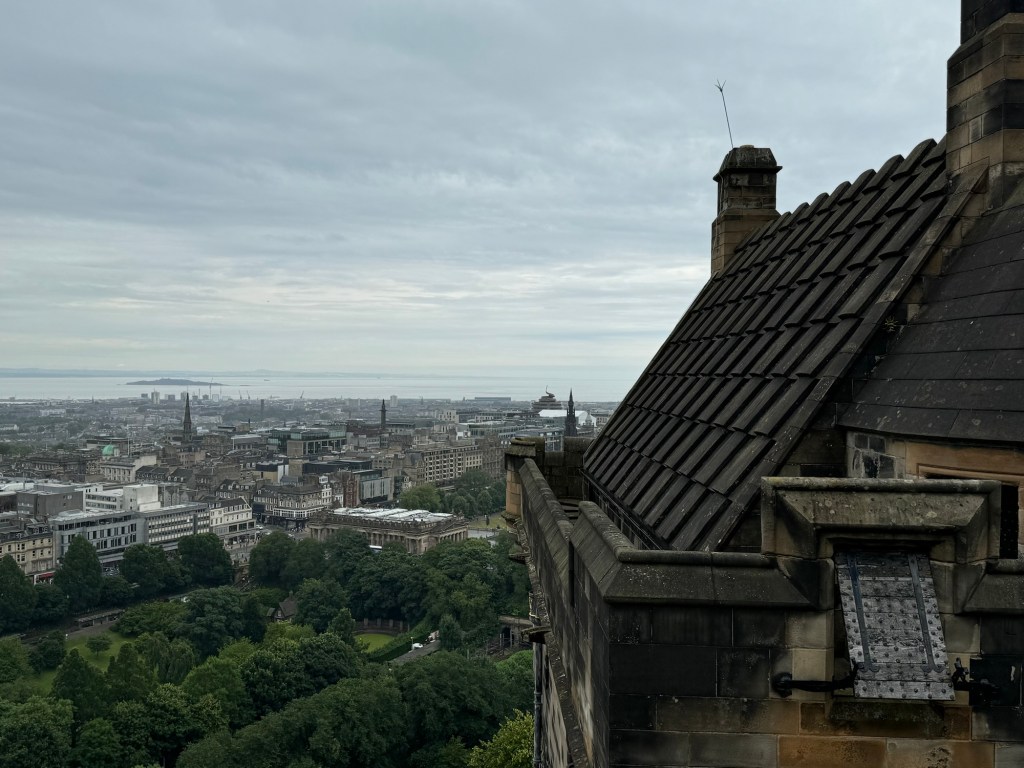
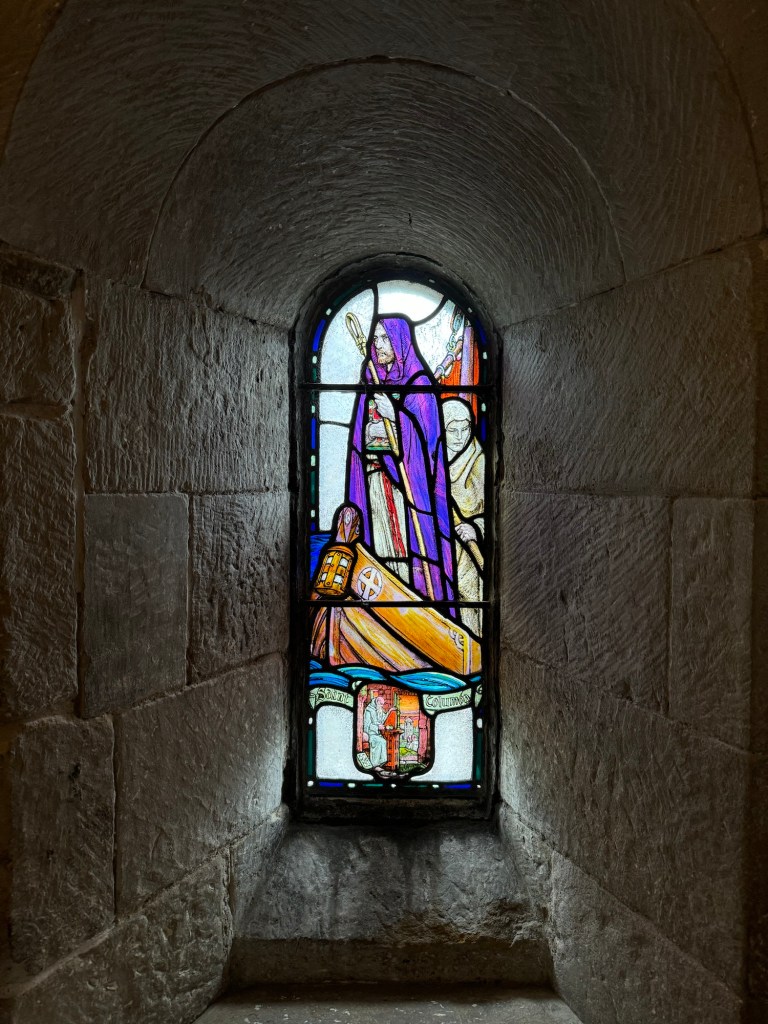
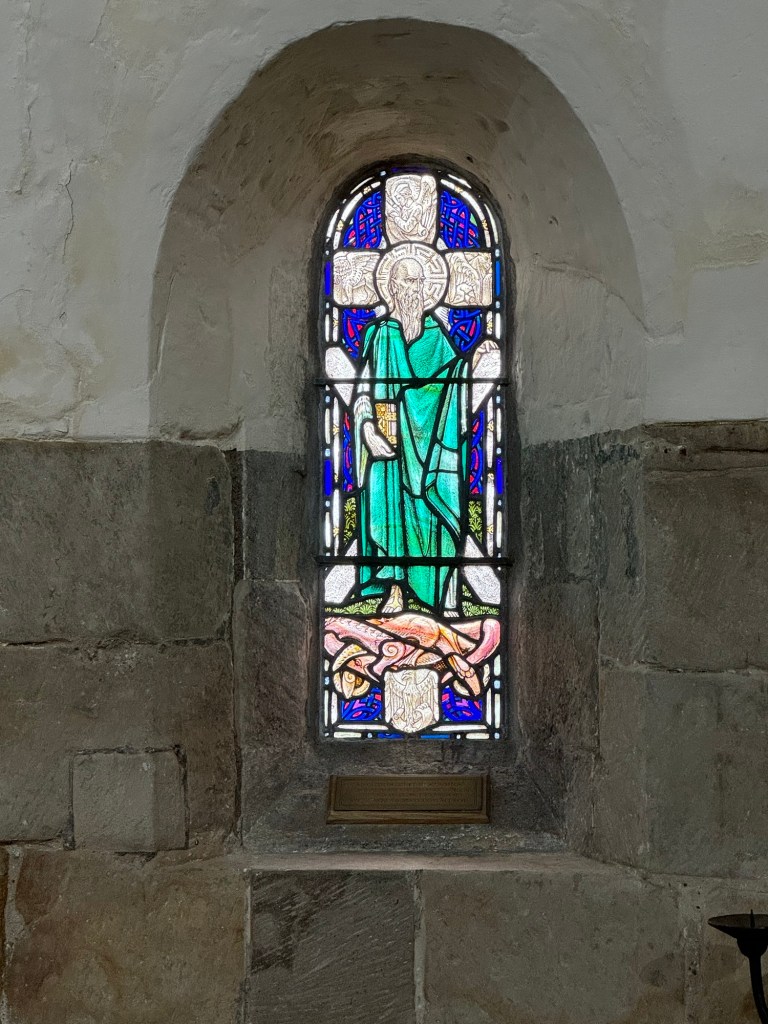


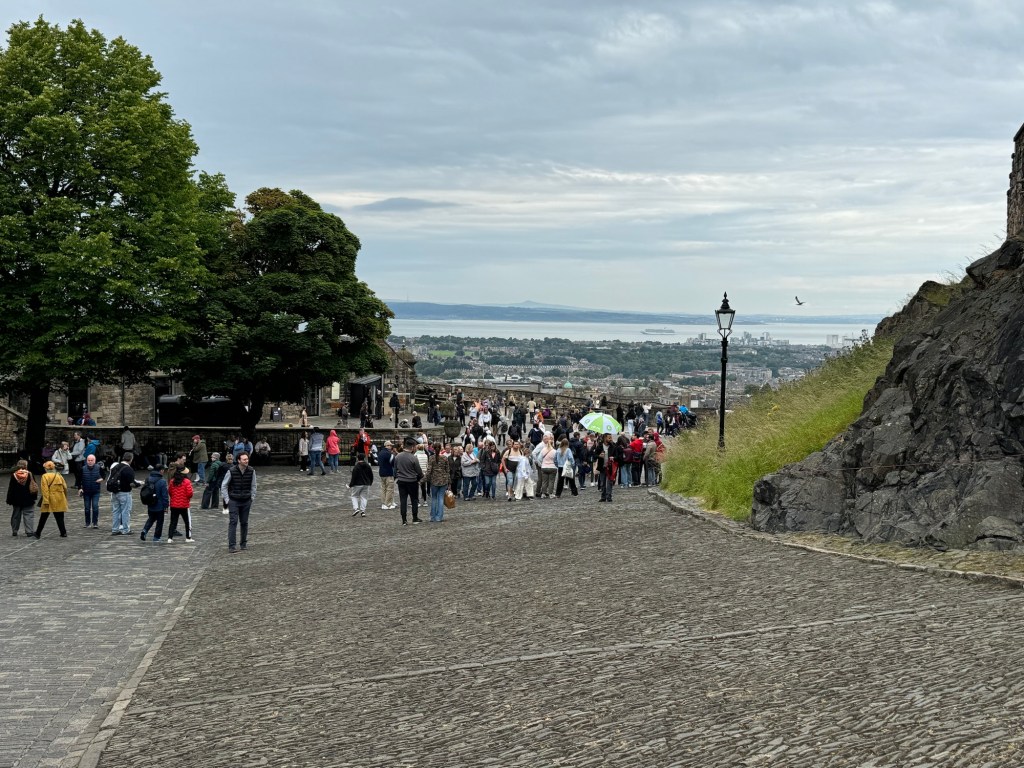

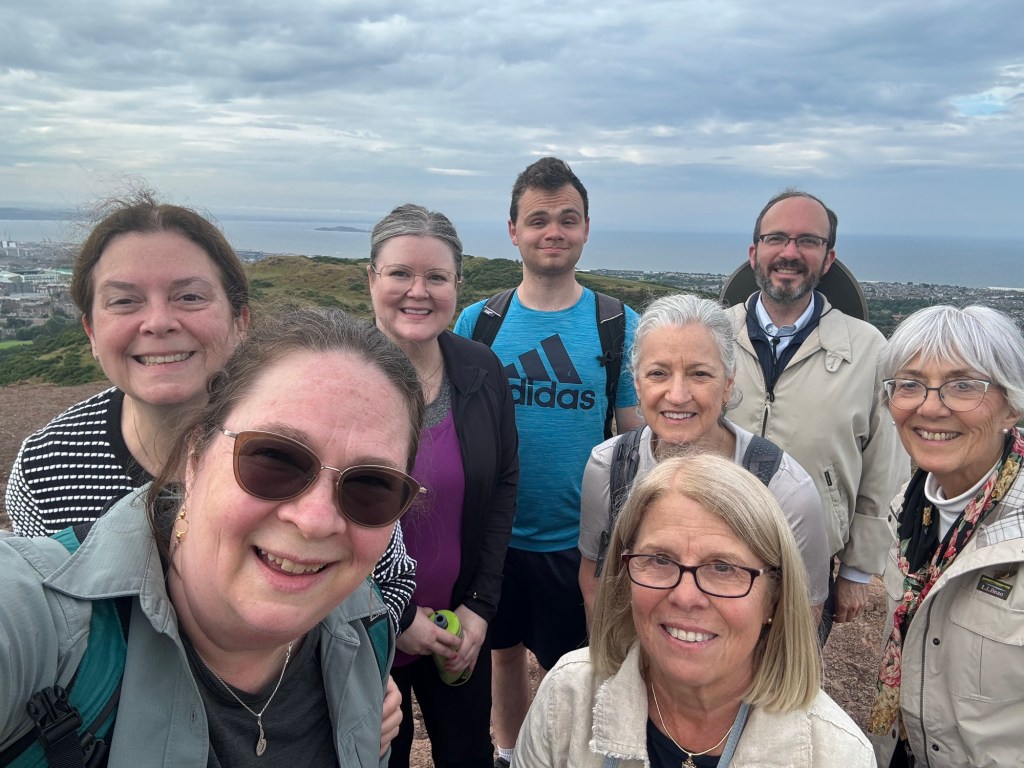
Then, the big adventure! Eight of us climbed up to the top of Arthur’s Seat—a long dormant volcano. (The castle is on top of a dormant volcano as well.) I’ve been wanting to climb up every time I’ve been to Edinburgh, and finally made it. It is a strenuous climb and the scramble up the final bit of rocks to get to the top is a challenge, but we all made it to the top and back down again safely and will have the aching joints and muscles tomorrow to prove it (and the photos, of course!).


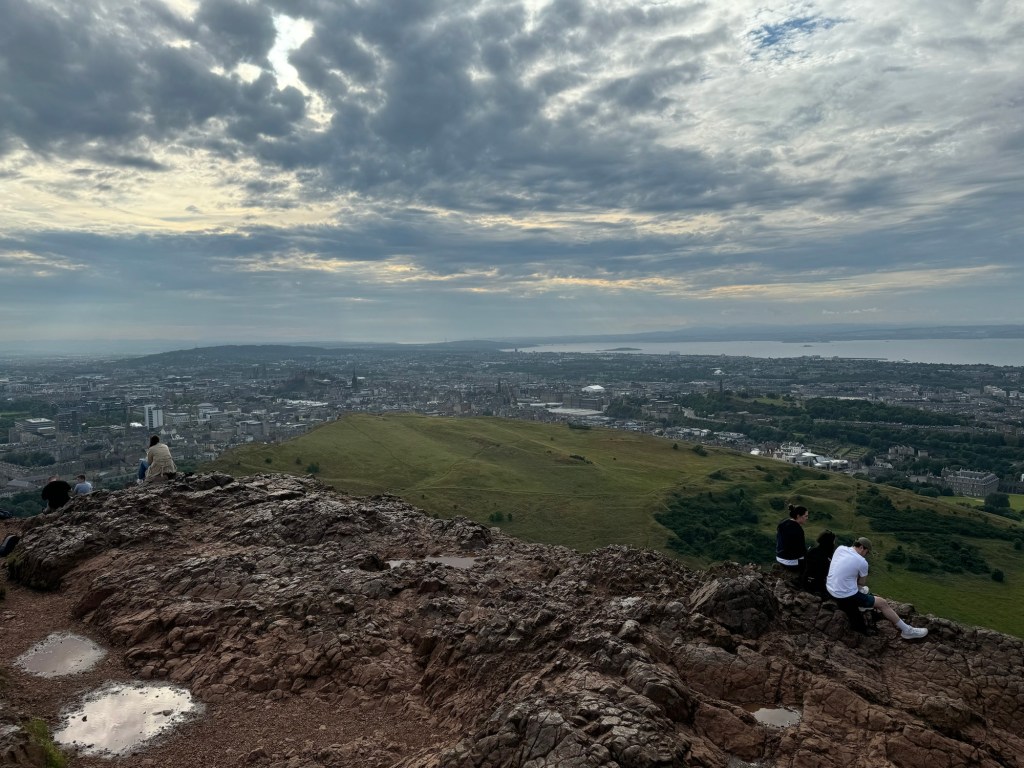

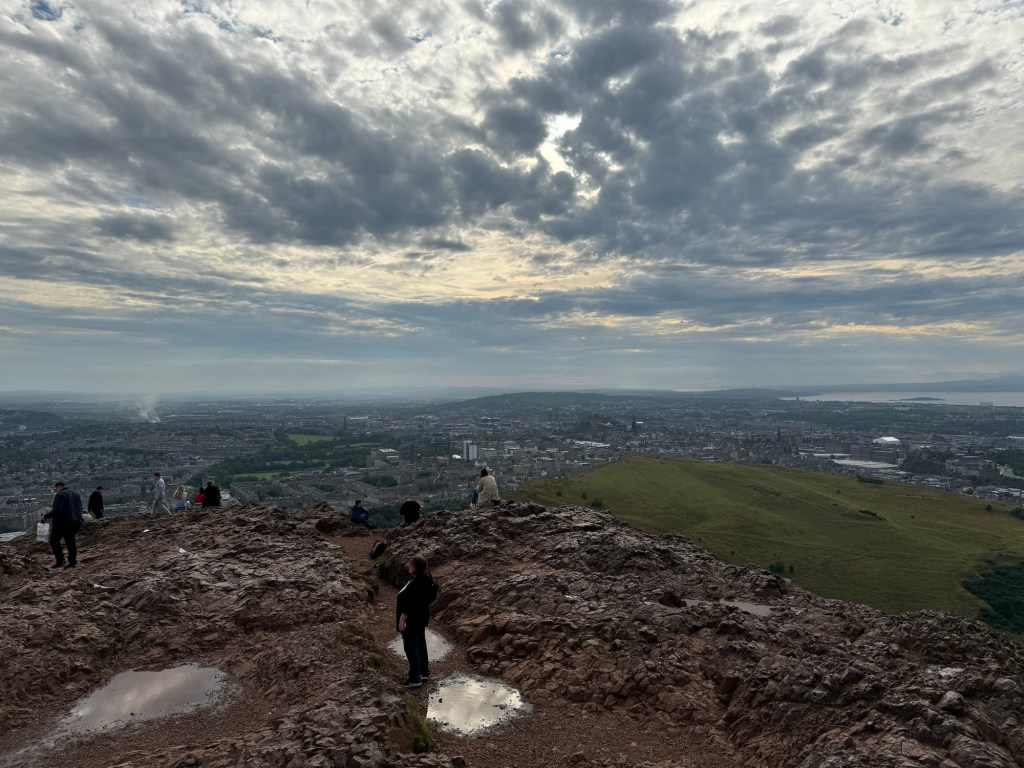


After the castle, Lauren and I met my friend James for tea. One of the best things, personally, about coming to Edinburgh is the opportunity to catch up with friends I worked with on Iona 32 years ago. We had brunch today with Ruth and Hugo, tea with James, and tomorrow I’ll have dinner with Sigi. I hope to see more friends as the trip continues. And continue to strengthen friendships with church members on the trip. It’s fun having time for conversations with people you’ve known for 20 years and finding things out about them that you never knew!

I am about to embark on a Presbyterian heritage pilgrimage to Scotland with a group of Madison Avenue Presbyterian Church (the church I serve as Associate Pastor) members, staff, and friends. We leave Friday evening and the church portion of the tour ends July 21. After that, a friend and I are staying on for ten days and going to the Shetland Islands for a good chunk of that time.
I promised folks from church that I would resurrect the blog I kept during my sabbatical pilgrimage walking across France and Spain in the fall of 2022, so those who cannot go on the trip can follow along.
We will begin the trip in Edinburgh—birthplace of the Presbyterian arm of the Reformation, where we will spend three days. Then we have a day in Stirling before heading to the west. After a few hours in Oban, we’ll catch the ferry to the Isle of Mull where we’ll be based in Tobermory for three nights.
The second part of our pilgrimage goes back much further than the Reformation to Celtic Christianity, St Columba, and the Isle of Iona. We’ll have a day trip to Iona to visit the Abbey, and experience this “thin place” that has been a pilgrimage destination for more than a millennium.
Many of us hope to see puffins and Fingal’s Cave on the Isle of Staffa the next day, while others will explore Tobermory.
Then it’s back on the ferry and down to Glasgow for our final night of the tour.
I’ll try to post nightly during the church tour, and then as often as the muse strikes while I continue traveling in Scotland.
The Pilgrims’ Aiding
God be with thee in every pass,
Jesus be with thee on every hill,
Spirit be with thee on every stream,
Headland and ridge and lawn;
Each sea and land, each moor and meadow,
Each lying down, each rising up,
In the trough of waves, on the crest of the billows,
Each step of the journey this goest.
—from “New Moon of the Seasons: Prayers from the Highlands and Islands”, collected and translated from the Gaelic by Alexander Carmichael
Someone whose blog or social media posts I follow, some wise person, recently wrote about Tennessee Williams’ line, “I have always depended on the kindness of strangers”, in A Streetcar Named Desire, saying something to the effect that it is a shame this line was spoken by a character, Blanche DuBois, who was incapable of managing life at all and thus the line has a negative connotation. I am sorry I cannot remember whose post I was reading that got me thinking about this, and cannot give them credit. My deepest apologies to you, whoever you may be.
The truth is, we all depend on the kindness of strangers. If strangers were not kind to each other, didn’t help each other out, this world would be a much harder, more unpleasant, downright miserable place to be. Much more so than it currently is. This truth is one of the things that has become more evident to me as I undertook this solo adventure to walk across large swathes of France and Spain over the last two and half months. Along the way, strangers have interpreted for me, helped me find doctors and medical care, given me directions, said, “Bon, courage!”, when the day was getting long and the path was challenging and I seemed to be moving painfully, or painfully slowly. Strangers have gotten me ice and ice packs for my feet and ankle; stopped, unbidden, to make sure I knew I had missed a turn and was not at all on the path, stopped to help me figure out which way the path went when the markings weren’t clear; strangers have welcomed me into their homes turned into gites (pilgrim accommodations in France) and fed me multi-course, home-cooked French meals. The lovely couple who own the Air Bnb I am in left me a brand new ice pack and even left crutches should I need them. They brought my friend Amanda and I small gifts to take with us, and have checked to make sure I was okay over this week. Strangers have smiled and said Bon Chemin/Buen Camino over and over and over again. I’m not sure pilgrims would make it very far without the support and help of strangers. We depend upon their kindness.
Several weeks ago, I was talking with someone, a stranger who either was sharing my table or staying in the same gite, about NYC. They were talking about how very helpful they found New Yorkers, commenting on how the stereotype of rude New Yorkers is undeserved. They said whenever they needed help or directions in the city, New Yorkers always stopped to help them. If they had their map out, someone would always stop and ask if they needed help finding something. I agreed that I had found the same thing in all my years of living in the city. New Yorkers may not always look you in the eye, smile or say hello, but if you needed something or were in trouble they were right there to help you.
When I fell and sprained my ankle I had to deal with it on my own since I was not traveling with anyone. I admit, it would have been nice to have company at that point. But I wasn’t really alone. The staff behind the bar of the restaurant downstairs gave me ice whenever I asked for it. They called the emergency clinic for me on Sunday morning to ask if they were open and would see me. They called a taxi for me. The clinic evaluated me, gave me an anti-inflammatory injection and charged me nothing (thank you taxpayers of Spain), the same taxi driver returned to take me to the next town. My hosts there provided an ice pack and got it for me whenever I asked for it, invited me to join them for their family lunch the second day I was there, made an appointment for me at the physiotherapist (who worked on my foot, ankle and knee for an hour and a half and charged me all of 30 Euros. Again, thank you Spanish tax payers.) And a friend I made while crossing the Pyrenees, part of the “Camino family” that was together for just four days but became fast friends, offered to leave her Camino and come help me if I needed her. If I had broken my ankle and was unable to walk at all, I probably would have accepted her offer. I knew it was sincere.
One of the learnings of this time is not just that we all depend on the kindness of strangers, but that most of us (perhaps true narcissists are the exception) want, even need, to offer that kindness. And, I don’t know that much about narcissists/narcissism, but I guess if showing kindness fed their self-image, even they would have a need to show kindness! Humanity is a big web; we are woven together. That is hard to see sometimes because we are so fractured and divided politically. But even when we are on polar opposite sides of an issue, you can often still see this deepest impulse to respond to each other when we are in need—remember the story of opposing protestors stopping to help a man who had a heart attack or had collapsed for some reason?
That is something I want to hold on to from this sabbatical time. How everyone supported each other, how total strangers were eager to help, how everyone recognized that we are all on the same path—whether we are walking or providing hospitality and support for those who are walking. We are all pilgrims learning to walk through life, helping each other on the way, walking each other home, as Ram Dass said.
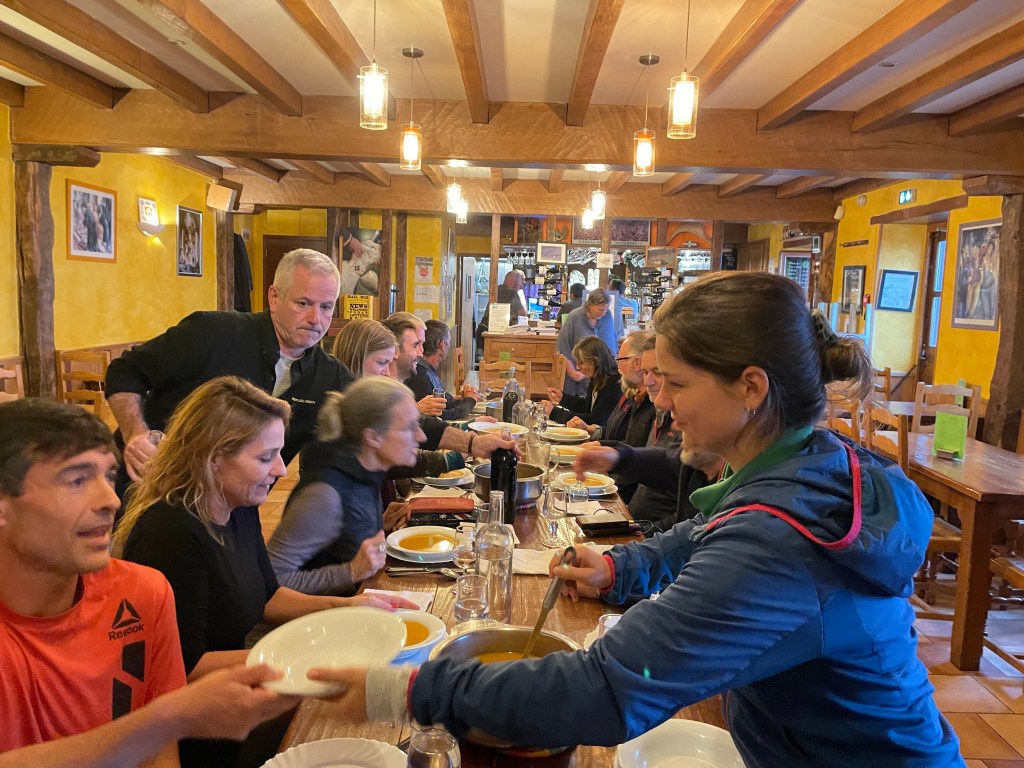
Here is my view as I type this:
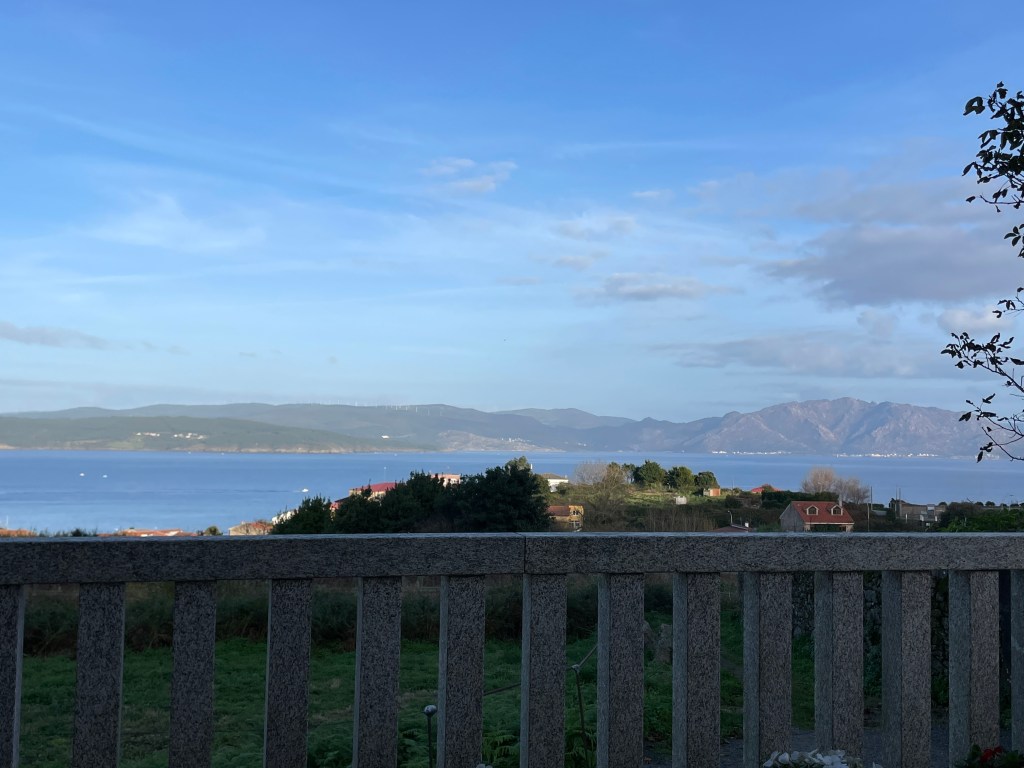
If you are a friend or family member or connected with me on FB, then you know I had to stop walking almost a week ago. Last Saturday (was it Saturday? I think so), I made the climb up to O Cebreiro, the highest elevation I had to tackle since the Pyrenees. It rained all day. And it had rained all the previous day. The path was very wet and muddy, and it times it was like walking up a very shallow stream. I made it just fine. Then, when I got to O Cebreiro, I fell down the two wet stone steps into the restaurant of the hotel where I was staying and sprained my ankle. On the one hand, I am glad I did not fall on a remote path and have to be rescued because I couldn’t walk to the nearest village. On the other hand, it seems the height of irony to have walked for almost two months, with all the rocky, tricky ascents and descents I had, and then fall on the steps going into the restaurant. I knew at the time it was probably a Camino-ending injury, but at first I hoped I might be able to start walking again after a couple days rest. The staff behind the bar supplied me with ice that evening and the next morning, and called me a taxi to take me to the nearest medical clinic 4 km away. They examined my ankle and knee, which I also wrenched, saw no sign of a fracture, gave me an anti-inflammatory injection and told me I could start walking again in an hour and a half. I knew better. The same taxi took me to my next destination—Triacastela—where I already had a room booked for the night at Casa Simon. If you are a planning a walk, please consider staying at Casa Simon when you get to Triacastela—it’s a pension rather than an albergue, but if you would like a lovely single room in a beautiful space with welcoming hosts, I highly recommend it. They were so kind. I ended up staying two nights while I figured out what to do, and while I was there I saw an amazing physiotherapist who worked on my foot, ankle, knee and leg for an hour and a half. I am convinced that the reason I am healing more quickly than I would have thought is because of all the work she did. She also confirmed that it was indeed a serious sprain and I could not continue walking.
To say I was disappointed is an understatement. Though I already knew that and had accepted it, I burst into tears when she confirmed it. But, onward. Ultreia and suseia as they say on the Camino—which roughly translates to onward and upward, or further and higher. It usually refers to continuing to walk, but in my case, it meant onward to plan B. I just had to figure out what plan B was. I knew I needed to rest my ankle and knee so that when I flew to Paris on 11 November I would be able to walk around the city. My close friend of forty years, who is like my sister, is joining me in Paris for ten days before I return home for Thanksgiving. I did not want to be in Paris for ten days unable to move around the city.
I decided what I needed was a week at the ocean. I have always found the ocean to be the most restorative place —especially rocky coastline—so I started researching Air BnBs in Finisterre and Muxia, and found this beautiful place with this spectacular view of the water and the mountain across the bay. Finisterre is where many people end their pilgrimage. As its name says, it is the “end of the earth”, the farthest west you can go in this part of Spain. I haven’t walked to the lighthouse yet, where pilgrims end their pilgrimage if they go beyond Santiago. But I hope to be able to do that before I leave. I have been walking down the hill to the village each day, and that’s probably enough for now. But there is an old fort/castle in the village, right on the water, and below it are rocks with crashing waves. Perfect.
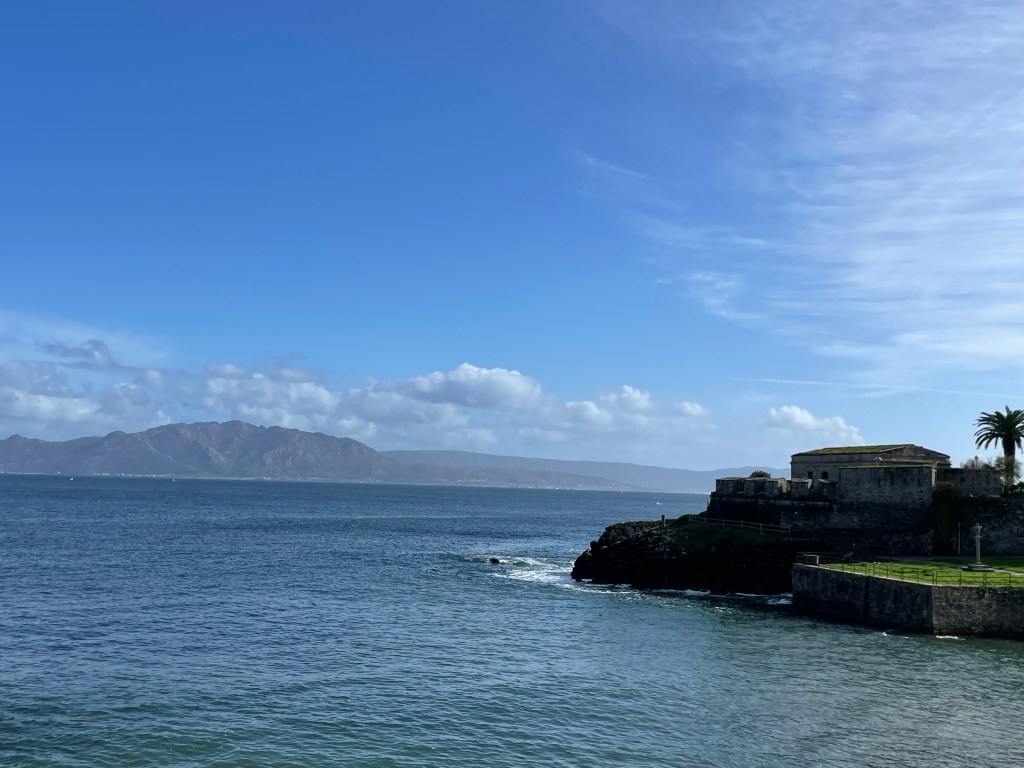
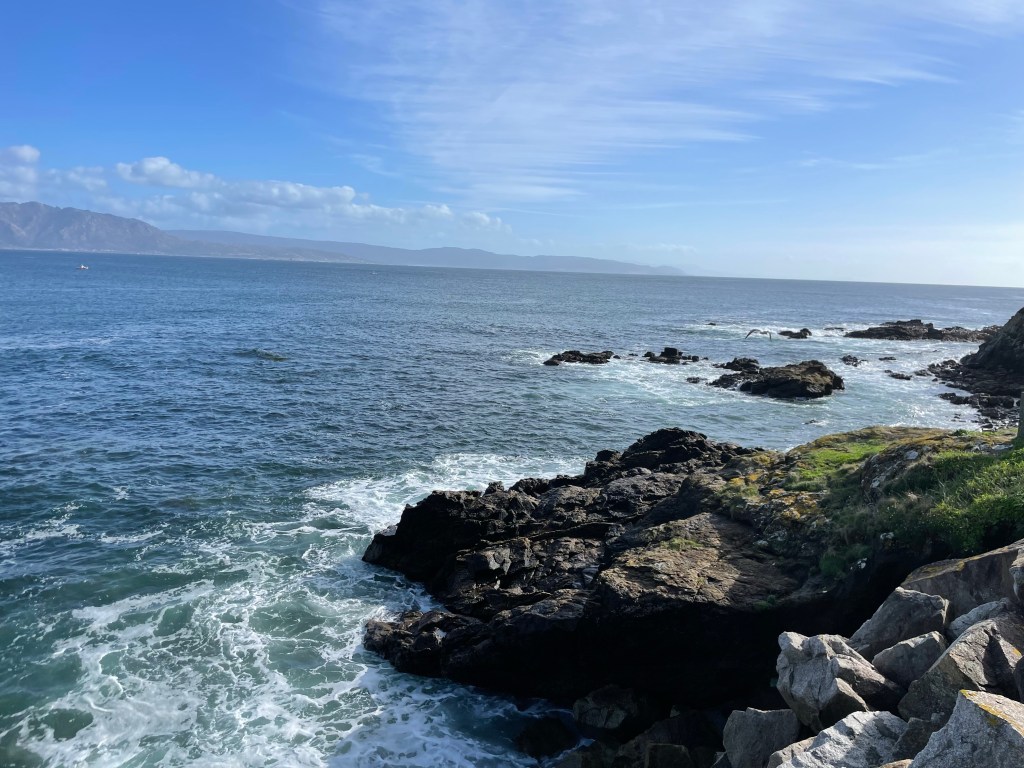

I took a bus from Triacastelo to Santiago on Tuesday. It felt very strange to be entering Santiago de Compostela by bus rather than on foot. I went to the square to see the Cathedral, since I stayed in the former monastery that is right there. I decided that even if I cannot get the Compostela—the beautiful certificate that says you completed the pilgrimage, I have earned the photo in front of the Cathedral since I walked across France and part of Spain. I don’t like the one I took last Tuesday, so I’ll get a better one when I return on Wednesday. But here is the Cathedral at night:

When I learned that my friend Amanda from Canada, who I met in the first week in France, and who has been on a similar schedule as me, including foot injuries, was also looking at places to stay in Finisterre, since she also had to quit walking, we decided to combine forces and she has been here the past couple of days. She will leave tomorrow, and I will have a few days on my own, reading, writing, reflecting, staring at the water, and healing. And enjoying this amazing, charming German bakery:

I can’t promise how much blogging I will do the next few days. There is wifi, but not the best, and it takes forever for photos to upload to WordPress. But I’ll try to catch up a bit. I am grateful to all of you for following along and for your words of encouragement. Several people have suggested I write a book. I’m not sure the world needs yet another book about the Camino. But I do want to do some writing of some kind. Maybe just more blogging. If I’m going to continue this in some form, I should probably learn more about what I’m doing. Tech stuff is not my forte.
We are going to walk up the hill to see the sunset on the other side of this peninsula. Don’t worry. It’s a short walk. Shorter than the walk down the hill into town. Here is how the light has changed since I took the photo at the top of this post:

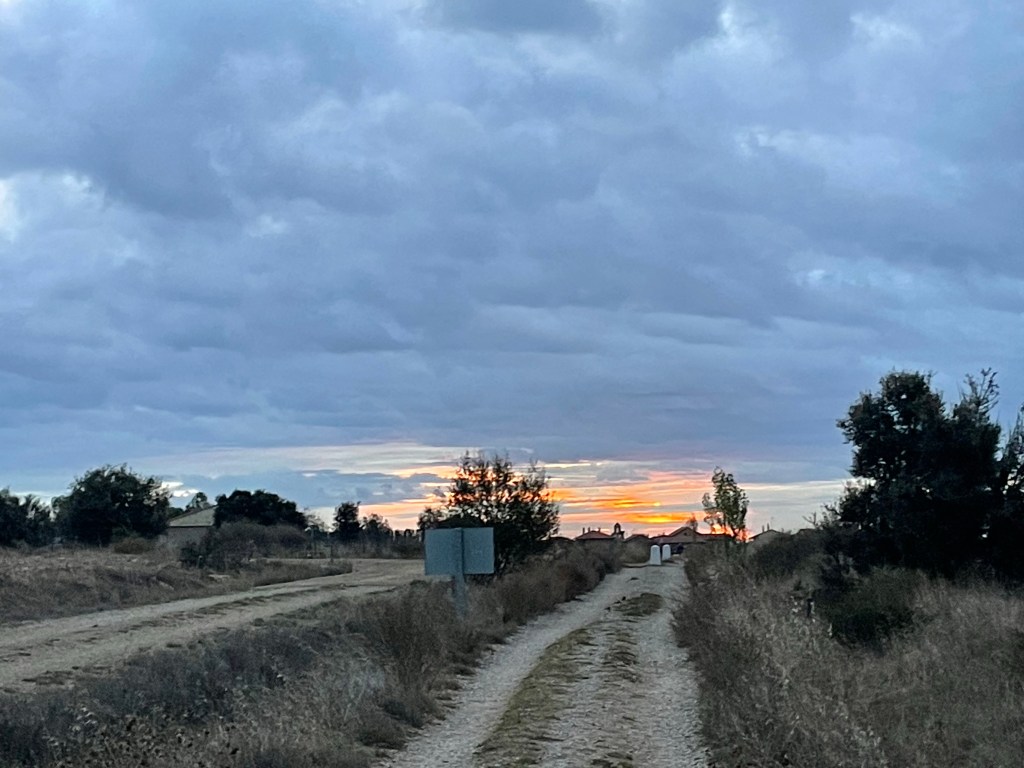
Today was a gorgeous walk, starting with the sunrise as I left Santa Catalina. I’ve been waiting at least until it is light enough to walk rather than hard dark, which means later and later starts—8:30 this morning. You have to remember to turn around and check on the sunrise since you are always walking away from it on the Camino.
At first the mountains seemed so far away. I thought, “surely I’m not going to cover that much ground in one day? They have to be more than 17-18 km.” But I did, in fact, reach them—at least the beginning of them. The second half of the day was a steady uphill, but not very steep except for a couple of short stretches. It felt good to be climbing again, and my feet did SO much better because there was very little pavement today, almost entirely dirt road and dirt/stony path.


Looks like it will have to be one photo at a time again, and less of them. Those last three took forever to load. Sigh.
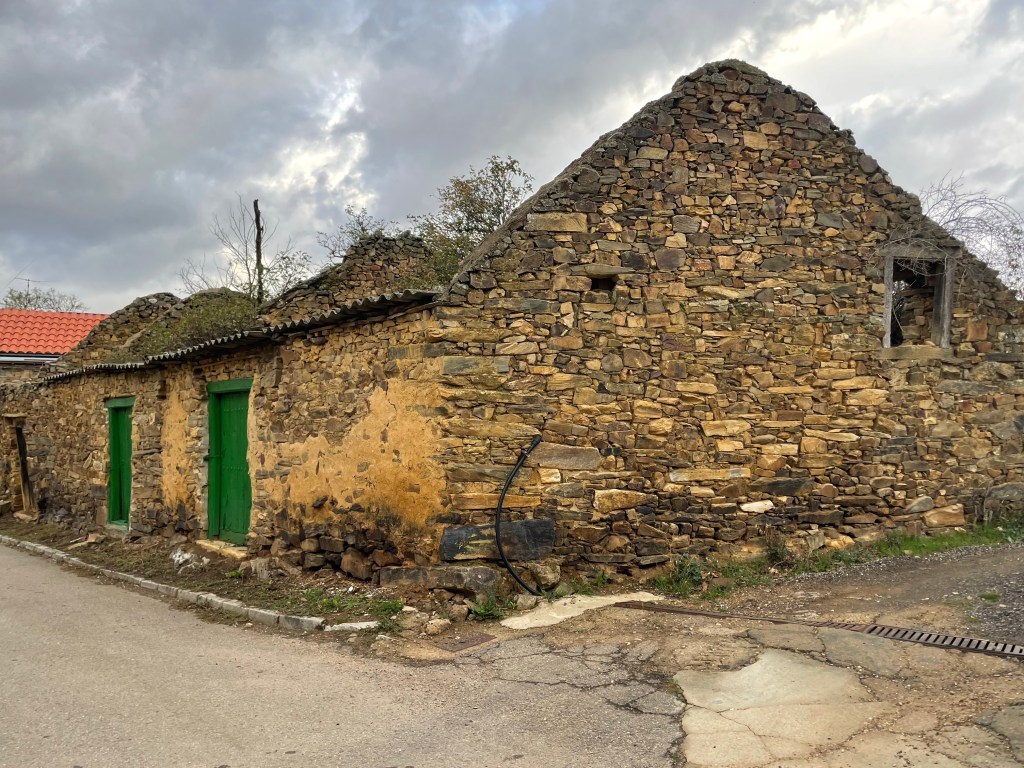


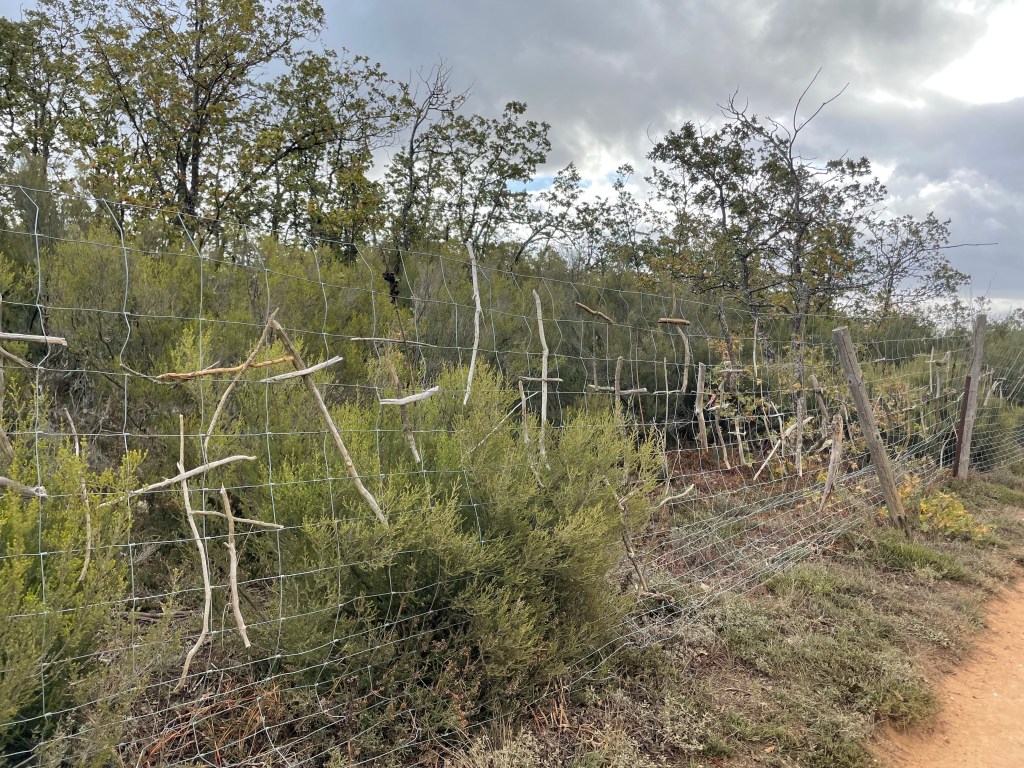

I stopped in Rabanel del Camino for lunch, and to get out of the rain. And, drum roll, there was an open church!! I think because it was associated with the monastery across the street. You can stay at the monastery if you want time for reflection, but you have to stay at least two nights. Which makes sense. There not a whole lot of time for reflecting when you arrive, eat, do laundry, and have to get up early and start walking the next day.


Tomorrow I climb a bit more, 2 km to one of the most famous and significant points along the Camino, Cruz de Ferro. This is where pilgrims place the rock they have carried with them, often signifying a burden they are leaving behind. I have carried two small stones with me to place there—one from the coast of Maine and one from Iona—two places that are the most dear to my heart and renewing for me. I wanted to leave something that symbolized renewal and rest and gifts from the ocean, which never fails to restores my mental and emotional health—which is also the purpose of this sabbatical after a few challenging, stressful years! Maine, Iona and walking across France and Spain, they all represent Sabbath for me (well, I worked my butt off on Iona, but it is still a place of renewal)— taking a real break from work and daily life to rest, remember, reflect, gain new perspective, and be restored by God’s creation, both nature and the people you share those breaks with, whether they are old friends or new.
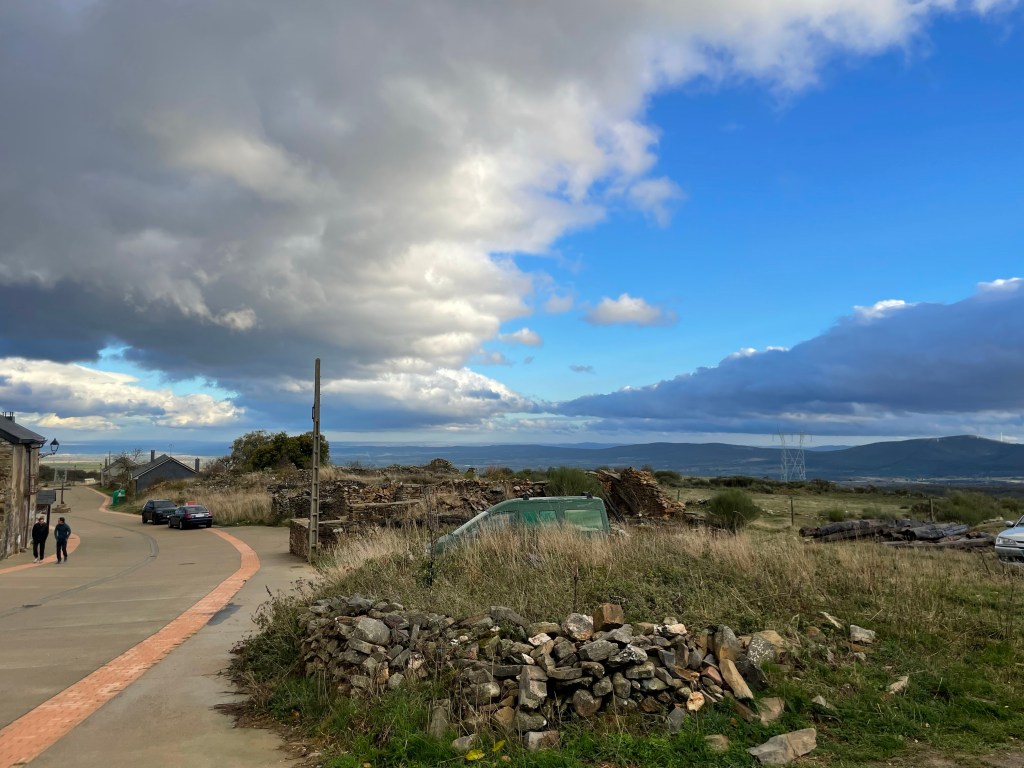
I did a relatively short walk today, about 12 km, and that included some extra walking around the village this evening. I got to Astorga yesterday afternoon, hoping to see both the cathedral and the Gaudi Bishops’ Palace before nightfall. But since I also needed a short nap and to make accommodation and baggage transfer arrangements for the next few days, I ended up with only enough time for one of those before dark. And they both need to be seen in daylight because of the stained glass windows. So I chose the Gaudi palace, because I have fallen in love with Gaudi, and I figured I could sneak into mass in the morning and see the Cathedral that way. More on that later.
The Gaudi Palace did not disappoint. It was commissioned after the previous bishops’ palace burned to the ground. The bishop imperiously demanded that he had to have a place for his family (staff) to live and work that was worthy of his stature (that’s the gist of it), so they commissioned Gaudi to build such a place. The bishop died before it was finished, and while Gaudi planned it and started it, he seems to have largely abandoned the project after the Bishop died. Plus, apparently the church didn’t pay him for about four years. It took decades for the palace to finally be finished, and it wasn’t long before they made it a museum. It is glorious. Here are some photos:

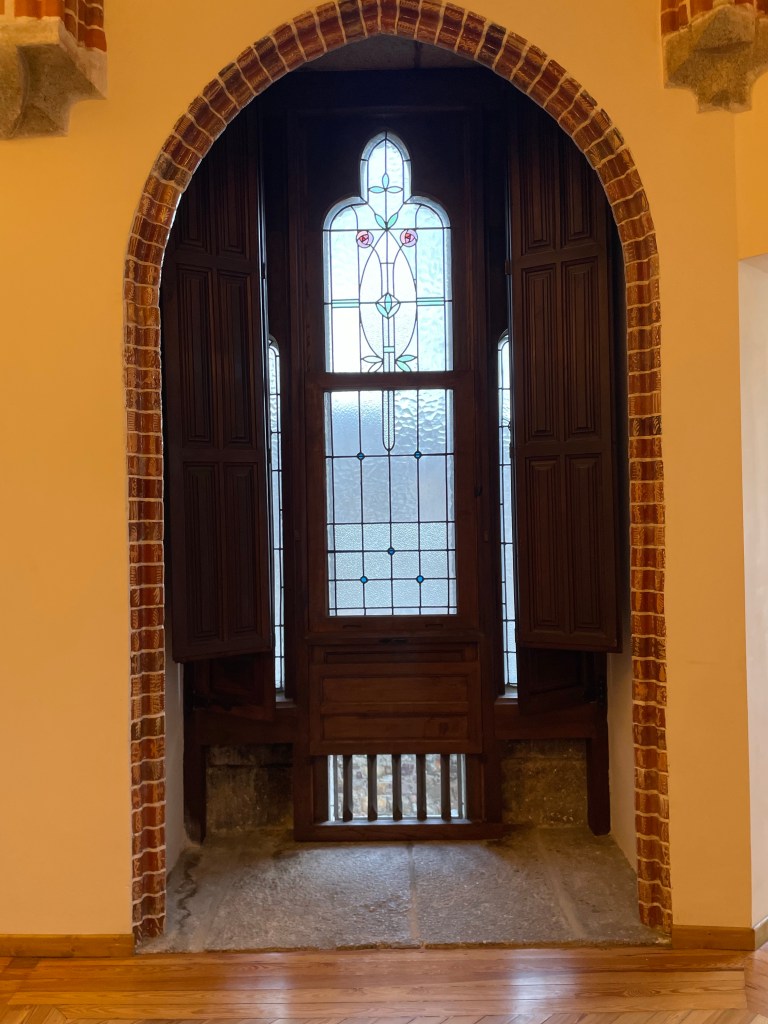
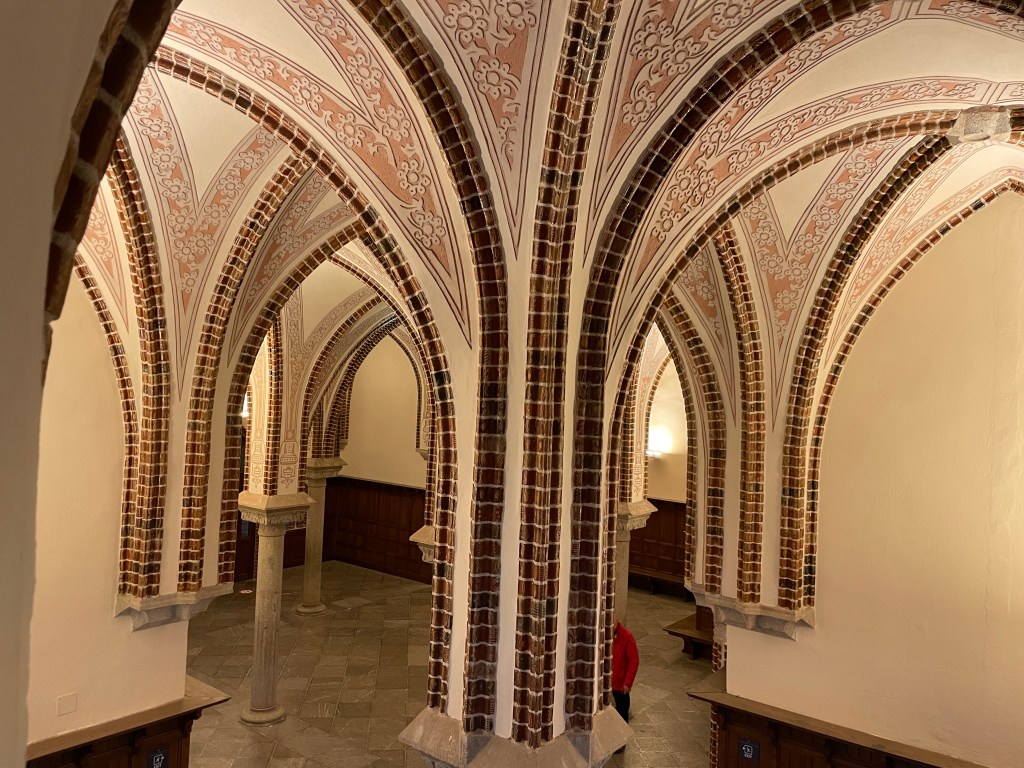

Oh bother. The wifi is not strong enough to really do this. Let me try one photo at a time.
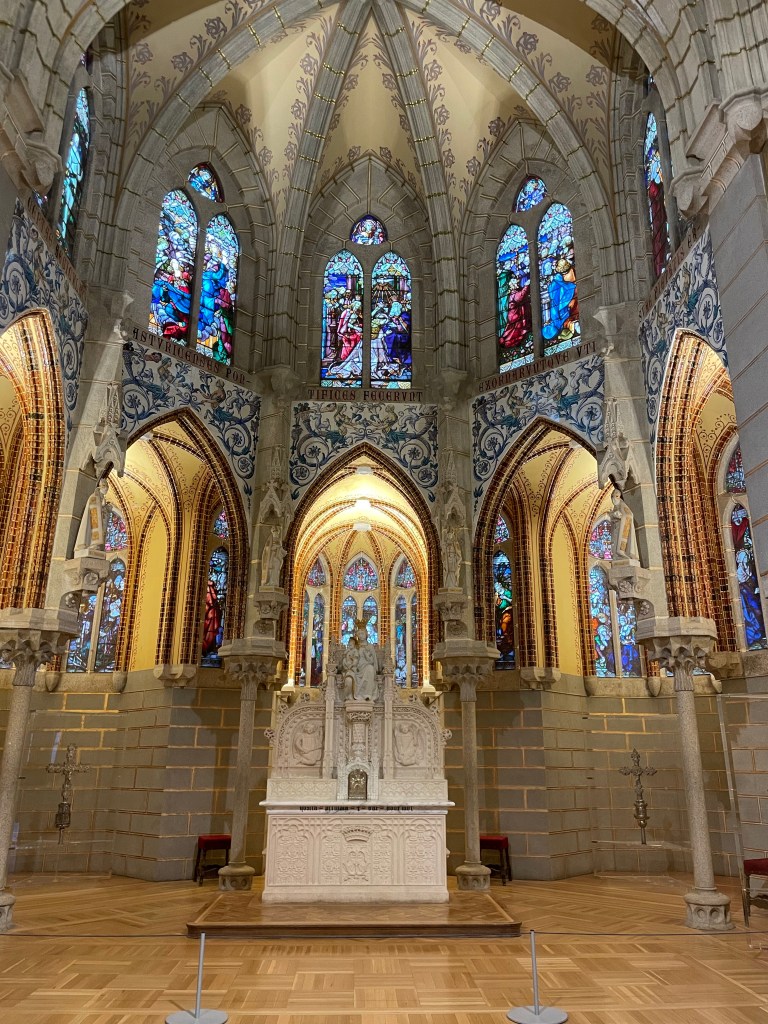
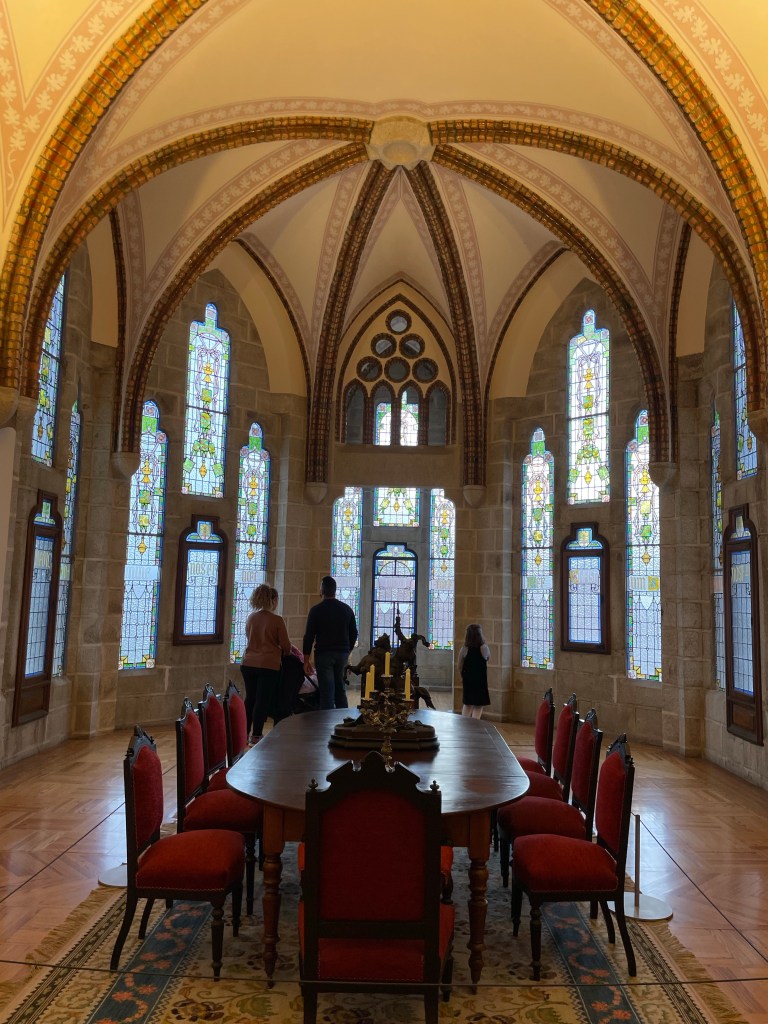


The wifi is just too slow. I’ll have to stop posting photos, and hope to do some catching up tomorrow. I’ve got 17-18 km to do, including a not insignificant climb. Time to get my climbing legs back! I’m planning on an early start, but not too early. The time should change this Saturday, but right now it’s not getting light until after 8. And there are wolves in this area. I know they will not want to come near me, and I think it’s exciting they are making a comeback. But still. I don’t want to walk in the dark where there are wolves!
Some musings that don’t require photos: Walking the Camino in Spain is very different from the Chemin in France. I think I’ve already talked about that a bit. One of things that I read or was told was that the Camino in Spain would feel more spiritual than the Chemin in France. I’m not sure why. Now I do not believe you have to be able to visit churches for an experience to have a spiritual element to it. Just look at the glorious, ever-changing countryside I’ve been walking through for eight weeks. That’s as awe-inspiring as anything can be. But one big difference between France and Spain is that in France almost every little church or chapel you came to, whether it was in a village or small town or out in the middle of nowhere was open. Anyone could go in. I loved that. I tried to step into every chapel and church I passed, even if I didn’t have time to stay more than a moment. They were such beautiful, old spaces, even the most simple ones, where people had worshipped for centuries. I loved seeing them, perhaps lighting a candle, saying a prayer, or simply having a moment of quiet. In Spain it is the opposite. Apart from the cathedrals and large churches in the towns and cities, that you need to pay to go into (I don’t begrudge this, I’m sure they cost a fortune to keep up) every single church is locked up tight. All of them. It is such a disappointment. It’s probably because there are so many more people walking in Spain than in France, and I guess not all pilgrims (or walkers) show respect for the spaces. But unless you happen to be somewhere at the time of mass, you cannot get into any of the churches. While I do not need to go into a church to feel God’s presence and wonder at creation or to say a prayer, I miss being able to go into these beautiful, ancient spaces where people have worshipped for generations. At least I can admire their towers that provide homes for storks’ nests:

 babartlett